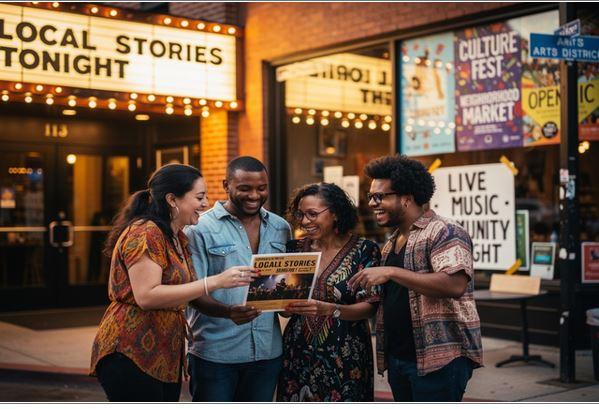
How Local Culture Shapes Great Entertainment
Entertainment does not emerge from a cultural vacuum. It is cultivated within specific social, historical, and geographic contexts that determine what audiences find meaningful, thrilling, or worthy of their leisure time. Understanding this relationship requires moving beyond the assumption that entertainment is universally translatable. Instead, the most enduring forms of amusement are those that resonate deeply with the values, rituals, and aesthetic sensibilities of a particular community.
The Cultural Foundations of Amusement
Every form of entertainment carries embedded cultural codes. Music, theater, sport, and games all reflect the priorities of the societies that produce them. What one culture regards as sophisticated leisure, another may find incomprehensible or even distasteful. This variability is not a defect but a strength, because it allows entertainment to fulfill its deepest function: reinforcing shared identity and belonging.
Consider how communal celebration shapes preferences. In societies where collective gathering is central, entertainment tends toward participatory forms rather than passive spectatorship. The design of sustainable cultural spaces, as examined in research on urban leisure environments, demonstrates that physical and social infrastructure directly influences which entertainment practices flourish and which fade. Local architecture, climate, and social organization all leave measurable imprints on recreational habits.
Why Localization Outperforms Homogenization
Conventional wisdom in the global entertainment industry often favors standardization. Producers assume that a formula successful in one market can be exported wholesale to others. Yet evidence repeatedly challenges this belief. Franchises, formats, and games that ignore local sensibilities frequently underperform, while those adapted thoughtfully to regional tastes achieve remarkable loyalty.
The reason is straightforward. Entertainment satisfies emotional and symbolic needs that are culturally specific. Humor rooted in one linguistic tradition rarely survives translation intact. Narrative structures that feel satisfying in one storytelling tradition may seem incomplete in another. Successful entertainment enterprises therefore invest in cultural fluency, tailoring their offerings to align with local expectations rather than imposing foreign templates.
Gaming as a Cultural Mirror
Games of chance and skill offer a particularly illuminating case study. The way a society approaches gambling reveals its attitudes toward risk, fortune, community, and even morality. In some cultures, games are inseparable from social ceremony, played during festivals and family gatherings. In others, they occupy dedicated commercial spaces designed to concentrate excitement and spectacle.
Modern digital platforms have amplified this dynamic. Online offerings such as live roulette games illustrate how a traditionally European pastime has been adapted for regional audiences through localized language, presentation, and hosting styles. The same underlying game is repackaged to feel familiar and inviting within each specific market, demonstrating that even a fixed set of rules can be culturally reframed to enhance appeal.
Historical Trajectories and Regional Identity
The evolution of entertainment institutions cannot be separated from broader historical forces. Colonization, migration, trade, and economic development all shape how leisure practices develop. The distinctive character of gaming establishments across different regions reflects centuries of accumulated influence. The rich account of how casino culture evolved regionally shows that entertainment venues become woven into local social fabric, adopting music, cuisine, and hospitality customs unique to their surroundings.
This historical layering explains why identical business models produce different experiences in different places. A gaming floor in one country emphasizes conviviality and shared celebration, while another prioritizes discretion and individual concentration. Neither approach is inherently superior. Each represents an optimal adaptation to its cultural environment, refined over generations of practice.
The Practical Logic for Creators
For those who design and distribute entertainment, these observations carry actionable implications. First, research into local values must precede product development rather than follow it. Assumptions about universal appeal should be treated with skepticism and tested against genuine cultural knowledge. Second, collaboration with local creators and communities produces more authentic results than distant imitation.
Third, adaptation should be substantive rather than cosmetic. Merely translating text or swapping visual symbols rarely suffices. Meaningful localization engages with the underlying emotional and social functions that entertainment serves within a given culture. This demands humility and sustained attention, but it yields entertainment that audiences embrace as their own rather than tolerate as foreign import.
Balancing Global Reach and Local Roots
None of this implies that entertainment must remain permanently confined within cultural boundaries. Cross-cultural exchange enriches creative traditions and introduces audiences to new pleasures. The critical distinction lies between imposition and dialogue. Entertainment that invites audiences into unfamiliar experiences while respecting their existing frameworks can bridge cultures successfully. Entertainment that disregards local context tends to alienate.
The most sophisticated producers therefore pursue a dual strategy. They maintain a recognizable global identity while embedding genuine local relevance in each market they enter. This balance allows scale without sacrificing resonance, reach without erasing distinctiveness.
Great entertainment, ultimately, is never purely global or purely local. It emerges from the productive tension between shared human desires and the particular cultural forms through which those desires find expression. Recognizing this truth transforms how we create, evaluate, and appreciate the amusements that shape our collective and individual lives across the world today.