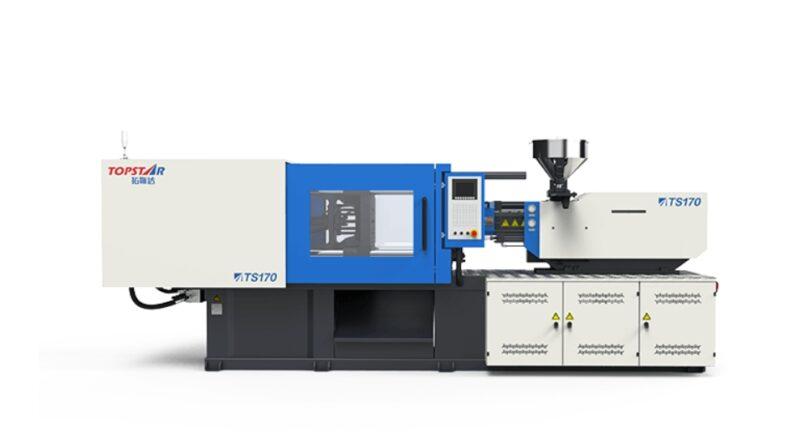
How does an injection moulding machine improve batch consistency of Mass-Produced Plastic Parts?
In mass production, consistency is not merely optional; it is the critical factor distinguishing a stable supply chain from a volatile production line. A plastic part may appear simple on the surface, but its creation involves a complex series of process decisions: melt temperature, injection speed, holding pressure, cooling time, clamping force, mold stability, and the repeatability of every action within the cycle. If any of these factors deviate, batch quality begins to fluctuate. While parts may still be successfully ejected from the mold, their quality cannot be consistently maintained. This is why the injection moulding machine plays a pivotal role in ensuring batch-to-batch consistency.
Injection Moulding Machine Repeatability: The Foundation of Batch Consistency
Batch consistency begins with repeatability. If an injection moulding machine cannot replicate the same process conditions in every cycle, parts will gradually drift away from their target specifications. In high-volume production, even minute variations in pressure, speed, temperature, or timing can lead to significant deviations across an entire batch. For instance, one part might be slightly overweight, another might exhibit a minor sink mark, and a third might fall just outside the acceptable dimensional tolerance. The machine must prevent such deviations.
Repeatability refers to the machine’s ability to execute identical actions, apply consistent forces, and elicit the same material response under identical conditions. While this sounds straightforward, achieving it requires precise control systems, a stable mechanical structure, and reliable feedback loops. A high-performance injection moulding machine does more than just “run”; it executes operations with rigorous consistency. It is this rigor that brings predictability to large-scale plastic manufacturing. At Topstar, our injection molding systems are engineered to maintain this repeatability throughout extended production runs.
Precise Control of Pressure, Speed, and Temperature Minimizes Deviation
Another reason injection moulding machines enhance batch consistency is their ability to precisely control key process variables. The molding of plastic parts is not a matter of chance; proper formation relies on keeping pressure, speed, and temperature within controlled ranges. Significant deviations in these values inevitably lead to variations in part quality.
Injection pressure serves as a prime example. If the pressure is too low, the mold cavity may not fill completely, resulting in short shots or structural weaknesses. Conversely, if the pressure is too high, the machine may overfill the part, causing flash, internal stress, or dimensional distortion. A well-controlled injection moulding machine maintains pressure within an ideal range, ensuring consistent filling for every part. At Topstar, we consider this one of the greatest advantages of modern injection moulding machines.
Stability prevents drift during long production runs
Batch consistency is most vulnerable during extended, continuous production runs. A machine might produce compliant parts at the start of a shift, only to see consistency decline over time. This degradation can stem from heat buildup, minor mechanical wear, fluctuations in back pressure, uneven screw recovery, or changes in the shop floor environment. A reliable injection moulding machine mitigates this risk by maintaining mechanical and thermal stability over the long term.
Mechanical stability begins with the machine frame, clamping unit, injection unit, and drive system. If these components fail to maintain precision, the accuracy of the production process suffers. For instance, fluctuations in clamping force can lead to flash in some cycles but not others, while uneven screw movement can alter shot volume. A high-performance moulding machine counters such instabilities through robust design and precise motion control.
Matching the Injection Moulding Machine to the mold enhances dimensional uniformity
An injection moulding machine does not operate in isolation; it must work in tandem with the mold, and the quality of this integration directly impacts batch consistency. Even a highly advanced machine cannot produce consistent parts if the mold is poorly matched, heavily worn, or difficult to control. Conversely, a well-designed mold performs at its peak when supported by the machine’s precise control over pressure, timing, and motion.
Dimensional uniformity depends on how effectively the machine fills and packs the mold cavity. Parts will be more consistent in size if the mold features a balanced gating design and the machine delivers repeatable injection performance. Poor flow balance or unstable machine settings can lead to varying shrinkage rates across different areas of the part, resulting in dimensional inconsistencies between batches.
Adaptive control improves consistency under changing conditions
In real-world production, conditions rarely remain static. Raw material batches vary slightly, shop floor temperatures and humidity levels fluctuate, and mold resistance changes as the production line operates. Consequently, moulding machines that operate solely based on fixed settings have limitations. To further enhance batch consistency, machines need to employ adaptive control technology.
Adaptive control enables the moulding machine to monitor the process in real time and make adjustments within permissible limits. If the machine detects a slight deviation in cavity filling, it can adjust speed or pressure. If deviations arise during the holding phase, it can modify the holding pressure response,and if thermal behavior changes, it helps stabilize the production cycle and prevents quality issues from escalating. At Topstar, we believe that adaptive control is becoming a hallmark feature of high-performance injection moulding machines.
Enhancing Batch Consistency by Controlling the Entire Production System
Consistency in mass-produced plastic parts is no accident. It stems from a machine capable of precisely repeating the same process; maintaining stable pressure, speed, and temperature; sustaining consistent performance over long production runs; integrating seamlessly with the mold; adapting to changing environmental conditions; coordinating with automatio