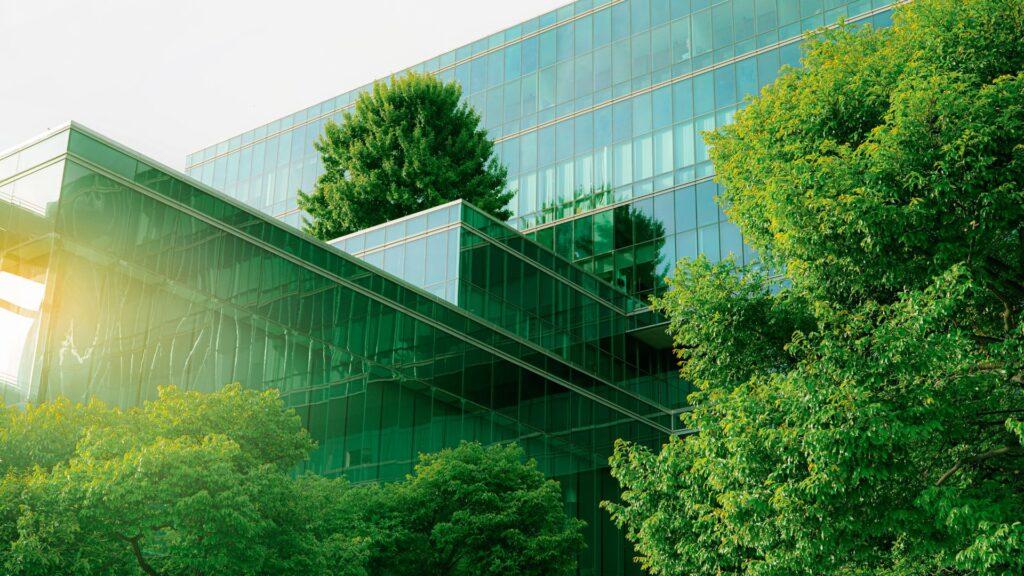
How Businesses Are Rethinking Greenery in Commercial Spaces
Greenery in commercial spaces is moving beyond the traditional office plant sitting in the corner. Businesses are increasingly incorporating botanical elements into their interiors as deliberate design features, using walls, partitions, displays, and architectural surfaces in new ways.
The shift is partly connected to the growing interest in biophilic design, but it is also about practicality.
Commercial interiors need to balance appearance, available space, maintenance requirements, and the way customers and employees use them. As a result, businesses are exploring more flexible approaches to incorporating plants and botanical features into their environments.
Greenery as a Design Element
Rather than adding plants after an interior has been completed, designers are increasingly considering botanical features alongside furniture, lighting, finishes, and colour schemes.
A reception area, for example, might use a vertical garden as a backdrop rather than relying on artwork or signage alone. A restaurant could incorporate foliage into a feature wall, while a retail store might use planted displays to frame particular product areas.
This approach gives greenery a more defined role within the overall design. Instead of distributing plants randomly throughout a property, businesses can use selected installations to create focal points or complement existing architectural features.
Making Use of Vertical Space
Floor space is valuable in commercial properties, particularly in offices, retail environments, restaurants, and hospitality venues. Large pots and planters can quickly interfere with walkways, seating arrangements, and flexible layouts.
Vertical installations offer an alternative. Walls that would otherwise remain unused can become prominent design surfaces. Vertical gardens can also be incorporated into partitions, reception areas, and meeting spaces without requiring the same floor footprint as extensive freestanding planting.
This lets businesses operating in compact environments add botanical design without sacrificing usable space in their layouts.
Choosing Between Living and Artificial Options
Not every commercial property has the conditions required for maintaining healthy living plants. Natural light may be limited, access for watering may be inconvenient, or a business may simply prefer an interior that requires minimal ongoing attention.
This has led to greater interest in artificial flowers and foliage as part of commercial interior design.
Modern artificial arrangements can be used in reception displays, hospitality settings, retail installations, and other areas where consistency is important. They can maintain their appearance without watering, seasonal replacement, or specialist plant care.
The distinction is therefore not necessarily between “real” and “fake” greenery. It is about selecting materials and installations that suit the particular environment. Living plants may be appropriate for one location, while artificial flowers or foliage may make more sense for another.
Using Greenery to Shape Commercial Spaces
Botanical features can also contribute to the organisation of an interior. They help in creating spaces within spaces.
An open-plan office might use planting to visually separate collaborative areas from individual workstations. A hotel or restaurant can use foliage to distinguish seating zones. Retailers can incorporate botanical displays to direct attention towards particular parts of a store.
Unlike permanent walls, these features can sometimes provide separation without making an interior feel completely divided.
This makes greenery particularly useful in commercial environments where layouts need to remain adaptable.
Creating a Distinctive Visual Identity
Commercial interiors form part of a company’s visual identity. The choice of furniture, materials, lighting, and finishes can all contribute to how a brand is perceived, and botanical design can play a similar role.
A minimalist office might use carefully structured greenery to complement clean architectural lines. A hospitality venue could use abundant foliage as part of a more expressive interior concept. A premium retail environment might favour restrained arrangements that work alongside sophisticated finishes.
The important consideration is consistency. Botanical elements work most effectively when their scale, placement, and style relate to the wider design rather than appearing as unrelated additions.
Designing for Practical Maintenance
Maintenance is another factor businesses need to consider before introducing plants or botanical installations.
Living greenery can require watering, pruning, cleaning, and occasional replacement. Accessibility is therefore important, particularly when plants are installed at height or across large wall surfaces.
Commercial properties also need to consider operating hours and disruption. A feature that looks impressive but requires frequent attention may not be practical for a busy workplace, retail environment, or hospitality venue.
Low-maintenance and artificial alternatives can address some of these challenges, while carefully selected living installations can work where regular plant care is already part of the property’s maintenance routine.
Final Thoughts
The future of commercial greenery is less about adding plants randomly and more about choosing the right botanical solution for each space. The most effective approach starts with the space itself: its size, lighting, traffic flow, purpose, and existing design. From there, businesses can determine where botanical elements will have the greatest impact and which materials are practical for long-term use.