How At-Home Laser and RF Devices Are Changing Beauty Routines
Within just the last decade, the modern beauty vanity has undergone a dramatic transformation. Picture the medicine cabinet of someone obsessed with skincare a few years back: a well thought-out stockpile of chemical exfoliators, encapsulated retinol serums, and maybe a rose quartz gua sha. Today, those glass containers sit alongside far more advanced tools—beauty technology powered by thermal and light energy.
It’s the dawn of the at-home beauty gadget era. For the health-conscious individual who already has a regimen of topical products, daily collagen peptides, and a self-care practice, the natural next question is: what’s next?
For a long time, the answer was exclusively sought through the help of dermatologists. However, as technology has advanced, at-home beauty devices have moved from novelty items to reliable components of a regular skincare routine.
Why At-Home Beauty Tech Routines Are Now the Norm
For the longest time, there was a clear line dividing professional dermatology treatments from at-home skincare products. Lasers and radiofrequency (RF), which stimulate collagen production and skin tightening, were done professionally, while skin-nourishing creams were reserved for home use.
The shift toward at-home beauty technology stems from a better understanding of how skin ages. Skin loses collagen and elastin fibers over time, and the deterioration process becomes even faster due to various environmental factors. Even though topicals can help with hydration, strengthening the skin barrier, and improving the skin’s appearance, they generally can’t reach far enough to create significant structural change in the dermis.
At-home beauty technology offers the ability to work beneath the epidermis. These consumer devices can stimulate the skin’s regeneration and repair process through micro-doses of energy. Think of it as the difference between an occasional intense gym session and a daily pilates practice—both are valuable, but one builds a foundation for long-term resilience.
Understanding Radiofrequency (RF) for Skin Sculpting and Tightening
If you’ve read anything about skincare recently, there’s one term you can’t ignore. Radiofrequency has been used in professional skin-tightening procedures for years.
In simple terms, radiofrequency uses electromagnetic waves to create heat beneath the skin. When the deeper layers of the skin absorb enough heat, it triggers a “wound-healing” response, prompting the body to produce more collagen and elastin, which tightens the skin.
As a non-invasive technique that requires minimal downtime, RF is especially popular among people looking to tighten and lift the skin around their cheeks, jawline, and neck.
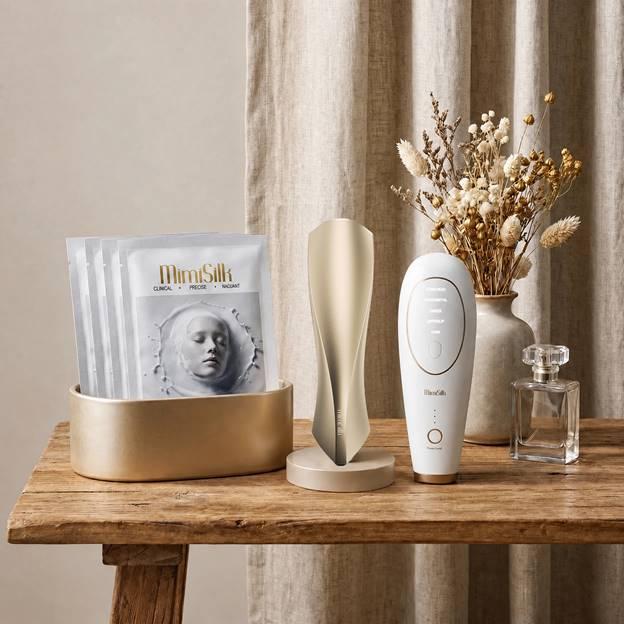
How this technology fits into daily life matters just as much as the science. Traditional at-home RF devices rely on conductive gels, which can be messy, cumbersome, and costly. That’s where smart engineering makes a difference: MimiSilk’s at-home RF device, named Vera, uses gel-free technology that delivers a 6.25 MHz frequency effectively without leaving any sticky residue.
The Fractional Laser Revolution, at Home
While radiofrequency technology focuses on skin tightening, non-ablative lasers focus on improving skin texture and tone.
It’s worth defining the terms first. Ablative lasers remove the skin’s uppermost layer and are highly effective but require significant downtime. Non-ablative lasers don’t affect the surface at all. Instead, they deliver pinpoint columns of heat energy into the dermis beneath the skin.
These micro-columns of heat encourage cell turnover and collagen regeneration from the inside out, resulting in a noticeably more even skin appearance.
Bringing this technology into the home once seemed impossible due to safety concerns. But thanks to advanced sensors and precise wavelength calibration, it’s now both safe and easy to use. Wavelength-specific devices, like those operating in the 1450nm range, are especially effective at targeting water in the dermis, generating heat without damaging the outer layer.
One example from this category is MimiSilk’s Iris, which uses an optimal wavelength of 1450nm to help stimulate cellular turnover and collagen remodeling from home.
Building Your Device-Based Routine
The biggest mistake skincare enthusiasts make when purchasing these devices is expecting instant results without any effort. Patience, regular use, and a proper strategy are essential to avoid overworking your skin.
1. Start with clean skin: Always use energy-based devices on clean, completely dry skin (unless the device instructs otherwise). Skin should be free of makeup, sunscreen, and excess sebum for the energy to work effectively.
2. Moderate your actives: Pause strong active ingredients like prescription-strength retinoids or chemical peels for one to two weeks before starting RF or laser treatments, since combining them can increase sensitivity.
3. Prioritize nourishment after device use: Both RF and laser devices generate thermal energy that promotes collagen production, but they also increase transepidermal water loss. That means it’s important to hydrate skin right after use. You can consider ceramides, peptides, hyaluronic acid, or other nourishing creams.
4. Follow the plan: At-home devices work on a cumulative basis. Using one once a month won’t produce results. No matter the device, consistent use is key.
A Beauty Editor’s Reality Check
As we witnessed the implementation of these new technologies, managing expectations becomes a priority. Will a home laser treatment erase deep expression lines overnight? No. Can an at-home RF treatment replace a surgical facelift? Never.
Skincare is a marathon, not a sprint, and lasting results take consistency. These devices are ideal for maintenance too. They could be the ideal bridge between professional procedures and a daily skincare regimen.
Think of at-home devices as part of a broader self-care lifestyle, alongside sun protection, hydration, and adequate sleep, which are the foundations for healthy skin. Modern skincare isn’t just about what products apply to your skin, instead, it’s about nurturing it from the inside out.