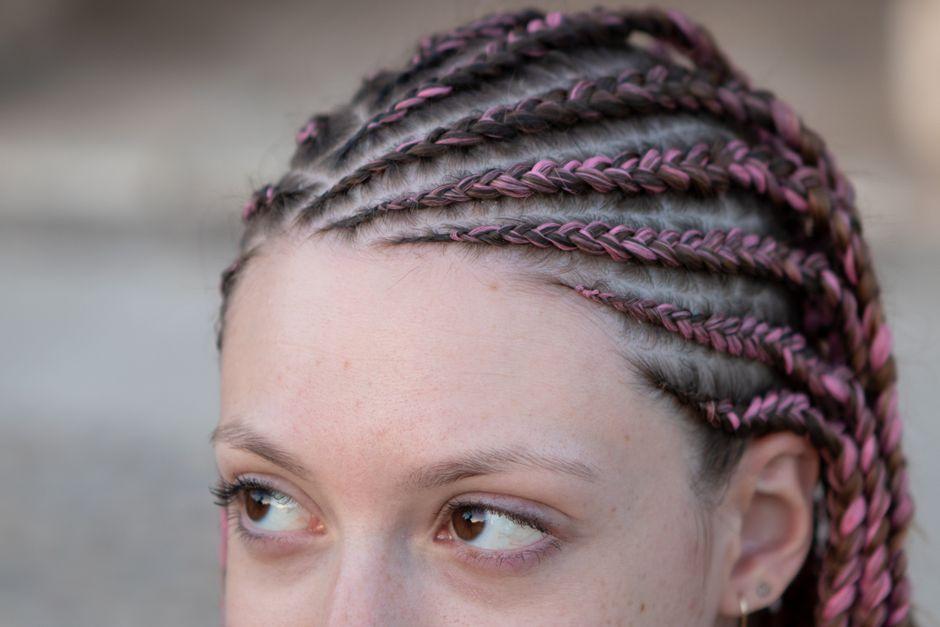
Everything You Need to Know About Fulani Braids
Everything You Need to Know About Fulani Braids
What Are Fulani Braids?
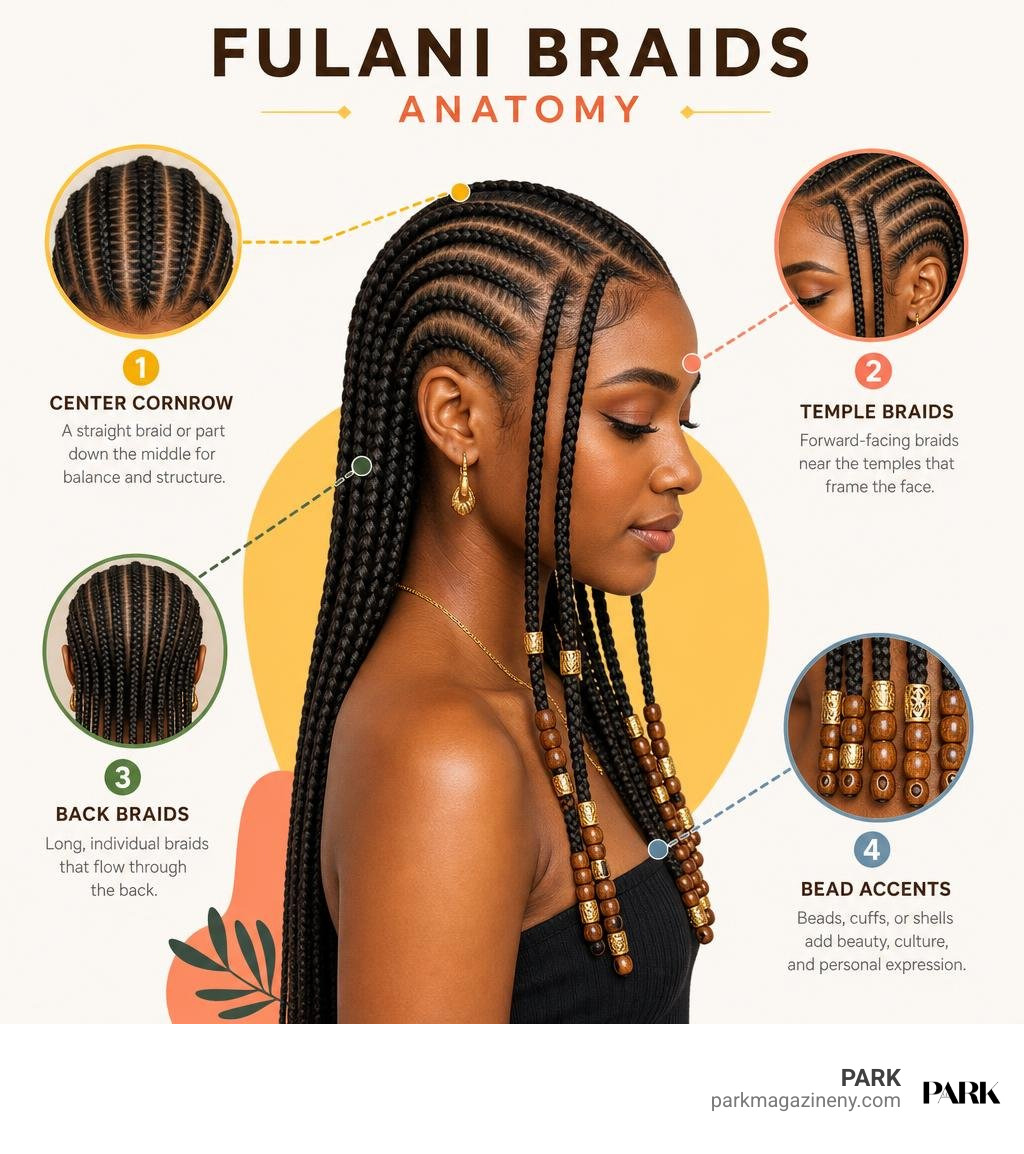
Fulani braids are a West African braided style that combines close-to-the-scalp cornrows with loose individual braids, often finished with beads, cuffs, or cowrie shells. The classic look includes a center braid or part, forward-facing braids near the temples, and longer braids through the back. It is both a striking style and a low-manipulation option when installed gently and maintained well.
The name honors the Fulani, or Fula, people of West Africa and the Sahel. For generations, these detailed patterns and adornments have expressed heritage, identity, beauty, and social standing. Today, the style has evolved into countless options, from classic beaded braids to boho curls, geometric parts, ponytails, and sleek modern looks.
Fulani braids can protect natural hair from daily styling, but only if the braids are not painful or too heavy on the edges. Most styles wear well for about 4 to 6 weeks with regular scalp care and satin protection at night.
I am W.A. Muller, and this guide covers how to choose, wear, and care for Fulani braids with respect for their cultural roots.
Fulani braids word list:
Cultural Origins and Structural Anatomy of Fulani Braids
To appreciate this look, one must first recognize that it is far more than an aesthetic trend. The style represents living history. Originating with the nomadic Fula (Fulani) ethnic group distributed throughout West Africa and the Sahel region, braiding has long functioned as a visual language. Historically, specific plaiting patterns and embellishments communicated an individual’s family lineage, marital status, community wealth, and personal identity.
In pastoral nomadic traditions across countries such as Senegal, Guinea, Mali, and Nigeria, hair styling was a communal ritual passed down through generations. Adornments such as cowrie shells, metallic coins, and polished beads carried direct symbolic value, frequently signifying prosperity and protection. When public figures like Cicely Tyson in the 1960s and Alicia Keys in the early 2000s introduced these patterns to mainstream global stages, they brought ancestral African craftsmanship into contemporary view.
History and Heritage of the Fula People
The Fula people represent one of the largest historically nomadic pastoral communities in the world. Their migration paths shaped vibrant cultural exchanges across more than a dozen African nations. Because hair was considered the highest point of the body and closest to the divine, the styling of hair was approached with artistic reverence.
Historians also note that across the African diaspora during the transatlantic slave trade, intricate cornrow maps occasionally embedded practical knowledge, acting as secret navigational guides to freedom. Carrying this legacy into August 2026, modern wearers celebrate a heritage of endurance, dignity, and artistic brilliance every time they sit in the braider’s chair.
Defining Anatomy: Center Cornrow, Side Braids, and Accents
What makes the classic Fulani layout instantly identifiable? The architecture relies on three primary elements:
- The Signature Central Cornrow: A clean braid plaited from the hairline straight back toward the crown or nape, creating an anchored axis of symmetry.
- Forward-Facing Temple Plaits: Cornrows on the side of the head that intentionally braid forward toward the face, leaving hanging side plaits near the cheekbones or jawline.
- Cascading Back Section: Individual box braids, knotless plaits, or twists covering the back half of the head to ensure natural movement.
- Statement Embellishments: The integration of elevated accessories such as cowrie shells, metallic rings, and wooden beads, which add deliberate auditory charm and visual texture.

Comparing Fulani Braids to Tribal Styles and Cornrows
It is common to hear the terms “tribal braids,” “cornrows,” and “Fulani braids” used interchangeably, but there are distinct structural differences:
| Feature | Fulani Braids | Generic Tribal Braids | Traditional Cornrows |
|---|---|---|---|
| Defining Pattern | Center braid, forward-facing temple cornrows, back individuals | Varies widely (cross-overs, geometric patterns, Ghana parts) | Parallel or curved plaits braided flat against the scalp |
| Hair Layout | Hybrid (cornrows in front, loose plaits in back) | Full head cornrows or hybrid configurations | Scalp-braided entirely, ends tied or free |
| Cultural Heritage | Specific to the Fula/Fulani people of West Africa | Broad umbrella term for regional African tribal styles | Ancient pan-African styling technique |
| Signature Accessories | Cowrie shells, beads, filigree cuffs, hair thread | Beads, wooden rings, metallic strings | Optional minimal cuffs or bead accents |
As documented in Fulani Tribal Braids: The Complete Style Guide – Mane mention, “tribal braids” functions as an overarching classification for numerous cultural techniques, whereas the Fulani pattern is a specific, historically defined subcategory.
Popular Variations, Sizing, and Length Options

Modern styling has expanded the traditional blueprint into creative variations that accommodate different lifestyles, face shapes, and styling preferences. The balance of scalp cornrows and loose hanging hair offers endless adaptability.
Modern Variations: Boho, Curls, and Quick Weave Fulani Braids
If you want to personalize your look, stylists have developed several distinct approaches:
- Boho (Goddess) Fulani: Features pieces of loose human or synthetic wavy hair left out along the length of each braid, softening the silhouette and matching flawlessly with sophisticated dress styling.
- Flip-Over Fulani: Constructed without a rigid center part, allowing you to flip the top section from side to side for maximum root volume.
- Fulani with Quick Weave: A time-saving alternative detailed in Fulani Braids With Quick Weave: Easy Install, Styles & Care – boho braids, where the front features traditional cornrows while the back is installed using bonded wefts on a protective cap.
- Fulani Ponytail or High Bun: Cornrows gather seamlessly into a high crown bundle, keeping the hair lifted for formal events or hot summer days.
- Geometric and Heart-Shaped Parts: Contemporary variations where the side cornrows are plaited into curved waves, zig-zags, or interlocking heart motifs.
For an extensive collection of modern creative styles, see Fulani Braids Hairstyles: 15 Stunning Looks + Care Tips – boho braids and Fulani Braid Hairstyles: The Ultimate Guide to Styles, Sizes & Lengths – Savannah Herald.
Choosing the Right Braid Sizing
Your chosen braid thickness dictates installation duration, daily weight on the scalp, and style longevity:
- Small (Micro/Fine): Highly detailed, crisp, and long-lasting (up to 6–8 weeks), but requires 6 to 8 hours of installation time and places more tension on delicate perimeters.
- Medium (The Classic Choice): Considered the ideal balance for most hair types. Medium braids offer clear parting definition, moderate installation time (4 to 6 hours), and balanced weight distribution.
- Large & Chunky: Bold, graphic, and installed quickly in 2 to 4 hours. However, larger sections hold their neat appearance for a shorter duration (around 3 to 4 weeks).
Length Considerations from Bob to Waist-Length
Choosing your braid length comes down to personal aesthetic and comfort:
- Shoulder-Length / Bob: Lightweight, playful, and great for active individuals or sensitive scalps.
- Mid-Back Length: The most common versatile choice, sitting comfortably without pulling down the neck.
- Waist-Length & Extra Long: Dramatic and striking, though the additional weight requires careful posture awareness and an extra-long bonnet or double-scarf wrapping routine at bedtime.
Salon Preparation, Chair Time, and Pricing Benchmarks

Preparation is key to getting the best result from your appointment while keeping your natural hair strong. Arrive at the salon with clean, deeply conditioned, detangled, and gently blown-out hair free of heavy butters or silicones.
Extensions, Synthetic Hair, and Adornment Selection
For a neat, tension-free result, select the correct extension material:
- Pre-Stretched Kanekalon Hair: The industry standard for cornrows and individual plaits. Feathered ends ensure natural tapering without blunt, heavy bottoms.
- Bulk Human Braiding Hair: Highly recommended for boho styles. Unlike synthetic curls that tangle easily after two weeks, human hair retains softness with light leave-in hydration.
- Beads and Jewelry: Acrylic beads are lightweight and place minimal tension on hair follicles; heavy wooden beads or metal charms look stunning but should be placed sparingly near fragile edges.
Time in the Chair and Installation Costs
How much time and budget should you set aside?
- Small Fulani Braids: 6 to 8 hours | $250 – $375+
- Medium Fulani Braids: 4 to 6 hours | $180 – $300
- Large / Chunky Fulani Braids: 2 to 4 hours | $120 – $200
Pricing varies depending on salon location, stylist expertise, and add-ons like extra length, custom parting, or intricate beadwork. Researching local service providers via Braids & Locs Near Me in New York City | Book Now! – Booksy or scheduling through platforms like Schedule Appointment with Retro Braids NYC provides realistic regional rate benchmarks. As analyzed by Cost of Fulani Braids: NYC to LA How Much Is Too Much? – Unruly, high-demand metropolitan braiders typically range from $200 to $375 for standard medium-to-small installations, reflecting a complete, high-touch investment in professional beauty.
Scalp Care, Maintenance, and Protective Health
A protective style is only truly protective if you look after the scalp underneath. Because cornrows expose clean parts to the elements, consistent hydration is essential.
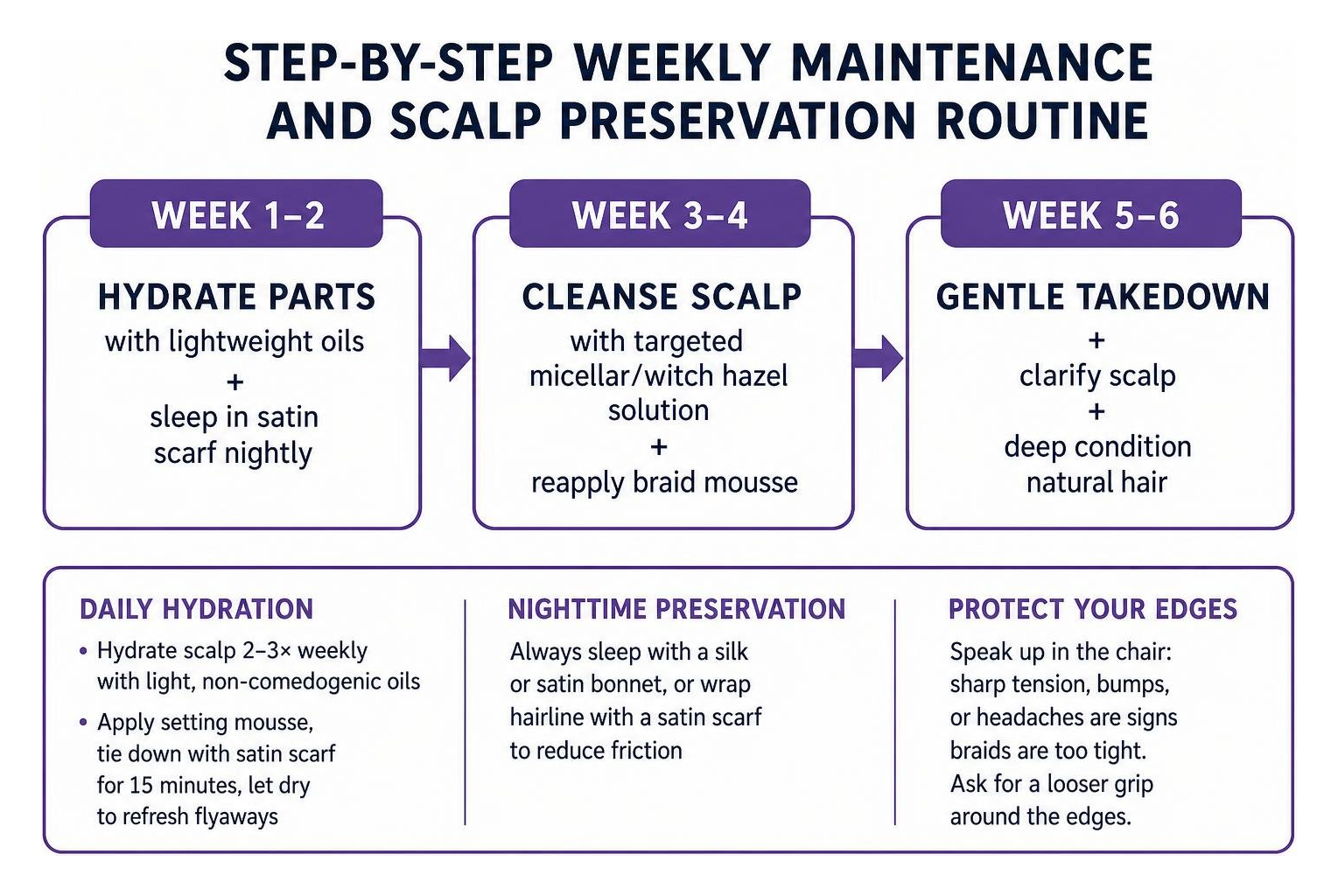
Daily Hydration and Nighttime Preservation
To maintain clean lines and prevent irritation:
- Hydrate the Scalp: Apply light, non-comedogenic oils (such as jojoba, almond, or diluted tea tree oil) directly along part lines two to three times weekly. If you experience dry, irritated skin along exposed parts, integrate specialized hydrating serums into your regimen.
- Tame Frizz: Apply a setting mousse across your cornrows, tie down with a silk or satin scarf for 15 minutes, and let dry to refresh flyaways.
- Nighttime Protection: Always sleep with a silk or satin bonnet, or wrap the hairline securely with a satin scarf to eliminate pillowcase friction.
Preventing Traction Alopecia and Edge Breakage
Traction alopecia occurs when chronic physical pulling damages hair follicles, leading to thinning along delicate perimeters. To protect your hairline:
- Speak Up in the Chair: Mild tension is normal, but sharp throbbing, bumps, or headaches are clear signs the braids are too tight. Request a looser grip around the edges.
- Choose Knotless Methods: Request knotless feeds for loose individual braids to distribute weight gradually along the hair strand.
- Respect Wear Limits: Never leave braids installed longer than 6 to 8 weeks. Keeping styles in too long leads to lint buildup, matting, and root breakage.
- Take Rest Breaks: Allow your natural hair a 2 to 3 week rest between installs. Wash thoroughly with a clarifying shampoo and treat with a protein-moisture deep conditioning mask before your next braided style.
Frequently Asked Questions About Tribal Hair Care
How long do Fulani braids typically last?
Fulani braids generally last between 4 to 6 weeks. While small braids can physically hold for up to 8 weeks, removing them around the 4 to 6-week mark is best for scalp health and natural edge retention. Styles featuring loose boho curls typically look best for 2 to 4 weeks.
Can Fulani braids cause hair damage or traction alopecia?
When installed with balanced, comfortable tension and maintained properly, Fulani braids do not damage hair; they help length retention by reducing daily manipulation. However, excessive pulling on temple cornrows or leaving heavy extensions in too long can lead to edge damage. Always ensure your stylist prioritizes scalp comfort over tight styling.
How should you wash your scalp while wearing braids?
Rather than drenching your entire head under a heavy shower stream (which introduces frizz and weighs down braids), use a targeted applicator bottle with diluted sulfate-free shampoo. Gently massage along the exposed parts with the pads of your fingers, rinse carefully with a damp cloth or low-pressure water, and dry completely with a hooded dryer or blow dryer on a cool setting to prevent trapped moisture and mildew.
Conclusion
Fulani braids are a stunning fusion of centuries-old West African artistry and contemporary personal expression. By understanding their rich cultural background, selecting the right size and length for your lifestyle, and committing to gentle scalp care, you can enjoy a versatile, protective look that turns heads.
For more inspiration on pairing statement protective hairstyles with the latest in seasonal luxury fashion, explore our curated guides on haute couture and fashion trends.