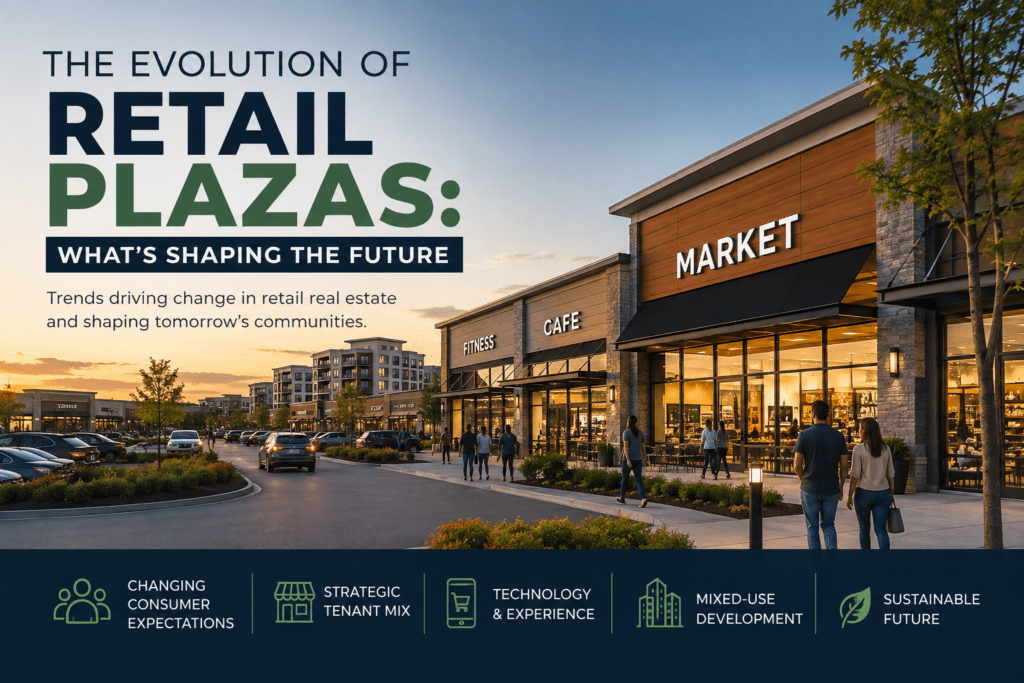
The Evolution of Retail Plazas: What’s Shaping the Future
The concept of retail plaza has undergone many changes during the last few years. It used to be simple stores lined up with just one big store in the middle. Today, retail plazas are evolving into more dynamic commercial properties shaped by changing customer behaviour, technology, and the growing demand for convenience. For businesses searching for retail space for lease in Mississauga, factors such as accessibility, tenant mix, visibility, and proximity to essential services can play an important role in choosing the right location.
The purpose of this article is to trace the history of retail plazas through its design, tenants, convenience, technology, and mixed use, and future trends. Everyone – owners, tenants, and customers – is a factor behind this change.
From Traditional Shopping Centres to Modern Retail Plazas
Old-style retail plazas weren’t complicated. One large anchor tenant, a handful of smaller stores around it, and a parking lot big enough for the busiest day of the year. Most of the foot traffic came from that anchor, so there wasn’t much reason to plan beyond it. Leasing followed the same pattern, fill the anchor first, then fit smaller tenants around whatever space was left.
That’s harder to lean on now. Accessibility and visibility from the roadway, and how the actual place feels are factors that matter a great deal to people. The tenants themselves have become pickier; they would rather position themselves next to establishments attracting a similar type of customer base instead of just any establishment. Well-maintained plazas through efficient planning, good signage, and proper renting arrangements will usually fare well in this competitive environment.
Changing Consumer Expectations Are Reshaping Retail Spaces
Shoppers just expect more now. Convenience and accessibility sit near the top of what decides where people go, sometimes ahead of price or brand loyalty. Essential services and everyday retail haven’t lost their importance either, and that’s still what most plazas are built around.
For owners and investors, understanding these changing preferences is also an important part of making a successful commercial real estate investment, as consumer demand can directly influence a property’s long-term performance and value.
Convenience, Experience and Accessibility
But people also want more variety in one stop, dining, services, specialty shops, not just the basics. Online and mobile shopping get a lot of credit for changing physical retail, though it’s not really a replacement so much as a shift in what stores are for.
A lot of retailers now lean on their physical space to support online orders, pickup, returns, that kind of thing, so the two aren’t really competing anymore. Plazas have had to rethink layout and tenant mix with that in mind.
The Importance of Tenant Mix
Tenant mix might be the single biggest factor in how well a plaza performs. It’s not just about filling units anymore, owners think about which businesses sit next to which and how those choices affect the overall draw of the property.
A café, a drug store, and a gym are some examples; when located near each other, there is a possibility that customers visit more than one business during a single shopping trip.
The reason is because business owners study the environment very carefully before entering into a lease agreement. The questions that come to mind include who is living nearby, and what is not offered in the area that requires people to travel.
Technology and the Modern Retail Experience
Technology is involved in almost every aspect of the day-to-day operations of a retail plaza. Digital signs, contactless payments, online ordering, and deliveries seem no longer novel but have redefined these places from the inside out. Retailers get a clearer read on who’s shopping and when.
Property managers get something out of it too, faster maintenance requests, easier communication with tenants, fewer manual processes that used to eat up a lot of time. This doesn’t mean physical retail is losing out to e-commerce. If anything, it’s holding up better because the two now work together instead of against each other.
Retail Plazas and the Rise of Mixed-Use Development
Retail, housing, offices, and community spaces used to be planned as separate things. That’s shifting. More retail plazas now sit inside larger mixed-use developments that combine several of these at once.
Put retail next to housing or office space and you get a built-in customer base that doesn’t rely only on drive-by traffic. Residents and employees get everyday services close by, and retailers get steadier visits throughout the day instead of relying on people driving in from somewhere else.
It’s changing what a “retail destination” even means, less a place you go out of your way for, more something already part of where people live and work. Location and demographics still matter a lot here, maybe even more than in a standalone plaza.
What the Future Holds for Retail Plazas
A few things seem likely to keep shaping retail plazas. Convenience isn’t going anywhere as a priority. Flexibility matters more too, spaces that can adjust to changing tenant needs tend to hold up better than ones locked into a single use.
Expect physical and digital retail to keep blending together. Sustainability and energy efficiency will probably factor into new projects more than they used to. And there’s less interest in one standard plaza format across the board, what works in one neighborhood might not work three miles away, and owners are starting to plan with that in mind.
Shaping the Future of Retail Real Estate
The modern retail plaza is evolving beyond a simple collection of storefronts, with greater emphasis on convenience, accessibility, and community needs. OL Plazas focuses on retail properties supported by strategic tenant mixes, strong trade areas, convenient access, and essential services that help drive consistent customer traffic.
Need-based tenants such as grocers, pharmacies, medical clinics, and banks can strengthen a plaza’s role within the surrounding community. At the same time, active leasing, thoughtful tenant selection, and targeted property improvements can help retail assets adapt to changing market demands.
Frequently Asked Questions
1. What is a modern retail plaza?
A modern retail plaza is a commercial property that combines everyday services, dining, and retail in one location, usually planned around the needs of the surrounding community rather than offered as a simple row of separate stores.
2. How have retail plazas changed over the years?
They have moved away from a layout built mainly around parking and a single anchor tenant, toward designs that focus more on accessibility, tenant mix, and the overall experience of visiting the property.
3. Why is tenant mix important in a retail plaza?
A well-planned tenant mix brings together businesses that appeal to different types of customers, which can lead to more repeat visits and better long-term performance for the property.
4. How is technology changing retail real estate?
Technology affects both retailers and property managers, from digital signage and online ordering to tools that support communication and maintenance. It has also strengthened the link between physical and online retail rather than replacing one with the other.
5. What is the future of retail plazas?
Retail plazas are likely to see more mixed-use development, more flexible layouts, and closer attention to local demographics, along with continued integration of physical and digital retail.