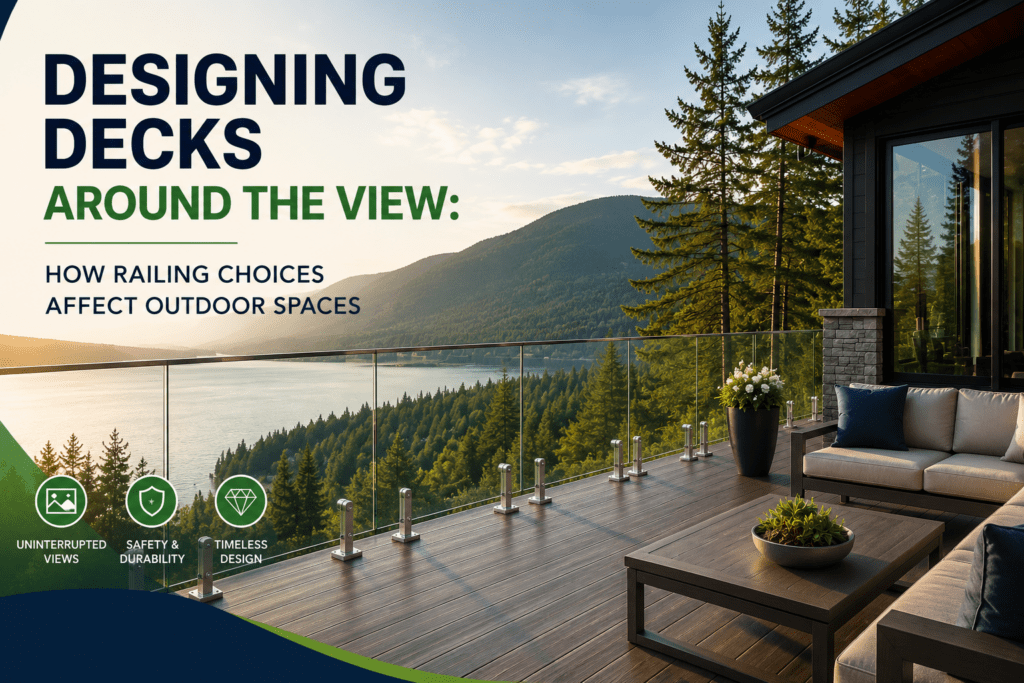
Designing Decks Around the View: How Railing Choices Affect Outdoor Spaces
Every deck starts with the basics, such as decking material, furniture placement, and perhaps even some form of shading structures. As for railing installation, it is often the last one to consider, and it is usually installed with no special thought put into it and only as a way to check a code box. However, this is a pity because the railing installation is placed at eye level, and it is an element that one’s gaze constantly meets when going outside. Also, the railing plays a key role in determining whether a space feels open and airy or enclosed.
Consider a deck with a view to the garden, a forest, or a lake. In this case, the railing installed can allow seeing the view from there without any interruption, or, alternatively, it can cut it into little parts. The old-fashioned kind of railing, consisting of a set of vertical balusters and thick rails, does the latter quite well. Glass railings, on the other hand, offer the same functionality as any other railing but without obstructing one’s view of what is going on outside.
This is not all, however, because the elements supporting panels, such as spigots, connectors, posts, etc., are also important in determining how the railing looks and how well it fits into the overall deck design.This article covers how railing choices affect deck views and outdoor spaces, including glass railing panels, hardware selection, design considerations, installation factors, and maintenance.
How Railing Choices Affect the View From a Deck
Height, material, spacing, and even the glass railing hardware all shape what you end up seeing once you’re actually standing on the deck. A solid wall, or balusters packed too close together, can break up a view that would otherwise read as one continuous scene. That’s really the argument for thinking about railing early, back when the deck is still on paper, instead of bolting a system onto finished framing.
There’s also the seated-versus-standing question, which people forget about more often than you’d think. A railing might look totally fine from a standing height and then suddenly feel a lot more present once you sit down and your eyeline drops a couple feet.
Think Beyond the Railing Line
Walk through what’s actually worth protecting: old trees, a garden you’ve put years into, a lake in the distance, or just some breathing room between your yard and the neighbor’s fence. Once that list is clear, it’s a lot easier to prioritize which sightlines the railing needs to respect. This is really the whole point behind how glass railing panels improve deck views: protecting the parts of the outlook that matter most.
Why Glass Railing Panels Work Well for View-Focused Decks
The transparency is the obvious part. Glass railing panels keep a visual thread running between the deck and everything around it, so your eye moves past the railing instead of stopping there. It tends to suit contemporary and transitional homes especially well, though with the right frame and hardware finish, it can work on more traditional exteriors too.
It also gets along with just about any decking surface: wood, composite, stone. Unlike a heavily patterned metal or wood railing, glass doesn’t fight with what’s underfoot.
Creating an Open Visual Connection
Because you can see straight through the panels, the railing simply doesn’t dominate the space the way a run of repeated balusters does that fence-like rhythm that pulls the eye along instead of letting it rest.
Combining Function With Design
Worth saying plainly: a railing still has a job to do beyond looking good. It has to contain the deck, meet safety codes, and survive years of weather. Picking glass for the view is fine, but it shouldn’t mean skipping a properly engineered system built for the deck’s actual height and structure.
Choosing the Right Glass Railing Hardware for the Design
This is where most of the real decisions happen. The glass gets the attention, but it’s the hardware that determines how the system actually gets mounted and how clean the finished result looks.
A few common pieces show up again and again:
- Spigots – Glass railing spigot anchor each glass panel to the deck at its base
- Glass-to-glass connectors – Connectors join two panels where there’s no post between them
- Glass-to-wall connectors – These are used where a railing run ends against a wall or column
- Posts and mounting brackets -It is used for post-and-panel setups rather than spigot-only designs
Finish matters here too. Stainless steel tends to pair naturally with the minimalist feel glass railings go for, and it holds up reasonably well outdoors when it’s cared for. But beyond looks, glass railing hardware really needs to be chosen around the railing’s configuration, what it’s mounting to, and the specific structural requirements of the project.
A typical stainless-steel lineup might include square and round spigots, adjustable versions, side-wall-mounted spigots, and glass-to-glass connectors that give a rough sense of what a standard install usually draws from.
Railing Design Considerations for Different Glass Deck Railing Views
Not every view calls for the same playbook. Here’s roughly how priorities shift depending on what’s on the other side of the railing; a handful of deck railing ideas worth weighing before locking in a layout.
Waterfront and Lake Views
Long sightlines are everything here. Thick posts spaced too close, or a solid kick plate at the bottom, will eat into exactly what makes a waterfront deck worth having.
Garden and Backyard Views
If the landscaping is the star, think about how it reads through the railing across seasons, not just in high summer when everything’s full and green, but in the leaner months too. A see-through panel keeps the garden part of the picture year-round.
Elevated Decks
Height adds more angles to think about, since what you see shifts depending on where you’re standing relative to the edge. It’s worth actually walking the footprint or at least studying the plans closely and checking sightlines from more than one spot.
Urban and Neighborhood Settings
In tighter settings, the priority often flips from “maximize the view” to “balance openness with some privacy.” Layout, panel placement, and even the glass treatment itself can help manage what a neighbor sees without walling the deck off completely.
How to Coordinate Glass Railings With the Rest of the Deck Design
Railing shouldn’t get chosen in a vacuum. Decking boards, stairs, exterior doors, outdoor furniture all add up to one overall look, and hardware finish is one of the easiest details to accidentally clash with everything else.
Match the Railing to the Architecture
Contemporary homes generally lean toward minimal-profile hardware and frameless glass. Transitional homes often do well with a slightly more traditional post-and-rail frame around glass infill. Even a traditional home with a newer outdoor addition can pull off glass railing, usually by matching the hardware finish to other exterior metal on the property.
Consider the Full Outdoor Space
Furniture, lighting, planting beds, stair placement, privacy screening all interact with the railing one way or another. It’s worth stepping back and looking at the deck as a whole before locking the railing in as a standalone choice.
Practical Factors to Consider Before Installing Glass Deck Railings
Once the design direction feels settled, there’s a checklist of practical things that still need sorting before anything gets installed:
- Local building codes and required railing heights
- The deck’s structural capacity and where mounting points can actually go
- Glass specifications – thickness, tempering
- Whether the chosen glass and hardware are actually compatible
- Panel sizing and overall layout
- Drainage and water exposure right at the base of the railing
- How easily the system can be accessed for maintenance later
- Whether a professional installer is the better call for this particular project
Codes and structural requirements shift depending on where you live and the specifics of the deck itself, so it’s worth checking in with your local building authority or a qualified contractor rather than treating general advice as the final word.
Maintenance Considerations for Glass Deck Railings
Glass railings need a bit of upkeep to stay looking sharp. Being outdoors means water spots, dust, and general grime build up on the panels over time, so regular cleaning is what keeps that clear sightline you designed for in the first place.
The stainless-steel hardware has its own maintenance needs too, generally whatever the manufacturer recommends for outdoor metal. It’s worth thinking through how easy the glass and hardware will be to reach for cleaning, ideally during the design phase, not as an afterthought once it’s all installed.
A Better Approach to View-Focused Deck Design
Pulling everything together, a workable process looks something like this:
- Figure out the primary view you actually want to protect.
- Work out where sightlines matter most, standing and seated both.
- Pick a railing style that fits that priority.
- Choose glass and hardware that are compatible with each other and with the deck’s structure.
- Match the railing’s finish and profile to the rest of the home.
- Confirm structural and local requirements before anything gets installed.
Make the Railing Part of the View, Not a Barrier to It
A well-thought-out railing adds to an outdoor space instead of competing with it. Glass railing panels are one of the more reliable ways to keep a deck feeling open to whatever’s around its garden, lake, quiet backyard while still giving the space a properly defined edge. And the glass railing hardware holding it all together matters just as much as the glass, since it shapes both how the system looks and how long it actually lasts.
Suppliers like Everoll Industries Ltd. carry tempered glass railing panels along with stainless-steel hardware built for outdoor use decks, balconies, porches, and stairs. If you’re still in the planning stages and working through choosing glass railing hardware for outdoor decks, it’s worth a look through their glass railing panel and stainless-steel hardware categories as a starting point.
FAQs
1. Are glass railing panels a good choice for decks with scenic views?
Yes. Glass railing panels are transparent, so they preserve sightlines that a solid or heavily balustered railing would otherwise break up, while still giving the deck a clearly defined edge.
2. What type of hardware is used with glass deck railings?
It depends on the configuration, but the usual suspects are spigots, glass-to-glass connectors, glass-to-wall connectors, and posts or mounting brackets that anchor everything to the deck.
3. How do I choose glass railing hardware for my deck?
Start from the railing design and glass configuration you’ve already settled on, then factor in the mounting method, the outdoor environment, hardware finish, and whatever structural requirements the project has.
4. Are glass railings suitable for elevated decks?
They can be, as long as the system is designed and installed correctly for that height and structure. Elevated decks are also worth extra attention on sightlines, since the view changes more depending on where you stand.
5. How do you maintain glass deck railings?
Regular cleaning keeps the glass clear of spots and residue, and the stainless-steel hardware should get whatever care the manufacturer recommends so it holds up outdoors.
6. Can glass railings work with different deck materials?
Usually, yes, wood, composite, and most other decking surfaces pair fine with glass railing. The mounting system just needs to be right for that specific structure.