Essential House Cleaning Tips: A Complete Guide to Creating a Fresh, Organized, and Well-Maintained Living Space
Understanding the Importance of a Clean Home
A clean home creates a comfortable, organized, and welcoming environment for everyone who lives there. Dust, dirt, food particles, pet hair, stains, and clutter can gradually accumulate even when basic cleaning is performed regularly. Without a consistent routine, small cleaning tasks can eventually become more demanding and time-consuming. House cleaning is therefore an important part of maintaining the condition and appearance of a home. A good cleaning routine does not mean that every surface must be cleaned every day. Instead, it involves understanding which areas require daily attention, which tasks can be completed weekly, and which areas need occasional care. Kitchens, bathrooms, bedrooms, living rooms, floors, furniture, appliances, and frequently touched surfaces all require different approaches. By creating a realistic schedule and following practical cleaning methods, homeowners can keep their living environment fresh while making household maintenance easier and more manageable.
Creating a Practical Cleaning Schedule
A well-organized cleaning schedule can prevent household responsibilities from becoming overwhelming. Daily tasks may include washing dishes, wiping countertops, putting belongings away, and removing visible dirt from frequently used areas. Weekly responsibilities can include vacuuming, mopping, dusting furniture, cleaning bathrooms, changing bedding, and managing household waste. Monthly or seasonal tasks may involve cleaning windows, washing curtains, organizing cabinets, wiping baseboards, and reaching areas behind furniture. Dividing tasks according to frequency allows homeowners to maintain their homes without attempting to complete everything in one session. A written checklist can also help ensure that important tasks are not forgotten. Household members can share responsibilities according to their schedules and abilities, making the workload more manageable. The most effective schedule is one that is realistic and flexible enough to fit everyday life. Consistency is more important than creating a complicated routine that is difficult to maintain.
Organizing Before Cleaning
Organization and cleaning work well together because clutter can make surfaces, furniture, and floors difficult to access. Before beginning a cleaning session, household items such as clothing, books, toys, dishes, electronics, and decorations should be returned to their appropriate places. Clearing countertops and floors allows cleaning tools to reach more surfaces and reduces the time spent moving objects from one location to another. Storage baskets, drawers, cabinets, shelves, and containers can help keep belongings organized. Items that are broken, unused, or no longer needed can be sorted and handled appropriately, which can create additional space. An organized room is generally easier to maintain because fewer objects collect dust and fewer surfaces remain obstructed. Spending several minutes organizing before cleaning can therefore make the entire process more efficient. It also allows homeowners to notice areas that need repair, replacement, or additional attention.
Keeping the Kitchen Clean
The kitchen is one of the busiest areas in a home and often requires frequent attention because cooking, food preparation, grease, moisture, and spills can quickly create residue. Countertops should be wiped regularly, especially after preparing meals, while spills should be cleaned promptly to prevent stains or sticky buildup. Cabinet doors and handles can accumulate fingerprints, grease, and food residue and should be included in the regular routine. Appliances such as ovens, microwaves, refrigerators, dishwashers, and other frequently used equipment should be maintained according to their care instructions. Sinks and faucets may also develop residue and should receive appropriate attention. Floors can collect crumbs, food particles, and dirt throughout the day, making sweeping, vacuuming, and mopping important tasks. Keeping kitchen items organized can make surfaces easier to clean and reduce clutter. A consistent kitchen routine supports a more pleasant cooking environment and prevents minor cleaning problems from becoming larger ones.
Maintaining Bathrooms Properly
Bathrooms require regular attention because they are exposed to moisture, soap residue, water deposits, and frequent daily use. Sinks, faucets, mirrors, toilets, showers, bathtubs, floors, doors, shelves, and handles should all be included in a practical maintenance routine. Soap residue can accumulate around showers and sinks, while mineral deposits may appear on faucets and glass surfaces. These areas should be cleaned using products that are suitable for the specific materials. Proper ventilation is also important because excessive moisture can contribute to unpleasant odors and other maintenance concerns. Towels, bath mats, shower curtains, and other washable items should be cleaned according to their care instructions. Frequently touched surfaces deserve regular attention because they are used repeatedly throughout the day. A consistent bathroom routine helps prevent heavy buildup and makes occasional intensive cleaning easier. Maintaining this area regularly can also make the bathroom feel more comfortable and inviting.
Dusting Furniture and Household Surfaces
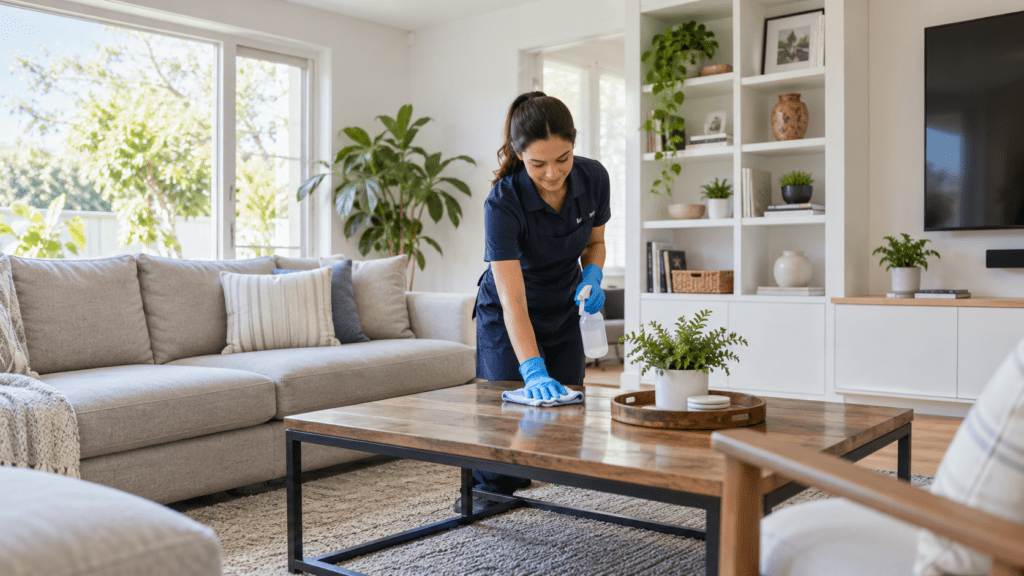
Dust can settle on furniture, shelves, tables, cabinets, picture frames, lamps, electronics, and decorative objects. Some surfaces may appear clean from a distance while still holding fine dust that becomes visible under natural or artificial light. Using a suitable microfiber cloth or appropriate dusting tool can help collect particles effectively without spreading them around the room. Cleaning higher surfaces before lower ones is a useful approach because dust that falls can be removed later. Electronics should always be handled carefully, and cleaning products should only be used when they are appropriate for the specific device or material. Furniture positioned against walls can create hidden areas where dust accumulates. Lightweight furniture may be moved carefully when necessary, although heavy items should not be moved without proper assistance. Regular dusting helps preserve the appearance of rooms and prevents dust from becoming heavily accumulated.
Taking Care of Floors
Floors receive constant use and can collect dust, dirt, hair, food particles, outdoor debris, and other materials. Different flooring types require different maintenance methods, so homeowners should follow appropriate care instructions for hardwood, tile, laminate, vinyl, carpet, and other surfaces. Carpets can benefit from regular vacuuming, especially in high-traffic areas, corners, stairs, and edges. Hard floors may require sweeping or vacuuming followed by mopping with a suitable product. Spills should be addressed quickly because some substances can stain or damage flooring when left untreated. Entry areas may require additional attention because outdoor dirt can easily be carried indoors. Rugs should also be maintained according to their material and construction. Regular floor care improves the appearance of rooms while helping preserve flooring materials. A consistent approach also reduces the amount of effort needed when more detailed cleaning is performed later.
Cleaning Bedrooms Thoroughly
Bedrooms should be maintained carefully because they are important areas for rest and relaxation. Bedding should be washed and changed according to household needs, while mattresses should be cared for according to manufacturer recommendations. Nightstands, dressers, shelves, lamps, headboards, and other surfaces can accumulate dust and should be included in routine cleaning. Floors should be vacuumed or cleaned, including areas underneath beds and furniture where dust can remain hidden. Closets may also require periodic organization because excessive clothing and clutter can make cleaning more difficult. Curtains and blinds can collect dust and may require vacuuming, washing, or other appropriate care depending on their material. Keeping bedrooms organized reduces visible clutter and makes everyday maintenance easier. A clean sleeping area can also make the room feel more comfortable and welcoming. Regular attention ensures that bedrooms do not become neglected while other areas receive more frequent cleaning.
Paying Attention to High-Touch Areas
Some household surfaces receive frequent contact but are often overlooked during normal cleaning. Door handles, light switches, cabinet handles, drawer pulls, remote controls, faucets, appliance controls, railings, and similar surfaces can accumulate fingerprints, oils, dirt, and residue. These areas should be included in a regular cleaning checklist because they are touched repeatedly throughout the day. Cleaning methods should be selected according to the surface material, while electronic devices should be handled carefully to prevent excessive moisture. Cleaning clothes should also be washed regularly so they do not transfer dirt between different surfaces. Paying attention to these smaller details can improve the overall quality of household maintenance. A home may appear clean while frequently touched surfaces remain neglected, so including them in the routine provides a more comprehensive approach. Consistent attention to these areas also makes regular cleaning easier over time.
Maintaining Furniture and Upholstery
Sofas, chairs, cushions, and other furniture can collect dust, crumbs, hair, and other particles, particularly around seams and underneath cushions. Upholstered furniture should be cleaned according to the manufacturer’s instructions to avoid damaging fabrics or finishes. Suitable vacuum attachments can help remove loose debris from upholstery, seams, corners, and difficult-to-reach spaces. Wooden furniture may require appropriate dusting and surface-care products, while glass and metal components should be cleaned according to their specific requirements. Furniture positioned close to walls can also create hidden areas where dust collects over time. Lightweight furniture can sometimes be moved carefully to provide access to these areas, but heavy furniture should not be moved without appropriate assistance. Regular furniture maintenance helps preserve its appearance and may extend the useful life of household items. It also contributes to a more comfortable living area, particularly when furniture receives frequent daily use.
Cleaning Windows and Window Areas
Windows can influence how bright and welcoming a room appears, but window frames, tracks, screens, and sills are often overlooked. Dust, insects, pollen, and other debris can accumulate in these areas over time. Glass should be cleaned using suitable products and tools to reduce streaks and protect the surface. Window frames should also receive appropriate attention according to their material. Excessive moisture should be avoided around wooden components and surfaces that may be sensitive to water. Curtains and blinds can also collect dust and may require periodic vacuuming, washing, or specialized care. Clean windows can make rooms appear brighter and more inviting by allowing more natural light to enter. Maintaining window tracks and surrounding areas also prevents dirt from becoming heavily accumulated. Including windows in a monthly or seasonal cleaning schedule ensures that these areas receive attention without requiring unnecessary daily work.
Maintaining Kitchen Appliances
Kitchen appliances can develop considerable residue because they are exposed to food, grease, steam, and frequent handling. Ovens may accumulate baked-on grease, microwaves can develop food splashes, and refrigerators may experience spills and food debris. Each appliance should be cleaned according to its manufacturer’s instructions because unsuitable products or excessive moisture can cause damage. Refrigerator shelves and drawers may need to be removed and cleaned separately, while appliance handles and control panels should receive regular attention. Areas underneath and behind appliances can also collect crumbs and dust. When these spaces can be accessed safely, they should be included in occasional cleaning tasks. Keeping appliances clean improves their appearance and can make the kitchen feel more organized. Regular appliance maintenance also provides an opportunity to notice leaks, damaged seals, unusual residue, or other concerns that may require repair.
Cleaning Cabinets and Storage Spaces
Cabinets, closets, drawers, shelves, and storage areas can become dusty and cluttered even when their contents hide the buildup from view. Periodically removing items from storage spaces allows homeowners to wipe shelves, vacuum corners, and reorganize belongings. Broken, expired, unused, or unnecessary items can be identified during this process and handled appropriately. Organizing storage areas makes frequently used belongings easier to find and reduces unnecessary clutter. Shelves should be completely dry before items are returned if moisture has been used during cleaning. Kitchen cabinets may require additional attention because cooking can create grease and residue, while bathroom cabinets can be exposed to moisture. Giving storage areas periodic attention prevents them from becoming permanently neglected. An organized storage system also makes future cleaning easier because surfaces are more accessible and belongings are easier to manage.
Cleaning Vents and Ceiling Fixtures
Vents, ceiling fans, light fixtures, and other elevated components can accumulate dust over time. These areas are easy to overlook because they are above eye level, but visible buildup can affect the appearance of a room. Suitable dusting tools or vacuum attachments can help clean accessible areas safely. Electrical fixtures should be handled carefully, and moisture should not be introduced into electrical components. When ladders or elevated surfaces are required, homeowners should follow appropriate safety precautions and avoid unnecessary risks. Difficult-to-reach fixtures may be better handled with suitable equipment or professional assistance. Including ceiling fans, vents, and light fixtures in an occasional maintenance schedule can help maintain a more complete level of cleanliness. These tasks do not necessarily need to be performed every week, but they should be included periodically so that dust does not accumulate excessively.
Choosing Cleaning Products Carefully
Selecting suitable cleaning products is important for protecting household surfaces and achieving effective results. Different materials can have different requirements, and a product that works well on one surface may damage another. Homeowners should read product labels carefully and follow instructions concerning application, dilution, ventilation, storage, and safe handling. Cleaning chemicals should never be mixed unless the manufacturer specifically confirms that the combination is safe. Reusable microfiber cloths, brushes, vacuum attachments, mops, and other appropriate tools can improve cleaning efficiency. Products should be stored securely and kept away from children and pets. Using excessive amounts of a product does not necessarily produce better results and may leave unwanted residue. A careful approach to product selection helps protect furniture, floors, countertops, appliances, and other household materials while making cleaning more effective.
Making Cleaning More Time-Efficient
Cleaning does not have to consume an entire day when tasks are planned properly. Homeowners can save time by keeping frequently used supplies together and following the same general process for each room. Working from top to bottom prevents dust from settling on surfaces that have already been cleaned. Completing similar tasks together, such as dusting several rooms before vacuuming floors, can reduce unnecessary movement. High-traffic areas should receive priority because they usually become dirty more quickly than less frequently used spaces. Larger projects can be divided across several days when necessary rather than attempting to complete everything during one session. A practical routine allows homeowners to maintain a clean environment without feeling that cleaning is an endless responsibility. Efficiency comes from consistency, organization, and suitable tools rather than simply trying to work faster. Developing a routine that fits naturally into everyday life is one of the best ways to maintain long-term results.
Benefits of Professional Cleaning Assistance
Some households prefer to manage all cleaning tasks independently, while others may benefit from professional assistance because of demanding schedules, larger properties, or extensive cleaning requirements. Professional cleaners can provide support with routine maintenance and more detailed tasks depending on the homeowner’s needs. This can be particularly useful when a property has accumulated significant dirt or when residents do not have enough time to complete every task themselves. Professional assistance may also be useful before or after special events, during household transitions, or when additional attention is required. Homeowners should communicate their priorities clearly so cleaners understand which areas require the greatest attention. Whether professional assistance is used regularly or occasionally, it can complement everyday household habits. The decision should depend on available time, budget, property size, cleaning requirements, and personal preferences.
Maintaining Cleanliness Between Cleaning Sessions
A clean home is easier to maintain when household members develop simple daily habits. Putting belongings away after use, wiping spills immediately, washing dishes, removing visible debris, and managing clutter can prevent small messes from becoming larger problems. Shoes can be removed near entrances to reduce the amount of outdoor dirt brought indoors. High-traffic areas can receive quick attention whenever visible dirt appears, while kitchens and bathrooms can be maintained through smaller recurring tasks. These habits reduce the amount of work required during larger cleaning sessions and help keep the home looking presentable throughout the week. House cleaning becomes much more manageable when intensive tasks are supported by small daily actions. Instead of allowing dirt and clutter to accumulate, homeowners can address problems as they appear. This approach saves time and makes the overall cleaning routine less stressful and easier to maintain.
Creating a Long-Term Maintenance Routine
A long-term maintenance routine should reflect the household’s lifestyle, property size, number of occupants, and level of daily activity. Daily tasks can focus on dishes, clutter, visible spills, and commonly used surfaces. Weekly tasks may include vacuuming, mopping, dusting, bathroom maintenance, bedding, and kitchen cleaning. Monthly or seasonal tasks can include windows, baseboards, cabinets, storage areas, vents, appliances, and other less frequently used spaces. The schedule should remain flexible because household circumstances can change. A home with children or pets may require additional attention in certain areas, while a smaller household may have fewer daily cleaning requirements. A written checklist can make it easier to track responsibilities and divide tasks among household members. The most effective routine is one that is realistic enough to follow consistently. Regular maintenance prevents cleaning responsibilities from becoming overwhelming and supports a more organized household environment.
Creating a Fresh and Comfortable Living Environment
A clean and organized home can make everyday life more pleasant and comfortable. Removing dust, managing clutter, maintaining floors, cleaning surfaces, and caring for frequently used areas can improve the overall appearance of a property. Cleaning also provides an opportunity to notice maintenance problems such as leaks, damaged surfaces, loose fixtures, stains, or deteriorating materials. Identifying these concerns early may allow homeowners to address them before they become more serious or costly. A home does not need to be perfectly spotless at every moment, but consistent attention to important areas can make household responsibilities much easier to manage. House cleaning should therefore be viewed as an ongoing part of home maintenance rather than an occasional task performed only when the property looks dirty. With a practical schedule and consistent habits, homeowners can create a space that feels cleaner, fresher, more organized, and more enjoyable throughout the year.
Conclusion
Maintaining a clean home requires planning, consistency, organization, and attention to both visible and overlooked areas. Kitchens, bathrooms, bedrooms, floors, furniture, windows, appliances, storage spaces, vents, and frequently touched surfaces all require appropriate care. A practical schedule can divide these responsibilities into manageable daily, weekly, monthly, and seasonal tasks. Organizing rooms before cleaning can improve efficiency, while choosing suitable products can help protect household surfaces. Simple daily habits can also prevent dirt and clutter from accumulating between more detailed cleaning sessions. Professional assistance may provide additional support for households with demanding schedules or extensive cleaning needs. Ultimately, successful house cleaning is not about achieving perfection every day but about developing a realistic routine that can be maintained over time. With consistent effort and good organization, homeowners can create a cleaner, fresher, more comfortable, and better-maintained living environment.