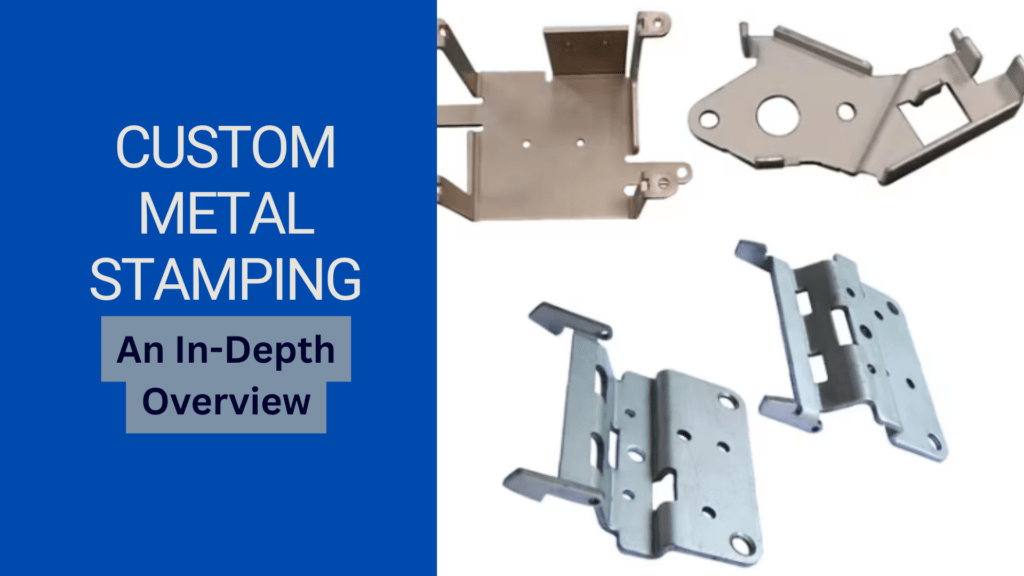
Custom Metal Stamping: An In-Depth Overview
When dealers and end users start looking for stamped parts, a big dilemma is whether to go for standard parts or custom stamped metal parts. This appears like a simple decision, but there are several aspects to consider, including cost, quality, versatility, and speed.
Customization in stamping is a recognized path to reliability and performance. Let’s unpack what this metal stamping strategy means, its benefits, limitations, and applications.
What is Custom Metal Stamping?
Custom metal stamping is the process of converting flat metal pieces into bespoke parts. It delivers unmatched design and material options, ensuring every stamped part meets specific requirements.
Crucial services in custom metal stamping, such as flanging, blanking, bending, coining, and embossing, are instrumental in delivering high-quality custom stamped metal parts.
The Benefits of Custom-Stamped Metal Parts
Getting parts from a metal stamping company presents the following benefits:
Product versatility: This metal stamping approach allows for the manufacture of complex items of different sizes. Even parts that appear too difficult to stamp can be used under custom part stamping services. This versatility makes custom parts popular in medical and other highly specialized industries.
High-Quality Parts: Custom stamping parts manufacturers are recognized for producing top-quality parts. Various industries trust these parts for the reliable performance they deliver.
Unmatched Accuracy: The precision level of metal stamping dies and machinery is another reason many users go for custom parts. Even the most complex stamped part designs are produced because the process is detailed and accurate.
Cost-Efficient: Metal stamping service significantly minimizes production cost through enhanced speed and reduced number of machines.
The Limitations of Custom-Stamped Metal Parts
Here are the main limitations of custom precision metal stamping services;
High Upfront Cost: Custom automotive metal stamping and the services for other industries demand a high upfront cost for materials, tooling, design expertise, and general engineering hours.
Over-Engineering: Working with a custom stamping parts manufacturer often presents the potential to add unnecessary specifications, a phenomenon called ‘over-engineering.’ Ideally, an engineer should balance between performance and complexity.
Techniques in Custom Metal Stamping
Mastering the techniques in metal stamping can be the key to ensuring the efficiency and quality of parts. Here are some common methods to expect from a reliable custom metal stamping company:
| Stamping Technique | Description |
| Bending | Displacing sheet metal angularly to produce precise shapes |
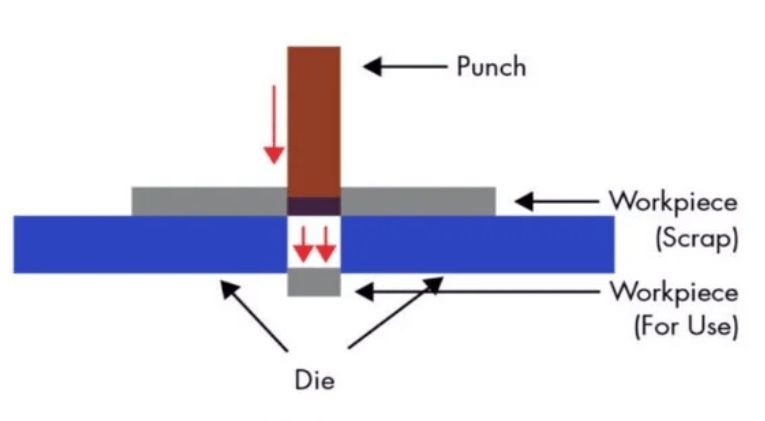
| Blanking | Cutting a metal strip to produce a workpiece |
| Coining | Pressure forces shapes on a workpiece, creating coin and other impressions |
| Cutting | Operations that rely on the shearing force on a workpiece |
| Drawing | A pad is pressurized to force sheet metal into a cavity to form deep shells |
| Embossing | Dies press against sheet metal to produce recessed or raised 3-D features |
| Forming | Shaping material without cutting – using compression and/or tension |
| Piercing | Forming holes in the sheet metal and discarding the slug |
| Punching | A punch press forces sheet metal into a shape |
| Trimming | Removes excess material from a metal sheet according to a set profile |
The Main Steps of Custom Metal Stamping
The metal stamping process entails designing the part using CAD (Computer-Aided Design) software, metal stamping prototyping, making custom metal stamping dies & tools, and the actual stamping step.
Part Design – The customer’s part specifications are converted into a comprehensive design blueprint with shape and dimensions.
Prototyping – A working model of the stamped part is produced and used for tests on durability, fit, and functionality.
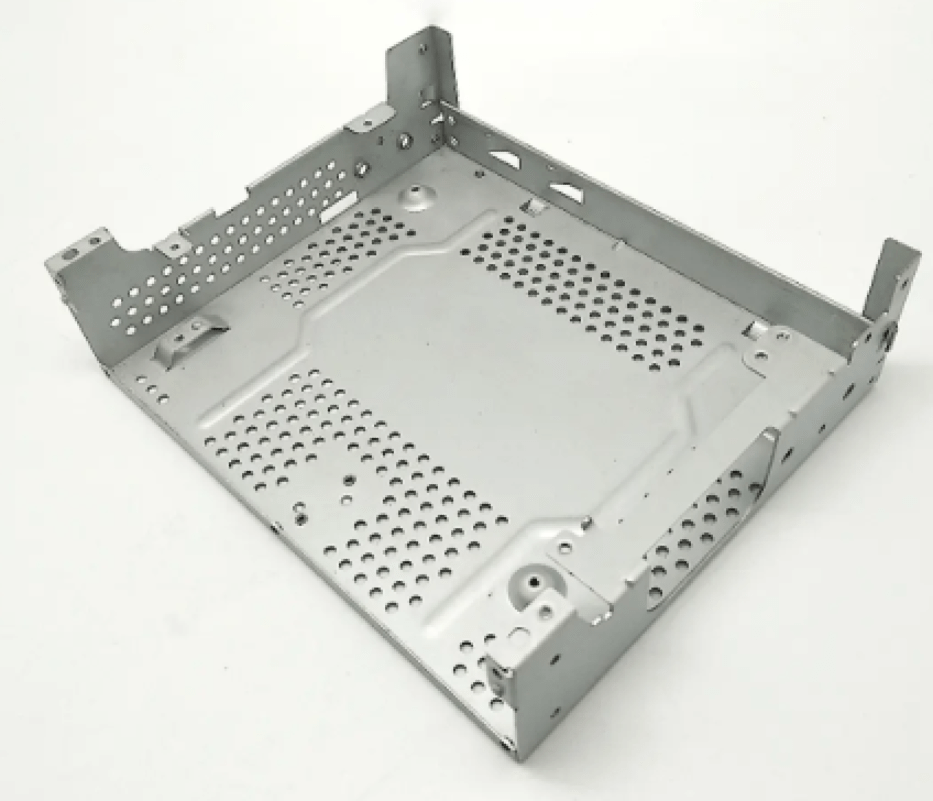
Metal Stamping Dies and Tools – The custom dies and tools for the stamping process are made.
Stamping – The stamping parts manufacturer applies various techniques such as blanking, progressive die stamping, and flanging, depending on the requirements.
Common Applications of Custom Part Stamping
Custom part stamping is found in many industries, including agriculture, automotive, defence and military, medical, telecommunication, and construction. the following:
Agricultural
The precision, strength, durability, and versatility of custom-stamped parts are valuable assets for this vast industry. A wide range of parts are found in equipment for storage, harvesting, and planting.
Automotive
From deep-drawn stamping to progressive stamping, custom automotive metal stamping offers a wide range of solutions to dealers, resellers, and manufacturers in the industry.
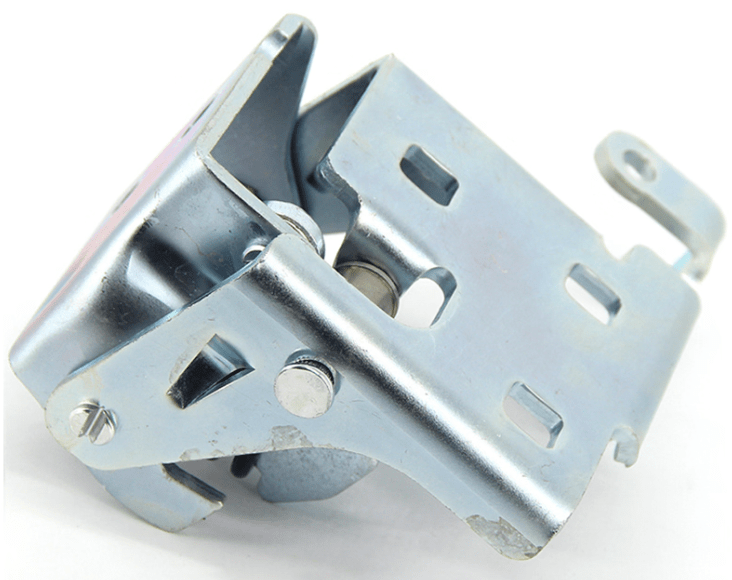
Different parts and assemblies for the automotive industry are produced – brackets, battery terminals, door latches, valve covers, catalytic converter housings, and others.
Defence & Military
Stamped parts for the defence & military industry must be precise, durable, and strong. The required attention to detail makes custom service an ideal choice.
Medical
Sheet metal stamping services for the medical industry provide high precision, custom size, and unmatched quality. With the increasing need for custom parts, only a custom sheet metal stamping service can effectively meet the needs of this industry.
Telecommunications
Under this service, custom metal stamping dies and machines are designed for aluminum, copper, galvanized steel, stainless steel, and other recommended materials for the industry. RF filters, battery contacts, and MEMS are popular stamped parts.
Construction Industry
Custom metal-stamped parts provide durability and structural integrity. Industry players use a wide variety of such parts, from reinforcement plates to brackets.
Materials for Custom Metal Stamping
The most common metals in custom stamping projects are;
- Aluminum – Lightweight and formable
- Copper – High electrical conductivity
- Carbon Steel – Strong and cost-effective
- Stainless Steel – Strong and corrosion-resistant
- Galvanized Steel – Excellent rust protection
- Titanium – Biocompatible, superior strength-to-weight ratio
Conclusion
Custom metal stamping plays a big role in various industrial applications. With the right design and manufacturing partner, you can consistently get quality, durable, and dependable parts for automotive, medical, telecommunications, and many other industries.
Request for the best sheet metal services services today.