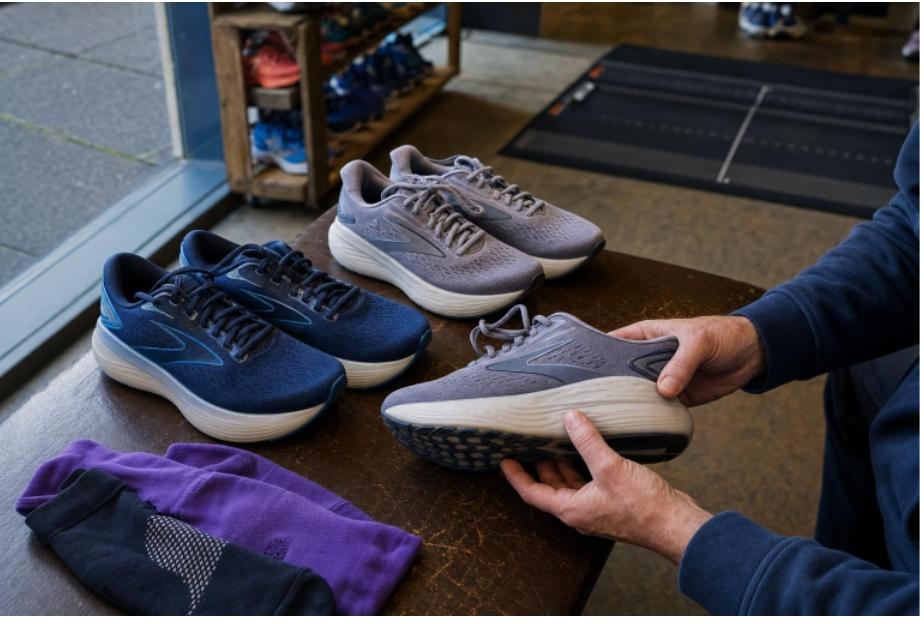
How to Choose the Right Brooks Glycerin Shoes for UK Runners
If you spend most of your miles on pavements and tarmac, a soft cushioned trainer can make daily running feel easier on your legs. The Brooks Glycerin range is a common choice for this kind of steady running, with two main options: a neutral shoe and a stability shoe.
The harder part is knowing which one suits you, and how to get the size and width right so your first run feels comfortable rather than fiddly. This guide keeps it practical. We will walk through what each Brooks Glycerin shoe does, who it fits, and the checks worth making before you buy.
What cushioned trainers actually do
A cushioned trainer puts more soft foam between your foot and the ground. That softens the feel of each landing, which can be helpful on hard surfaces such as tarmac, especially when you are building mileage or running at an easy pace.
Meet the Brooks Glycerin family
There are two headline Brooks Glycerin options to weigh up. Both are built around a soft daily-training feel, but one adds guided support for runners who want more control.
Glycerin 23 (neutral and cushioned)
The Brooks Glycerin 23 is the neutral, comfort-first option. Brooks lists it with an 8 mm midsole drop and a men’s weight of about 300.5 g. Its dual-cell DNA TUNED midsole is designed for soft landings and smoother toe-offs, with extra forefoot cushioning compared with the previous version.
Who it suits: neutral runners who want a soft shoe for easy miles, steady runs, and longer outings.
Glycerin GTS 23 (stability)
The Brooks Glycerin GTS 23 gives you a similar cushioned feel with added support. It uses Brooks GuideRails technology to help limit excess movement while keeping the ride comfortable. It is listed at an 8 mm drop with a men’s weight of around 311.8 g.
Who it suits: runners who have been told they overpronate, or runners who prefer a more guided feel when their legs get tired.
Which one should you pick?
Start with the support level, then think about feel. This quick check can help you narrow it down.
- If you have been told you need stability, or you notice your knees rolling inward as you tire, start with the Brooks Glycerin GTS 23.
- If you run neutral or are unsure, start with the Brooks Glycerin 23 and consider a shop gait analysis to confirm.
- If you want something slightly less plush with a classic daily-trainer feel, the Ghost 17 may also be worth trying.
If you are comparing value as well as comfort, these money-saving trainers tips can help you plan before you buy.
Get your UK size and width right
Fit matters more than any spec on the box. A shoe that is a little too small or too narrow can spoil an otherwise suitable trainer, especially as your feet swell during longer runs.
An easy fit check
Brooks suggests leaving roughly half an inch to an inch of space at the toe, which is about a thumb’s width. Try shoes on later in the day when your feet are slightly larger, check both feet, and wear the socks you actually run in.
Brooks widths at a glance
Brooks offers widths up to 4E for men and 2E for women. A wider fitting adjusts the volume of the upper and the footbed, so if standard trainers feel tight across the middle of your foot, a wide option is worth trying.
Glycerin, Ghost or Adrenaline?
- Glycerin 23: the softest choice here, best for runners who prioritise cushioning and comfort.
- Ghost 17: a balanced everyday ride that feels a little less plush than the Glycerin.
- Adrenaline GTS 25: a supportive option with GuideRails and a firmer, more guided feel than the Glycerin GTS.
Where to check UK colours and sizing
Once you have a model and size in mind, check what is available in your fitting. To compare current colourways and UK sizes in one place, browse the Brooks Glycerin collection UK and read the store’s returns and exchange policy before you commit. It lists exchanges within 14 days, with a shipping fee, and refunds within 14 days, with a 10% fee, so read the small print first.
It is also sensible to know the maker’s own policy. Brooks UK offers a Run Happy Promise, with a 90-day test run, free returns if the gear does not work out, and free standard shipping on orders over 100 pounds. If cost is still a factor, compare the total cost, delivery terms, and return fees before you check out.
Conclusion
Choosing your next pair does not need to be complicated. Decide on support first, confirm your size and width, then test the shoes on easy miles before using them for a long run. Comfort is personal, so trust how your feet feel over any number on a label.
FAQs
Is Glycerin okay for beginners?
Yes. Its soft, forgiving ride makes it a friendly choice for newer runners building regular mileage. Beginners often value comfort on easy runs, and the neutral Glycerin delivers that without a firm or race-focused feel.
What is the real difference between Glycerin and GTS?
They share a similar cushioned feel. The GTS version adds GuideRails to help keep excess movement in check for runners who want more guidance and support. If you run neutral, the standard Glycerin is usually the simpler starting point.
How do I pick my Brooks width?
Aim for about a thumb’s width of space at the toe and no pinching across the middle of the foot. If standard trainers feel snug, try a wide fitting. An in-store fitting or gait analysis is the surest way to confirm what suits you.
How long do cushioned trainers last before losing their bounce?
Foam softens gradually with use, so the springy feel fades over time rather than all at once. Pay attention to how the cushioning responds on easy runs, and consider replacing a pair once it starts to feel flat or less supportive underfoot.