Clogged Drain Cleaning Guide: Common Causes, Warning Signs and Professional Solutions
A clogged drain is one of the most common plumbing problems in residential and commercial properties. What begins as slow drainage can quickly develop into standing water, unpleasant odors, overflowing fixtures, or a completely blocked pipe. Although minor clogs can sometimes be addressed with simple household methods, recurring or severe blockages may indicate a deeper plumbing problem that requires professional attention. Understanding what causes drain clogs, how they can be addressed, and how future blockages can be prevented can help property owners protect their plumbing systems and avoid unnecessary damage.
Drainage systems are designed to carry wastewater away from sinks, showers, bathtubs, toilets, laundry appliances, and other fixtures. Over time, materials such as hair, grease, food particles, soap residue, mineral deposits, and foreign objects can accumulate inside pipes. When enough debris collects, the passage becomes restricted and water begins draining slowly. Eventually, the opening may become completely blocked.
Understanding How Drain Clogs Develop
Most drain clogs develop gradually rather than appearing without warning. A pipe may initially drain slightly slower than normal, but the problem can be easy to overlook when water still disappears from the fixture. As more debris accumulates, the flow becomes increasingly restricted.
Different drains tend to experience different types of blockages. Kitchen sinks are commonly affected by grease, food particles, and soap residue. Bathroom sinks and showers often collect hair, toothpaste, skin oils, and personal-care products. Laundry drains can accumulate lint and detergent residue, while floor drains may collect dirt and debris.
Some blockages develop within the fixture’s trap, while others occur farther down the drain line. This distinction matters because the appropriate solution depends on where the obstruction is located and what is causing it.
Common Causes of Clogged Drains
Hair is one of the most common causes of bathroom drain blockages. Hair can combine with soap residue and other materials to create dense masses that restrict water flow. Shower and bathtub drains are particularly vulnerable because hair naturally enters the drainage system during bathing.
Grease and cooking oils are another major cause of kitchen sink problems. Liquid grease may appear harmless when it is poured down a drain, but it can cool and solidify inside pipes. Over time, layers of grease can trap food particles and create increasingly severe restrictions.
Food scraps can also cause kitchen drainage problems, particularly when large particles enter the plumbing system. Even garbage disposals are not designed to handle every type of food waste, and certain materials can contribute to blockages.
Mineral deposits may accumulate inside pipes when water contains significant amounts of dissolved minerals. These deposits can gradually narrow the interior diameter of the pipe and reduce water flow.Foreign objects are another possible cause. Items such as small toys, jewelry, excessive paper products, or other objects can become lodged inside plumbing and create a physical obstruction.
Recognizing the Warning Signs
The earliest sign of a developing clog is often slow drainage. Water may take longer than usual to disappear from a sink, shower, or bathtub. This should not necessarily be ignored because early intervention may prevent a minor restriction from becoming a complete blockage.
Gurgling sounds can also indicate a drainage problem. Unusual bubbling or air movement may occur when water and air are struggling to move through a partially obstructed pipe.
Unpleasant odors are another warning sign. Organic debris trapped inside a drain can produce foul smells, particularly when food particles, grease, or other materials remain in the pipe for extended periods.If several fixtures begin draining slowly at the same time, the problem may be located farther along the main drainage system rather than inside an individual fixture. This situation may require professional assessment.
Why Prompt Drain Cleaning Matters
Ignoring a slow drain can allow the blockage to become larger and more difficult to remove. A partially restricted pipe provides additional surfaces where debris can collect, accelerating the buildup.
Severe blockages can cause wastewater to back up into sinks, bathtubs, showers, or floor drains. In some circumstances, overflow can damage flooring, cabinetry, drywall, and other building materials.Persistent moisture can also create unpleasant odors and contribute to other property concerns. Promptly addressing drainage problems can therefore help minimize both plumbing and secondary property damage.
Regular maintenance is often easier and less expensive than dealing with a complete blockage after the plumbing system has already stopped functioning properly.
Simple Methods for Minor Clogs
For a minor and localized blockage, a plunger may sometimes restore normal drainage. A plunger works by creating pressure and suction that can help dislodge material within the pipe.
The correct type of plunger depends on the fixture. A cup-style plunger may work well for sinks and tubs, while a flange-style design is generally more suitable for toilets. Creating an effective seal around the drain opening is important for generating useful pressure.
Before using a plunger, excess standing water may need to be removed or adjusted so that the tool can operate effectively. Repeated controlled plunging is generally preferable to excessive force.If plunging does not resolve the problem, repeatedly forcing the tool may not be productive. The obstruction may be located farther inside the plumbing system or may consist of material that cannot easily be dislodged with pressure alone.
Using a Drain Snake
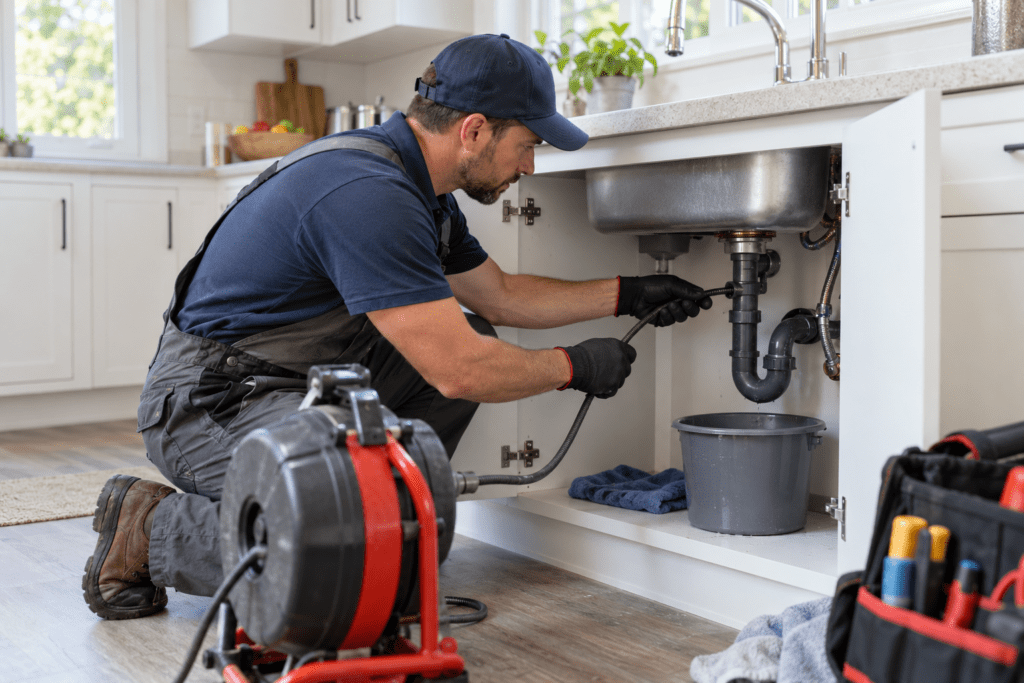
A drain snake, also known as a plumbing auger, can be useful for certain types of localized blockages. The tool is inserted into the drain and advanced toward the obstruction. Depending on its design, the cable can catch, break apart, or push through the material causing the restriction.
Using a drain snake requires care because excessive force can damage certain plumbing components or cause the tool to become stuck. The appropriate equipment also depends on the size and location of the drain.Professional plumbers may use larger mechanical augers for more substantial blockages. These machines can reach farther into drainage lines and provide greater power than basic household tools.
For significant buildup inside larger plumbing lines, professionals may use hydro jetting equipment. This process uses high-pressure water to clean the interior walls of pipes and remove accumulated grease, sludge, mineral deposits, and other debris.Hydro jetting is different from simply pushing through a blockage. Instead of creating a narrow opening through the debris, the process can clean a larger portion of the pipe’s interior.
However, hydro jetting is not appropriate for every plumbing system or every situation. The condition and material of the pipes should be evaluated before high-pressure equipment is used. Damaged or fragile plumbing may require a different approach.
Chemical Drain Cleaners and Their Limitations
Chemical drain cleaners are widely marketed as quick solutions for clogged drains, but they should be used cautiously. Some products contain highly corrosive chemicals that can create safety risks and potentially damage plumbing components when used incorrectly or repeatedly.
Chemical cleaners may also fail to remove the underlying cause of a blockage. A product might temporarily create an opening through accumulated material without fully cleaning the pipe.
Mixing different drain-cleaning chemicals can be especially dangerous because chemical reactions may produce toxic fumes or excessive heat. Product instructions should always be followed, and incompatible chemicals should never be combined.When a blockage is severe, recurring, or resistant to basic methods, professional mechanical cleaning may provide a more controlled solution.
Professional Clogged Drain Cleaning
Professional clogged drain cleaning involves more than simply forcing an obstruction through a pipe. A plumber can investigate the location and nature of the blockage and select equipment appropriate for the plumbing system.
Depending on the situation, professionals may use hand augers, mechanical drain machines, inspection cameras, hydro jetting equipment, or other specialized tools. The method chosen should be based on the pipe condition and the type of obstruction.Professional cleaning can be especially useful when a blockage returns repeatedly. Recurring problems may indicate grease buildup, tree-root intrusion, damaged pipes, improper pipe slope, collapsed sections, or another underlying issue.
Camera Inspection and Hidden Problems
When a blockage cannot be easily explained or repeatedly returns after cleaning, a plumbing camera inspection can provide valuable information. A small camera can be inserted into the drainage line to examine the interior of the pipe.Camera inspections may reveal cracks, breaks, root intrusion, heavy buildup, displaced joints, corrosion, or other conditions that are difficult to identify from outside the pipe.
This information can help determine whether cleaning alone is sufficient. If the pipe itself is damaged, repeatedly clearing the same obstruction may only provide temporary relief.A camera inspection can therefore help property owners avoid unnecessary guesswork and make more informed decisions about repairs.
When several fixtures drain slowly at the same time, the problem may be more extensive than an individual sink or shower clog. Multiple affected fixtures can indicate a restriction in a branch line or main drainage line.For example, a slow kitchen sink alone may suggest a localized kitchen drain problem. If sinks, showers, tubs, and other fixtures throughout the property begin backing up, a larger drainage issue may be involved.
In these circumstances, attempting to clear each fixture independently may not solve the underlying problem. A professional evaluation can help determine where the blockage is located and which section of the plumbing system needs attention.
Preventing Future Drain Blockages
Prevention is one of the most effective ways to maintain healthy plumbing. In kitchens, grease and cooking oil should not be poured directly down the drain. Allowing grease to cool and disposing of it appropriately can reduce the amount entering the plumbing system.Food scraps should also be kept out of ordinary sink drains. Even when a garbage disposal is present, large quantities of fibrous or hard materials may create problems.
Bathroom drains benefit from screens or strainers that capture hair before it enters the plumbing. These inexpensive devices can significantly reduce the amount of debris reaching the pipes.Regularly cleaning drain strainers and removing accumulated debris can also prevent small restrictions from developing into larger clogs.
Kitchen plumbing experiences a particularly wide range of materials, making preventative maintenance important. Grease, oil, coffee grounds, food particles, flour, and other substances can contribute to blockages.A sink strainer can catch food particles before they enter the drain. Even small amounts of debris should be removed regularly rather than washed down the pipe.
Running appropriate amounts of water while using the sink can help move wastewater through the drainage system, but water alone cannot prevent grease from accumulating. Proper disposal habits remain the most effective strategy.If a kitchen drain begins draining slowly, addressing the issue early can prevent a larger buildup from developing deeper within the pipe.
Maintaining Bathroom Drains
Bathroom drains are frequently exposed to hair, soap, shampoo, conditioner, toothpaste, and other substances. Over time, these materials can combine into sticky masses that restrict flow.
Drain screens can catch much of the hair before it enters the pipe. They should be removed and cleaned regularly so that accumulated debris does not itself become a drainage problem.Cleaning the visible portion of a drain and removing accessible debris can also help maintain flow. However, tools should be used carefully to avoid damaging fixtures or pushing debris farther into the plumbing.
If a bathroom drain repeatedly becomes slow despite routine cleaning, the obstruction may be located farther down the line and may require professional attention.Older plumbing systems may require additional care because pipes can develop internal corrosion, mineral buildup, deteriorated joints, or structural damage over time.
A recurring clog in an older system should not automatically be treated as an isolated blockage. Repeated buildup may be a symptom of a pipe that has become narrowed or damaged.
Professional inspection can help determine whether the drainage system remains structurally sound. If the pipe is deteriorating, replacement or rehabilitation may be more appropriate than repeated cleaning.Addressing the underlying plumbing condition can reduce maintenance costs and improve drainage reliability over the long term.
When Professional Help Is Necessary
Professional plumbing assistance is recommended when a blockage is severe, recurring, affects multiple fixtures, produces sewage backup, or cannot be cleared using appropriate basic methods.
Emergency attention may be particularly important when wastewater is overflowing onto floors or other surfaces. Contaminated water can create sanitation concerns and cause significant property damage if it remains uncontrolled.Professional help is also appropriate when there are signs of a damaged pipe, unusual odors, persistent gurgling, or unexplained changes in drainage throughout the property.
Attempting increasingly aggressive DIY methods when the cause is unknown can sometimes make the problem worse. A proper diagnosis can save time and prevent unnecessary damage.When hiring a plumber, property owners should look for experience with the type of drainage system involved. A qualified professional should be able to explain the likely cause of the blockage, the recommended cleaning method, and any additional repairs that may be necessary.
A written estimate can help clarify expected costs and the scope of work. If specialized equipment such as a camera or hydro jet is recommended, the plumber should explain why it is appropriate for the situation.
Property owners should also ask whether the work includes cleanup and whether any warranties or guarantees apply. Clear communication can help prevent misunderstandings and ensure that the proposed service addresses the actual plumbing problem.
Final Thoughts
A clogged drain may seem like a minor inconvenience, but persistent or severe blockages can develop into larger plumbing and property problems. Hair, grease, food particles, mineral deposits, foreign objects, and other materials can gradually restrict water flow and eventually prevent wastewater from draining properly.
Simple tools such as plungers or appropriate drain snakes can sometimes resolve minor blockages, but recurring problems often require a more thorough diagnosis. Professional cleaning methods can remove deeper buildup while camera inspections may identify structural issues that ordinary cleaning cannot address.
Effective clogged drain cleaning is ultimately about restoring proper drainage while understanding why the blockage occurred in the first place. Preventative measures, including using strainers, disposing of grease properly, limiting debris entering drains, and arranging periodic plumbing inspections when appropriate, can help reduce the likelihood of future problems.
By responding to slow drainage early and seeking professional assistance when necessary, property owners can protect their plumbing systems, reduce the risk of water damage, and maintain reliable drainage throughout the building. A clean and properly functioning drainage system contributes to a more comfortable, hygienic, and trouble-free property.