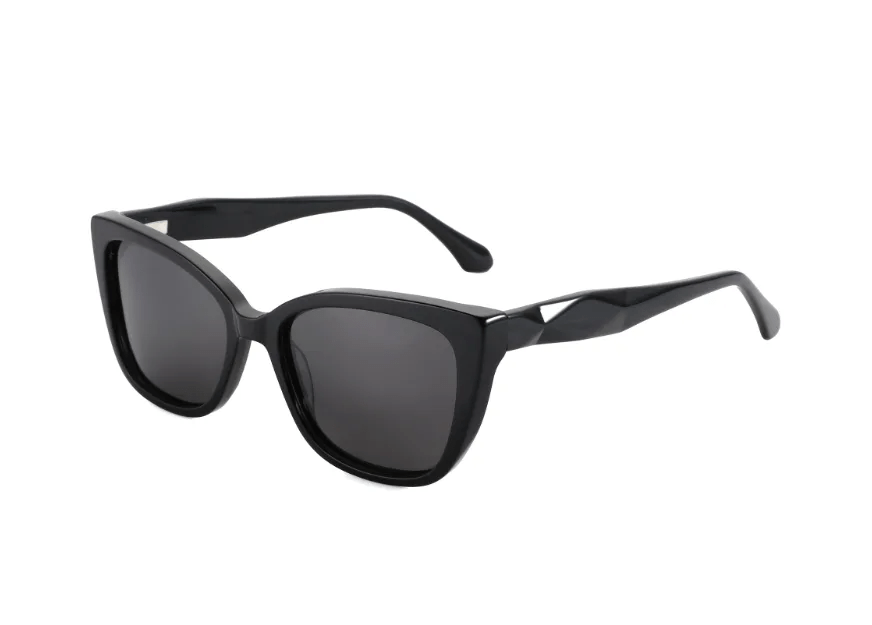
Black Glasses: The Timeless Eyewear Trend That Works for Every Style
Black glasses have remained a dependable wardrobe category because they can do two very different jobs. A fine black rim adds definition without asking for much attention; a thick, full-rim frame puts a deliberate outline around the eyes and can make the simplest outfit feel more graphic.
That flexibility is not the same as universal flattery. The heavy rectangular frame that gives a monochrome suit authority may overwhelm a quieter look built around a fine knit, minimal jewelry, and little contrast elsewhere. A slim black metal frame may feel polished and easy to wear, but it can also recede if you want glasses to be a central part of your style.
The more useful question is not whether black goes with everything. It is whether a frame’s scale, silhouette, and contrast work with the clothes you actually wear—and whether it fits well enough to become an everyday pair.
Black is versatile because the frame does the talking
Color is only part of the equation. Rim thickness, lens shape, bridge profile, and frame width determine how forcefully black reads on the face. Thin frames tend to have a quieter visual effect; thicker rims make a more immediate statement.
For a wardrobe built around charcoal, navy, denim, cream, and black, that can make a dark frame an easy repeat choice. The decision is really one of intensity. A fine oval or softly rectangular rim can act like a restrained accessory. A broad acetate rectangle has a more assertive, architectural quality and is better suited to someone who wants their glasses to register before the rest of an outfit.
Black frames can work for weekdays and weekends, including professional settings, but workplace appropriateness depends on local dress norms and the frame’s overall styling. A compact, understated shape communicates something quite different from an oversized angular pair, even in the same color.
Start with wardrobe mood, then narrow the shape
Instead of beginning with a face-shape chart or a list of microtrends, consider the role the glasses need to play. A first prescription frame may need to look credible with client-facing tailoring yet still feel natural with denim, knitwear, and off-duty layers. In that case, a medium-scale shape with some definition—but not too much theatricality—often gives more mileage than an extreme silhouette.
| Wardrobe direction | Black-frame silhouettes worth comparing | Likely visual effect |
| Minimal, neutral, or softly tailored | Slim oval, narrow rectangle, fine metal | Definition without much visual dominance |
| Classic and polished | Medium rectangle, softened square, restrained browline | Structure that does not feel overly fashion-led |
| Creative or expressive | Cat-eye, geometric forms, stronger corners | A clearer focal point and more personality |
| Vintage-leaning or smart casual | Browline or Clubmaster-inspired styles | A bolder upper line with lighter lower structure |
Rectangular glasses are often associated with a more formal or professional look, although the details matter. A rounded rectangle in thin metal will read differently from a thick, flat-top acetate frame. Browline and Clubmaster-inspired shapes offer another useful middle ground: their stronger upper framing adds character without creating the uninterrupted solid rim of a full acetate design.
If your clothing includes bright color, prints, or patterned tailoring, a slimmer black frame may leave more room for the outfit to lead. Cat-eye and geometric frames can bring more personality, but there is no need to reserve them for a particular kind of workplace or social setting.
It is easier to see these distinctions when several shapes are viewed side by side. Browsing a broader selection of black glasses—say, a narrow oval, medium rectangle, and bolder square—makes differences in rim depth, lens shape, and overall scale more apparent than judging one frame in isolation.
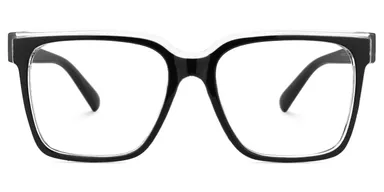
Thick acetate versus slim metal: think visual weight first
The central choice for many shoppers is between a substantial black outline and a lighter-looking frame. Thick full rims create a strong border around the lenses and can bring graphic structure to the face. Slim metal frames, and finer plastic frames, generally feel less dominant—particularly alongside colorful clothing, prints, or delicate accessories.
Material labels need some restraint. Cellulose acetate, also called zyl, is a common plastic frame material, while propionate is another plastic option with a different look and feel. Neither name alone predicts the weight, flexibility, durability, or comfort of a particular frame. Thickness, construction, hinge design, bridge shape, and finishing make a real difference.
Prescription requirements belong in this comparison, too. With stronger prescriptions, a smaller frame generally helps limit lens thickness. A thicker full rim may conceal lens edges better than a very thin frame in some cases, but the outcome also depends on lens material, frame size and shape, pupillary distance, and the prescription itself. An optician can help sort out those variables before a fashion-forward oversized shape becomes the default choice.
For shoppers who want separate work and everyday options without overspending, ZEELOOL affordable eyewear includes black frames in slim metal, classic rectangular and bolder acetate styles. Prescription lens customization is available, and customers should review the dimensions, lens requirements and current return terms for each frame.
Let face shape filter the options—not decide for you
Face-shape guidance can be a helpful way to reduce an overwhelming selection, but it is not a rulebook. A squared frame may be one complementary option for a very round face; that does not mean every round face needs sharp corners, or that every square frame will feel balanced.
Black makes proportion especially visible. A lens that is slightly too large, a very deep rim, or a high top line may stand out more clearly than it would in a translucent or pale frame. That is why a real try-on matters more than trying to solve the choice with a diagram.
A few observations are usually more useful than a prescribed formula:
- Frame width: A frame that extends too far beyond the face can look oversized; one that is too narrow can feel cramped. Check whether the model comes in more than one size.
- Top-rim placement: The rim should not sit conspicuously above the brows or very low on the face. Brow position and personal taste matter, but the frame should look settled rather than displaced.
- What the shape emphasizes: A sharp browline brings attention upward; a round lens can soften the overall impression; a deep square adds structure. These are effects to choose, not flaws to correct.
- Your preferred contrast: Some people want black glasses to be the strongest visual element on the face. Others want the eyes, hair, or clothing to lead. Either approach can work.
Look beyond the straight-on mirror view. Turn slightly, smile, and look down. A frame can photograph well from one angle yet feel too wide, too deep, or too dominant once it is seen in motion.
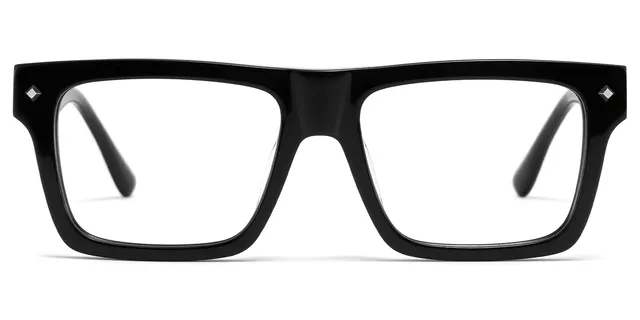
The final decision is made at the try-on
A compelling mirror moment is only the beginning. The frame must also stay comfortable at the bridge and temples and position the lenses appropriately for the prescription. Sliding down the nose, pressure behind the ears, red marks, a crooked fit, or lenses sitting too close to the face are all reasons to ask for an adjustment or reconsider the frame.
Daily use should influence the choice as much as styling does. If glasses will be repeatedly taken on and off, ask about the specific construction and hinge design rather than assuming that one material or color will suit that routine. For prescription wear, frame alignment and adjustments to nose pads or temples can affect comfort and optical performance; seek qualified fitting when it is needed.
Before committing, use a short, practical check:
- Look straight ahead and make sure the frame sits level without drifting down the nose.
- Check where your pupils sit within the lenses; they should not appear unusually close to an edge or conspicuously high or low.
- Pay attention to the bridge and temples long enough to notice pressure at the nose, behind the ears, or at the sides of the head.
- See the frame with both workwear and casual clothing, not only the outfit worn for the appointment.
Black glasses are a worthwhile wardrobe investment when they feel balanced rather than merely dramatic: present enough to suit your style, comfortable enough to wear, and practical enough for the prescription they need to carry.