Artist Nevil Dwek
By Jeremy Murphy
“Selective Memory”
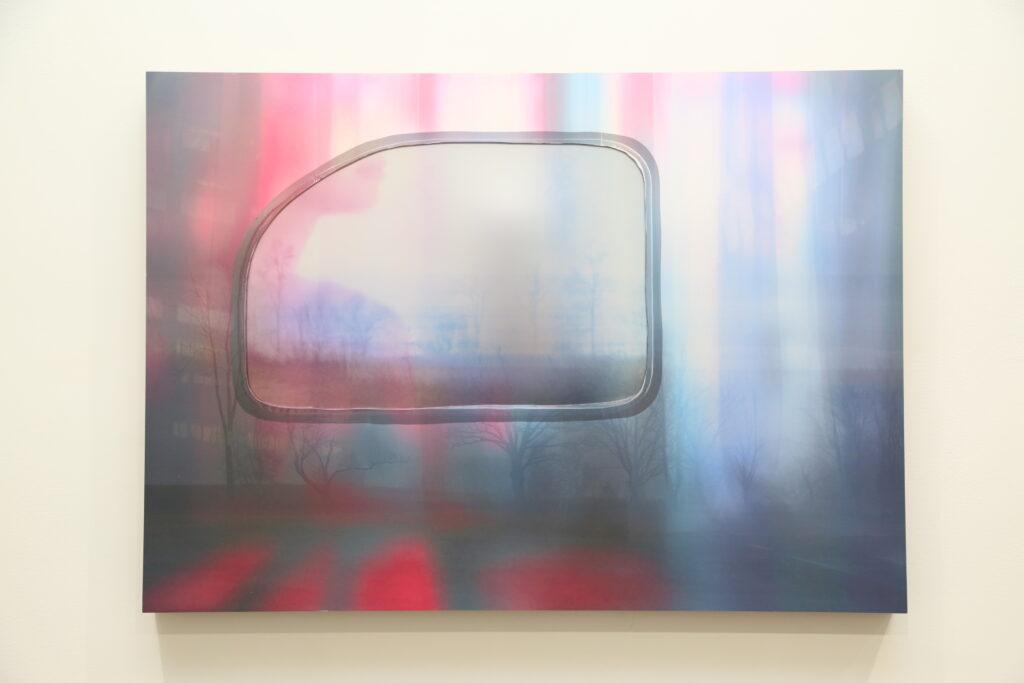
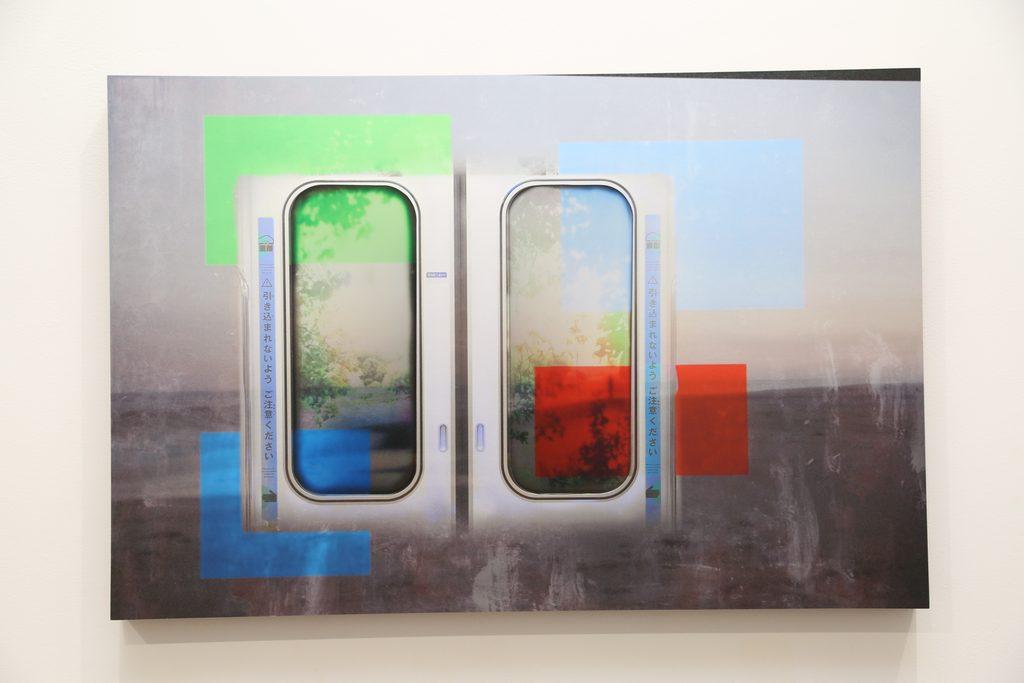
New York native Nevil Dwek returned to his roots in the Spring of 2025 with Selective Memory, a solo exhibition at Kate Oh Gallery at 31 East 72nd Street. This marked Dwek’s first solo show and showcased his multidisciplinary approach to art, blending photography, writing, and experimental materials to explore the elusive nature of memory and presence.
“The work started with my background in filmmaking,” Dwek said. . “When I reflected on things, it was always visual—and often through the act of looking out a window. That view tended to pull me back to something deeply nostalgic.”
From Film to Fine Art
A graduate of NYU’s Tisch School of the Arts, Dwek spent years honing his eye in film and photography, working with high-profile clients like Peter Marino, Chanel, and Ralph Lauren. Yet it was the emotional resonance of memory—often sparked by a fleeting glimpse through a window—that ultimately drew him deeper into fine art. “I loved the idea of capturing a still,” he explained. “But I didn’t want it to be just a regular photograph hanging on the wall. I wanted something that felt more like what a film does… like the feeling of looking out a window from a moving car, when everything is passing by.”
To create that layered, immersive effect, Dwek experimented with glass, mirrors, aluminum, and plexiglass, among other materials. “It took me a few years to make it work so it wouldn’t fall or break,” he said with a laugh. “My framers thought I was crazy. I didn’t want a traditional frame—I wanted it to feel like a real window.”
The Nature of Recollection
In Selective Memory, Dwek drew from his personal photography archive, constructing dimensional works that combined photography, writing, hand-cut films, and alcohol inks to evoke the shifting, dreamlike nature of recollection. “What we remember depends on where we are now,” he said. “It changes. It depends on your emotional state. And sometimes when something’s going on in the present, by going back to a memory, things will just pop up and you don’t know why.”
Curating the exhibition, he said, was like editing a film. “The body of work had to have a thematic feeling to it,” Dwek explained. “Sometimes I’d put them all in front of me and just stare at them, trying to see what worked and what didn’t. It was almost like scenes in a film—scene one, scene two.”
Kate Oh Gallery
The choice of venue also held personal significance. “I just walked by the gallery one day and went in and started talking to the gallerist,” he recalled. “It just came together naturally.” The location, 31 East 72nd St., across from Ralph Lauren, was especially meaningful. “It was in my neighborhood , where I grew up,” he said. “I’m a native New Yorker. Born at Lennox Hill Hospital, lived on 72nd and Third, and now on 74th. This was on 72nd Street. So it felt very personal.”
Dwek’s creative evolution from filmmaker to artist was more of a natural progression than a sharp turn. After directing his first feature film, “Undermine” starring Ellen Pompeo, in 2003, he began looking for new creative outlets. “I picked up my camera and just started shooting,” he said. “But I always had a side project—exploring ways to push the photograph further, to give it more of an edge or a different feel.”
Inspirations & Commissions : Peter Marino
His work eventually attracted attention from fashion and design heavyweights. A chance encounter led to a commission with architect Peter Marino. “My friend had my artworks on her table and he walked by, pointed to them, and said, ‘I love those,’” Dwek recalled.
He described his style as deeply layered and personal. “Even if it was just a flower, I’d often fragment it, blur some parts, isolate others. I tried to give it a personality,” he said. “There were always layers, always messages hidden in the image.”
Though inspired by some artists, Dwek drew his strongest influences from cinema. “My influences were more cinematic—more directors than visual artists,” he said. “I watched a lot of old films growing up, especially French cinema. It was very reflective, very introspective.”
Even as photography technology advanced, Dwek saw it as an opportunity rather than a threat. “When smartphones and Instagram came along, it challenged me more,” he said. “That’s when I started using more materials—I knew I had to go beyond just the image.” He viewed AI the same way: “Rather than fight it, I used it.”
Ultimately, Dwek aimed to create work that resonated both emotionally and visually. “When you looked at one of my pieces, you could tell it was mine,” he said. “That’s what I admired in the artists I loved—you recognized their work immediately.” Selective Memory offered a glimpse into that layered, ever-shifting space where memory, emotion, and art met—a window, quite literally, into Dwek’s world.
nevildwek.com