All About the John Pork Meme Origin
All About the John Pork Meme Origin
Why John Pork Became an Internet Icon
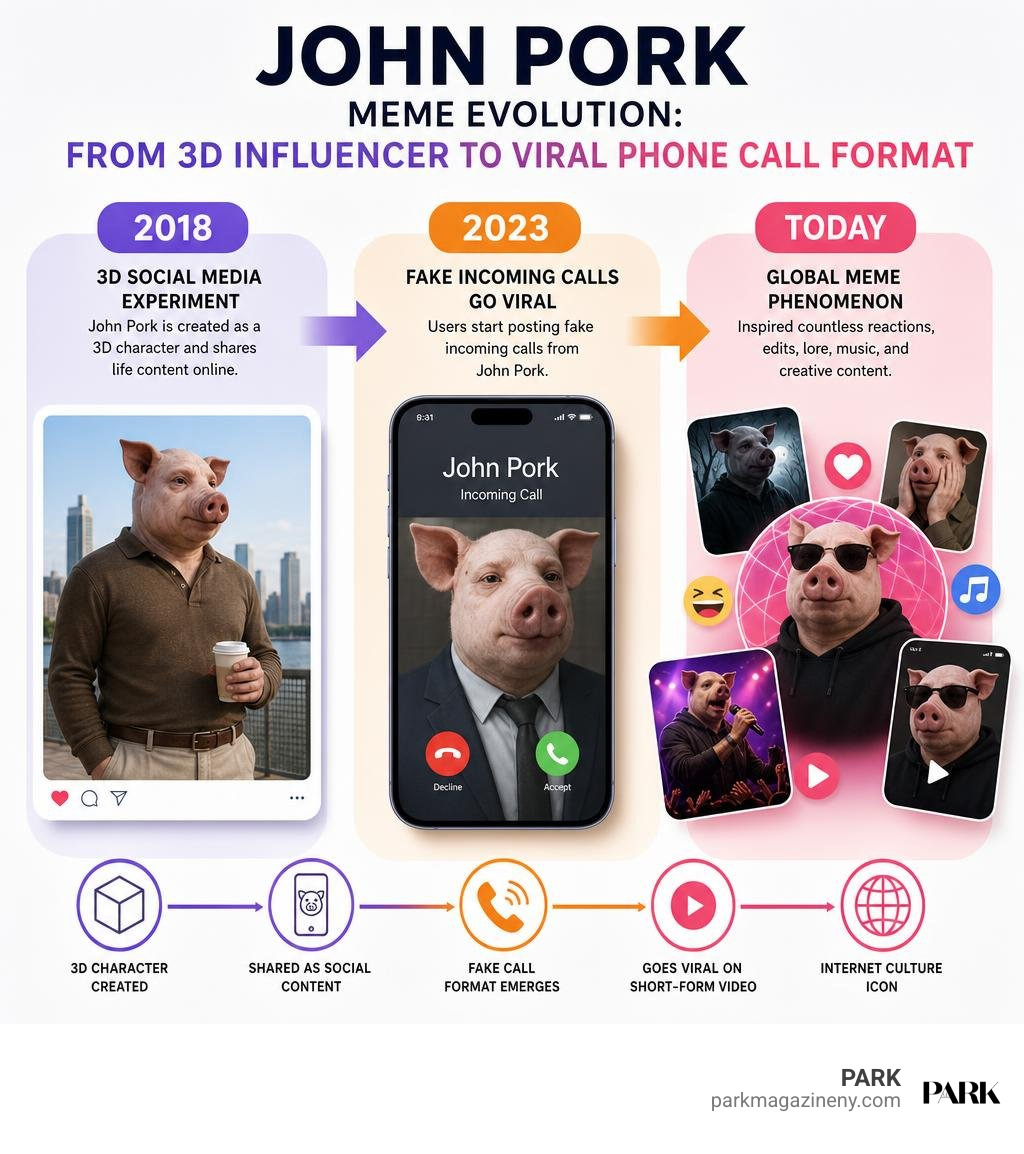
John Pork is a CGI virtual influencer: a human-bodied character with a realistic pig’s head. He began as a 3D social-media experiment in 2018, then became a worldwide meme when TikTok users started posting fake incoming calls from him in 2023.
The joke is simple and oddly effective: Why is this pig-man calling me, and should I answer? That question inspired reaction videos, fake lore, horror-style edits, music, and even a false rumor that John Pork had died. The hashtag #johnpork has since reached roughly 900 million TikTok views.
What makes the meme last is the mix of polished digital design and open-ended absurdity. John Pork is not a real person, nor is he a product of today’s generative AI boom. He is a deliberately created 3D character whose audience helped turn a niche Instagram persona into internet folklore.
I’m W.A. Muller, and this guide explains where John Pork came from, why the calls went viral, and what his unusual rise says about online culture.
The Genesis and Identity of John Pork
To understand the widespread allure of John Pork, we have to look past modern automated prompt tools and examine the origins of custom 3D computer graphics. Long before algorithmically generated images flooded our feeds, John Pork was sculpted and rendered by digital artists exploring how an anthropomorphic character could blend into real-world social feeds.
The character combines a realistic, textured pig snout, ears, and facial skin with an otherwise stylishly dressed human male torso. This distinct blend plunges viewers straight into the uncanny valley—a psychological threshold where something appears human enough to be recognizable, yet artificial enough to evoke curiosity, amusement, or slight unease.
| Feature | 3D Virtual Influencers (John Pork) | Generative AI Personas |
|---|---|---|
| Creation Method | Manual 3D modeling, texturing, and digital compositing | Automated diffusion models based on text prompts |
| Visual Consistency | High consistency across distinct environments and poses | Variable consistency across multiple angles and lighting |
| Origin Era | Conceived in 2017; debuted in 2018 | Rose to mainstream prominence from late 2022 onwards |
| Audience Lore | Collaborative, community-driven storytelling | Rapid, high-volume automated asset output |
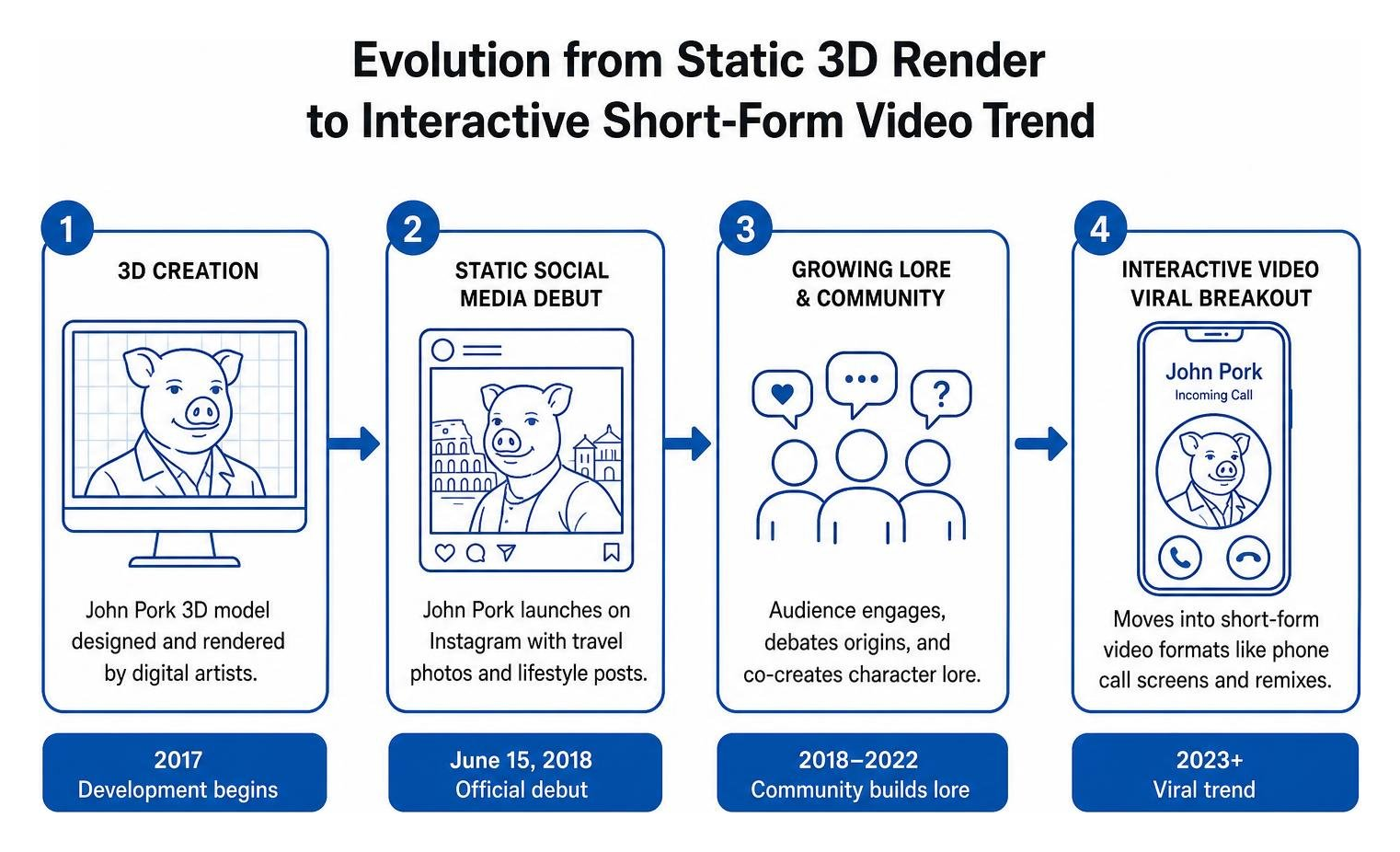
Through his official John Pork Instagram feed, the character engaged in familiar influencer habits: posing on street corners, taking vacation selfies, and captioning snapshots with playful emojis. This blend of mundane lifestyle posting and a surreal appearance formed the groundwork for a massive online following.
Early 3D Virtual Influencer Roots
The digital persona made his initial appearance on social media on June 15, 2018. Canonical lore placed his fictional roots in Palermo, Italy. Early posts showed him traveling across Europe, including sharing selfies in front of Doune Castle in Scotland. His casual bio—featuring phrases like “Good Vibes”—contrasted sharply with his swine head, earning thousands of likes per post over his initial years.
For in-depth background on his character profile and early digital history, the John Pork profile details document how these early images tested the boundary between fiction and authentic social engagement. His creators published posts sparingly, letting viewers debate his origins in the comment sections.
Francesco Di Luisi and the AVASCOT Creative Team
Behind the digital pig-man are digital artists Francesco Di Luisi and Sofia Oliveira of the creative entity AVASCOT (associated with BYTETRIBE, LDA). Development of the 3D model started back in 2017. Their core objective was simple yet avant-garde: explore how a fictional, anthropomorphic 3D entity could interact within real-world social media dynamics.
Rather than running a corporate campaign with strict messaging, the team kept the character’s background mysterious. They treated him as an open canvas, allowing organic internet reactions and community-crafted lore to shape his public persona over time.
Mechanics of the Viral Phenomenon and Digital Lore

The transition from a niche 3D art piece to an inescapable viral meme happened when the character moved from static photography into participatory, interactive video formats.
Several key factors drove this massive surge in virality:
- Pre-made editing templates: Platforms like CapCut let users easily drop their own video clips underneath the simulated call interface.
- Open-ended narrative tension: Creators could react in varied ways—fearful, amused, or bewildered—by asking whether they should answer the call.
- Auditory recognizability: The blend of generic iPhone ringtone audio with surreal visuals created an instantly recognizable sensory cue on short-form video feeds.
- Collaborative storytelling: Audiences continuously expanded the character’s world with dramatic backstories, distress calls, and comedic spin-offs.
How the John Pork is Calling Trend Exploded
The turning point occurred in March 2023 when TikTok creator @rover.joe shared an editable video template simulating an incoming call from John Pork. The video collected over 6 million plays in less than a week, triggering an avalanche of user reactions.
Creators worldwide began filming skits depicting the bizarre dilemma of receiving an unexpected call from the pig-man persona. The meme spread rapidly across the official John Pork TikTok channel, where short-form edits propelled the character into feeds across the globe.
Fictional Lore, Lola, and the John Pork Death Hoax
As the phone call meme dominated social media, internet communities began building deep, satirical mythologies around the character. Early running gags jokingly claimed the avatar was the real-life face reveal of the late Minecraft creator Technoblade. Later, the character’s universe expanded with the introduction of a fictional sister named Lola Pork (often referred to as LP).
By late March 2023, the narrative took an absurdist turn when user-generated videos started claiming that John Pork was calling because he was in danger. Soon, a viral rumor claimed he had been shot and killed, with one speculative TikTok video racking up over 6 million views in just three days. As documented in the John Pork meme documentation, the hoax grew so widespread that his creators publicly confirmed he was alive, well, and continuing to produce new digital content.
Mainstream Cross-Over, Controversies, and Cultural Legacy

As the meme moved beyond social feeds into physical culture, it occasionally created bizarre real-world mix-ups. The character evolved from an inside joke among Gen Z internet users into a mainstream talking point, sparking real-life misunderstandings and inspiring novelty audio tracks.
The 2026 Los Angeles Starbucks Cup Incident
In January 2026, John Pork entered real-world news when a Los Angeles County Sheriff’s Department deputy received a Starbucks cup featuring a quick barista sketch of the character. Unaware of the viral 3D avatar, authorities and local commentators initially suspected the drawing was a deliberate insult directed at law enforcement.
The situation was defused when internet culture commentators like Justin Whang posted clarifications online. Whang explained that the sketch was merely a reference to the viral TikTok trend rather than a targeted slur. His explanation gathered over 1.3 million views, spotlighting the growing divide between fast-moving online memes and real-world institutional interpretations.
From Novelty Tracks to Modern Internet Slang
The meme’s popularity quickly spread to the music streaming landscape. On March 29, 2023, the novelty track “John Pork is Calling …” by dontcarewontcare was published through digital distributor DistroKid. It gathered over 680,000 streams on Spotify as users added the 1-minute-and-42-second track to meme playlists and video edits.
Beyond novelty tracks, John Pork has entered modern youth slang. Media analyses of evolving adolescent vocabulary, such as the student slang and internet culture analysis, highlight how terms like “rizz,” “mid,” and “John Pork” represent a surreal, hyper-connected humor that defines contemporary digital dialogue.
Frequently Asked Questions About the Pig-Man Phenomenon
Is John Pork a real person or AI generated?
John Pork is not a real person, nor was he produced by generative AI tools. He is a computer-generated 3D virtual influencer developed in 2017 by digital artists Francesco Di Luisi and Sofia Oliveira of AVASCOT, making his social media debut in June 2018.
Why did the phone call meme go viral?
The “John Pork is calling” trend exploded thanks to user-friendly CapCut templates, recognizable iPhone ringtones, and the surreal humor of an uncanny pig-man dialing the viewer. It allowed millions of creators to produce quick, comedic reaction videos.
What was the John Pork death hoax?
In March 2023, fans created mock-serious creepypasta videos claiming that John Pork was calling for help before meeting a tragic demise. The death rumor gathered millions of views in days, prompting his creators to issue a statement confirming the character was still active.
Conclusion
The saga of John Pork illustrates how digital art, creative ambiguity, and community-driven storytelling can turn a quiet 3D modeling project into a worldwide cultural milestone. By giving their anthropomorphic character room to grow organically, his creators allowed the internet to build an interactive folklore around him.
As digital characters continue to blur the boundaries between virtual design and everyday pop culture, our appreciation for enduring, distinctive creations only grows. Much like assessing the ultimate luxury investments worth considering, true cultural impact comes down to originality, sustained relevance, and the ability to capture the public imagination. John Pork remains a quintessential icon of modern internet culture—a surreal reminder of how online communities turn odd visual concepts into shared cultural phenomena.