A More Restful Primary Bedroom: Balancing a Platform Bed Frame With King-Size Comfort
A primary bedroom should feel spacious enough for everyday movement while providing a comfortable place to unwind at the end of the day. Achieving that balance involves more than choosing attractive furniture or a large mattress. The bed’s dimensions, the space around it, the lighting arrangement, and the placement of storage all influence how the room looks and functions. When these elements work together, the bedroom can feel inviting without becoming crowded.
A king-size bed offers generous sleeping space, but its size also creates important design considerations. A frame that looks elegant in a showroom may dominate a smaller room or leave limited space for bedside tables and wardrobes. Choosing a suitable king gel memory foam mattress is therefore only one part of the process. The surrounding furniture and overall layout must support the bed’s dimensions while preserving a calm, practical environment.
Start With the Room, Not the Furniture
Before choosing a bed, consider the bedroom as a complete space. Measure the walls, doorways, windows, and any built-in storage that may affect furniture placement. A standard king mattress measures approximately 76 by 80 inches, but the frame usually extends beyond those dimensions. A thick headboard, wide side rails, or upholstered edges can increase the amount of floor space required.
These measurements become especially important when planning the route between the bed and the wardrobe, bathroom, or bedroom entrance. A large bed should not prevent drawers from opening or force someone to move sideways through a narrow passage. Marking the bed’s full footprint on a floor plan can help identify these issues before a purchase is made.
Room proportions also influence the best position for the bed. Placing it against the main feature wall often creates a natural focal point, but windows, doors, and architectural features may require a different arrangement. The goal is to establish a clear layout that accommodates the bed without sacrificing useful space elsewhere.
How a King Bed Changes the Room’s Visual Balance
A king bed naturally attracts attention because of its size. Its headboard, bedding, and surrounding nightstands can form the strongest visual element in the room. This can be an advantage when the rest of the design is relatively simple, but it may make the bedroom feel heavy if every piece of furniture is equally large or decorative.
One way to maintain balance is to vary the visual weight of the furnishings. A substantial bed can be paired with streamlined bedside tables, simple wall art, and uncluttered surfaces. Lighter bedding and a restrained color palette may also help the sleeping area feel less imposing. This does not mean avoiding rich colors or textured materials; instead, the aim is to give the eye enough quiet space to appreciate the main furniture.
The height of the frame matters as well. A low-profile design can preserve a sense of openness, while a tall, upholstered headboard may suit a room with higher ceilings. Considering both the bed’s width and its vertical proportions helps prevent it from overwhelming the architecture.
Finding the Right Frame for Comfort and Practicality
The frame influences how the bed sits within the room and how easily the surrounding space can be used. Different designs create different visual effects. A frame with exposed legs may reveal more floor beneath the bed, while a solid base can create a more substantial appearance. Upholstered frames introduce softness, whereas wood and metal designs can contribute a more structured look.

Exploring a range of platform bed frame designs can help clarify how frame height, headboard shape, and construction affect the finished bedroom. The most suitable choice depends on the mattress dimensions, the room’s layout, and the amount of visual weight the design can comfortably accommodate.
Practical features should also be considered before settling on a style. Under-bed clearance may make cleaning easier, while integrated charging or lighting can reduce the need for additional accessories. However, any built-in feature should fit the household’s routines and leave enough room for normal movement. A useful frame supports the overall design rather than dictating an awkward arrangement.
Bringing Bedside Technology Into the Design
Modern bedrooms often need to accommodate charging cables, reading lights, and devices used before sleep. If these items are scattered across bedside tables, they can create visual clutter even in a well-designed room. Planning for them early helps maintain a cleaner appearance without removing the conveniences people use every day.
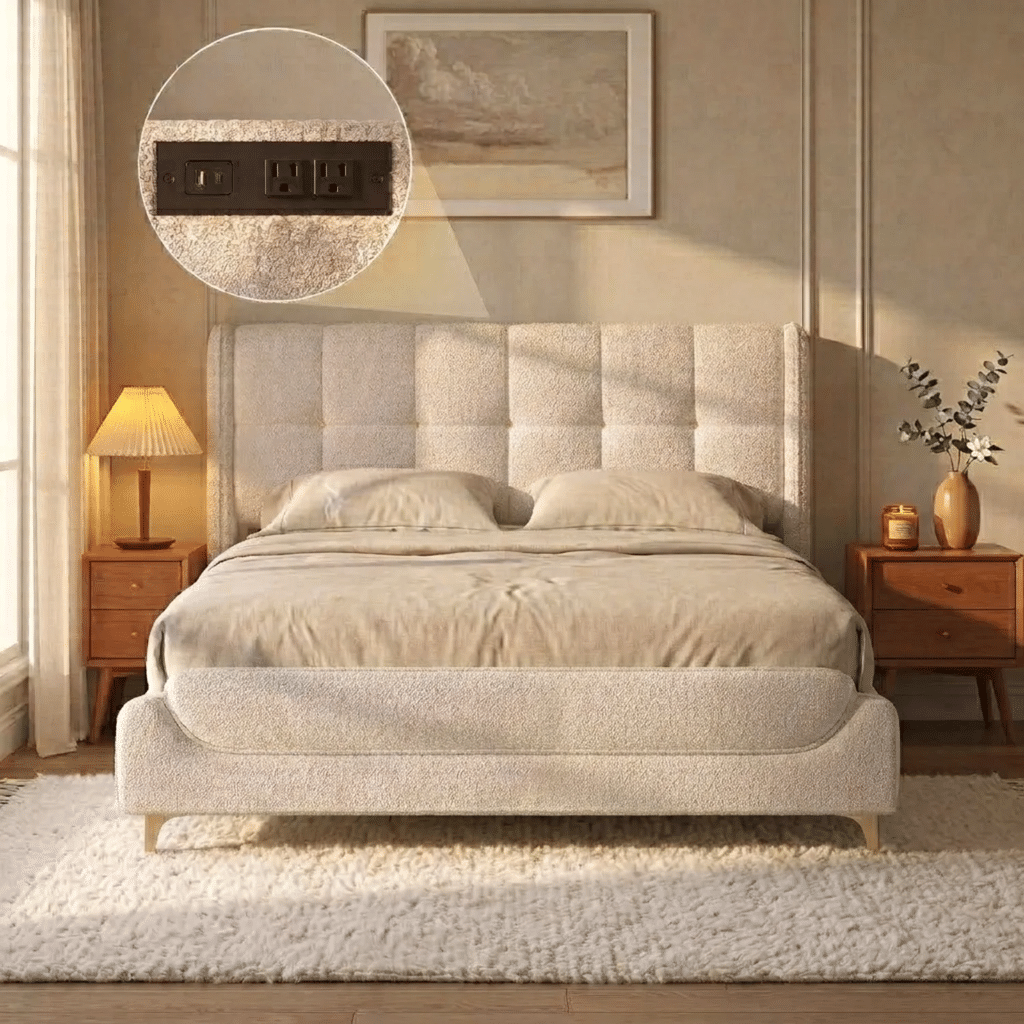
The Novilla GlowCharge LED Bed Frame combines an upholstered headboard with warm LED lighting and built-in AC, USB, and Type-C charging ports. Its tufted headboard and soft lamb-wool upholstery introduce texture, while the integrated features bring several bedside functions into one piece of furniture. The frame is offered in multiple sizes, including king, so its selected dimensions should be checked against the bedroom plan before other furniture is arranged.
Built-in lighting can reduce the need for separate bedside lamps, and integrated charging may help keep cables more organized. Still, these features work best when the bed is positioned near suitable power access and the controls are easy to reach. The surrounding nightstands, wall lighting, and decorative objects should complement the frame instead of competing with its features.
Creating Comfortable Movement Around the Bed
A restful bedroom should be easy to move through, even when the bed occupies a significant portion of the floor. Ideally, there should be enough room to get in and out of bed, reach a nightstand, and access storage without navigating around unnecessary obstacles. When space allows, approximately 24 to 30 inches of clearance along accessible sides is a useful planning guide, although the best arrangement depends on the room and the occupants’ needs.
Furniture placement should be tested with everyday activities in mind. Wardrobe doors need room to open, drawers should extend without hitting the bed, and the bedroom door should have an unobstructed swing. If the bed is positioned close to a wall, consider whether that arrangement will make one side difficult to access or change how the room is used.
Where space is limited, choose furniture that serves a clear purpose. Narrow nightstands may be more practical than wide cabinets, and wall-mounted lights can free up surface space. Keeping the walking routes simple helps a large bed feel like a deliberate design choice rather than an obstacle.
Coordinating Mattress Height, Bedding, and Headboard
The relationship between the mattress and frame affects more than comfort. Their combined height influences how easy it is to get into bed, how much of the headboard remains visible, and how the bed relates to bedside tables. A thick mattress can cover more of a padded headboard, while a low mattress may leave a larger section of the frame exposed.
Bedding also contributes to the bed’s overall proportions. A comforter that drapes heavily toward the floor can make a substantial frame look even bulkier. A more tailored arrangement may create cleaner lines, particularly when the bed already has a broad base or a prominent headboard. Pillows and throws can add texture, but using too many layers may obscure the shape of the furniture.
Compatibility should be checked before selecting the mattress and frame. The mattress must fit the intended dimensions and receive appropriate support from the base. A mismatch can affect how the mattress sits and how the finished bed looks. Considering the mattress, frame, and bedding as one composition helps produce a more cohesive result.
Using Lighting and Color to Keep the Space Calm
Lighting helps determine whether a primary bedroom feels relaxing or visually busy. A single overhead fixture may provide general illumination, but it does not always create the most comfortable atmosphere for reading or winding down. Bedside lights, dimmable fixtures, and indirect lighting can provide more control over the mood of the room.
The frame’s finish should guide some of these choices. Warm upholstery can work well with soft whites, natural wood, and muted earth tones, while darker frames may pair effectively with lighter walls and carefully placed accent lighting. The aim is not to match every item exactly but to establish a consistent visual relationship between the major surfaces.
Window treatments, mirrors, and decorative accessories can reinforce the design without filling every available area. Keeping surfaces relatively clear and allowing daylight to enter the room can help the furniture feel less crowded. When the bed is already the dominant element, a restrained approach often produces a more balanced result than adding multiple competing focal points.
A Bedroom Designed Around Rest and Daily Life
A well-planned primary bedroom balances sleeping comfort with the practical demands of everyday living. A king-size mattress provides generous room to stretch out, but the surrounding frame, storage, lighting, and furniture determine whether that extra space works comfortably within the room.
Begin with accurate measurements, select a frame that complements the architecture, and preserve clear routes around the bed. Then coordinate the mattress height, bedding, and lighting so that each element supports the overall arrangement. When comfort and proportion are considered together, the bedroom can feel spacious, functional, and restful without relying on excessive furniture or decoration.