Choosing a GMC with Comfortable Rear Seating for Friends and Family
A comfortable rear seat can make a significant difference when choosing a vehicle for family transportation, weekend outings, and everyday travel with friends. Whether passengers are joining a short commute or settling in for a longer road trip, adequate legroom, supportive seating, convenient amenities, and easy access all contribute to an enjoyable experience. GMC offers several SUVs and trucks with different cabin layouts, allowing shoppers to compare passenger space according to their needs. Exploring options at a GMC dealer in Oklahoma can help drivers evaluate available models and find a vehicle that balances rear-seat comfort with practicality, performance, and everyday versatility.
Start by Considering Your Passenger Needs
Before comparing GMC models, think about how many people typically ride in the vehicle. A household that usually travels with one or two passengers may have different requirements from a family that regularly carries several children or adults.
Consider how frequently the rear seats will be occupied and how long passengers usually spend inside the vehicle. Short trips around town may not require extensive seating features, but regular highway travel makes legroom, cushioning, and climate control more important.
Also consider the ages and sizes of passengers. Children may need accessible child-seat attachment points, while taller adults often benefit from generous legroom and headroom. Understanding these needs makes it easier to identify the right cabin layout.
Compare GMC SUVs for Rear-Passenger Space
GMC SUVs provide several options for drivers who prioritize passenger comfort. The GMC Terrain offers a practical two-row layout suited to smaller households and everyday transportation. Its rear seating can accommodate passengers while maintaining a manageable exterior size for city driving and parking.
The GMC Acadia provides a larger cabin with three-row seating, making it a useful option for families who occasionally need additional passenger capacity. Its flexible seating arrangements can help accommodate different combinations of passengers and cargo.
For shoppers who need even more room, the GMC Yukon and Yukon XL offer spacious interiors with three rows. The Yukon XL’s extended body provides additional overall space, which can be particularly useful for families who frequently travel with passengers and luggage.
Compare the actual seating measurements and configurations of each model rather than relying on vehicle size alone.
Evaluate Rear-Seat Legroom and Headroom
Legroom and headroom are essential factors when evaluating rear-seat comfort. Passengers should have enough space to sit naturally without feeling restricted by the front seats or roofline.
During a showroom visit, adjust the front seats to the position normally used by the driver and front passenger. Then sit in the second row to see how much knee room remains. This gives a more realistic impression than evaluating the cabin when the front seats are moved forward.
Headroom matters as well, especially for taller passengers. Check whether occupants can sit upright comfortably without their heads approaching the roof.
For three-row SUVs, examine the available space in every row. A vehicle may offer seating for several passengers, but the third row can differ significantly in comfort and accessibility.
Look at Seat Design and Cushioning
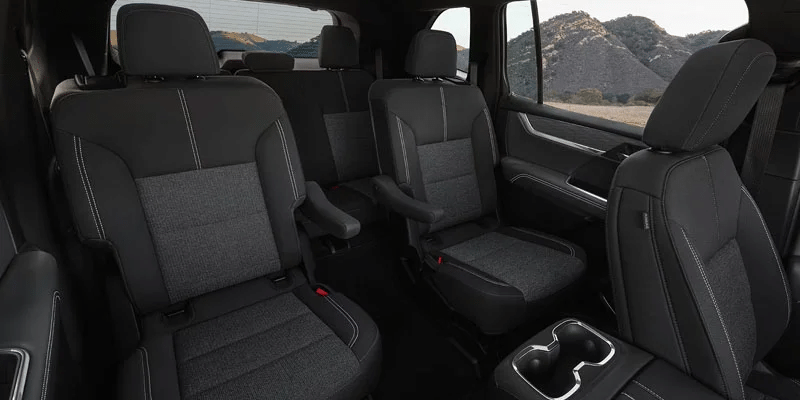
Seat construction can influence how comfortable passengers feel during longer journeys. Supportive cushions, appropriate firmness, and well-designed backrests can help reduce discomfort.
Pay attention to the shape of the rear seats and how they support the lower back and thighs. A seat that feels comfortable for a few minutes may feel less supportive after an hour on the road.
Upholstery also affects the cabin experience. Depending on the model and trim, GMC vehicles may offer different cloth or leather-appointed seating materials. Consider appearance, durability, ease of cleaning, and how the material feels in different temperatures.
If possible, have regular passengers sit in the vehicle before making a decision. Their feedback can help identify comfort concerns that may otherwise be overlooked.
Consider Second-Row and Third-Row Access
Easy access is particularly important in vehicles with three rows. Passengers should be able to enter and exit without excessive effort or needing others to move seats repeatedly.
Examine how the second-row seats slide, fold, or tilt to create access to the third row. Check whether the mechanism is simple to operate and whether children or older passengers can use it comfortably.
Captain’s chairs and bench seating provide different advantages depending on the model and configuration. Captain’s chairs create a walkway between the seats and can make movement toward the third row easier. A bench seat may provide room for an additional passenger in the second row.
Think about how often all seating positions will be used. The most convenient arrangement depends on passenger numbers and daily routines.
Check Rear Climate Control and Convenience Features
Rear passengers should be able to remain comfortable without relying entirely on the driver to adjust the cabin environment. Depending on the GMC model and trim, available features may include rear air vents, separate climate controls, charging connections, and convenient storage areas.
Rear climate vents can help distribute heated or cooled air toward passengers in the back. This is especially useful in larger SUVs, where the distance between the front dashboard and rear seats may make temperature distribution more challenging.
Cupholders, door pockets, armrests, and USB charging ports can also improve convenience. These details become valuable during school runs, family trips, and longer journeys when passengers need space for personal belongings.
Compare which features are standard and which are available only on higher trim levels or through optional packages.
Balance Passenger Space with Cargo Capacity
Passenger comfort is only one part of vehicle practicality. Families often need room for groceries, sports equipment, strollers, luggage, and other belongings.
When all three rows of an SUV are occupied, the remaining cargo area may be more limited than expected. Check how much storage space is available behind the rear seats and whether it will accommodate the items you regularly transport.
Folding seats can create additional room when fewer passengers are traveling. However, consider how easily the seats fold and whether the process requires significant effort.
The GMC Yukon XL may appeal to households that regularly need both passenger capacity and additional cargo flexibility. Smaller models may be more convenient for drivers who rarely carry a full group.
Do Not Overlook Rear-Seat Safety and Child-Seat Compatibility
Families with young children should evaluate rear-seat safety and child-seat installation. Check the location and accessibility of LATCH attachment points and seat belts.
Bring your child safety seats when visiting a dealership, if practical, and test whether they fit according to the vehicle and child-seat manufacturers’ instructions. Make sure the installation does not create unnecessary difficulties for other passengers.
Also review available rear-seat safety features and driver-assistance technologies. Depending on the model and trim, GMC vehicles may offer features designed to support driver awareness and help monitor surrounding traffic.
Technology can provide additional assistance, but proper child-seat installation and attentive driving remain essential.
Take a Test Drive with Your Passengers
A test drive is one of the most effective ways to evaluate rear-seat comfort. Bring family members or friends who regularly travel with you and ask them to sit in their usual positions.
Drive on different road surfaces when possible. Notice how the suspension handles bumps, whether road noise becomes distracting, and whether passengers can communicate comfortably.
Check visibility from the rear seats, access to controls, and the ease of entering and exiting the vehicle. If you are comparing multiple GMC models, repeat the same checks to make the differences easier to recognize.
Conclusion
Choosing a GMC with comfortable rear seating involves more than counting the available seats. Legroom, headroom, cushioning, climate controls, cabin access, safety features, and cargo flexibility all influence the passenger experience. Models such as the Terrain, Acadia, Yukon, and Yukon XL offer different cabin arrangements for varying household needs. By considering regular passenger requirements, comparing available features, and taking test drives with family or friends, shoppers can select a GMC that makes everyday transportation and longer journeys more comfortable.