How Do You Choose an iPhone Charger?
Most charger shopping starts with the wattage on the shelf and ends with a drawer of plugs that fit nothing in particular. The order is backwards. A charger has to answer three questions in sequence: which socket the phone uses, where the plug will be bought, and only then how much power and how many ports it should offer. Getting that order right is most of the work: sequence before specification. Answering them in that order takes ten minutes and prevents most of the money that gets wasted on capability the phone will never ask for. The answer is usually one plug that covers everything the household carries, rather than a bigger number on its own.
Step One: Check Which Port Your iPhone Uses
USB-C on Recent Models and Lightning on Older Ones
Start with the port, because it decides everything else. Apple moved its phones from Lightning to USB-C, so a recent model takes a C-to-C cable while an older one still needs Lightning. Buying an iphone charger before checking which socket sits at the bottom of the phone is how people end up with cables that fit nothing in the house. Look at the phone itself rather than the box the last charger came in, and write the answer down. Check the cables you already own as well, since a C-to-C lead from a laptop will usually charge the phone too, and that saves a purchase.
Cables and Adapters That Match That Port
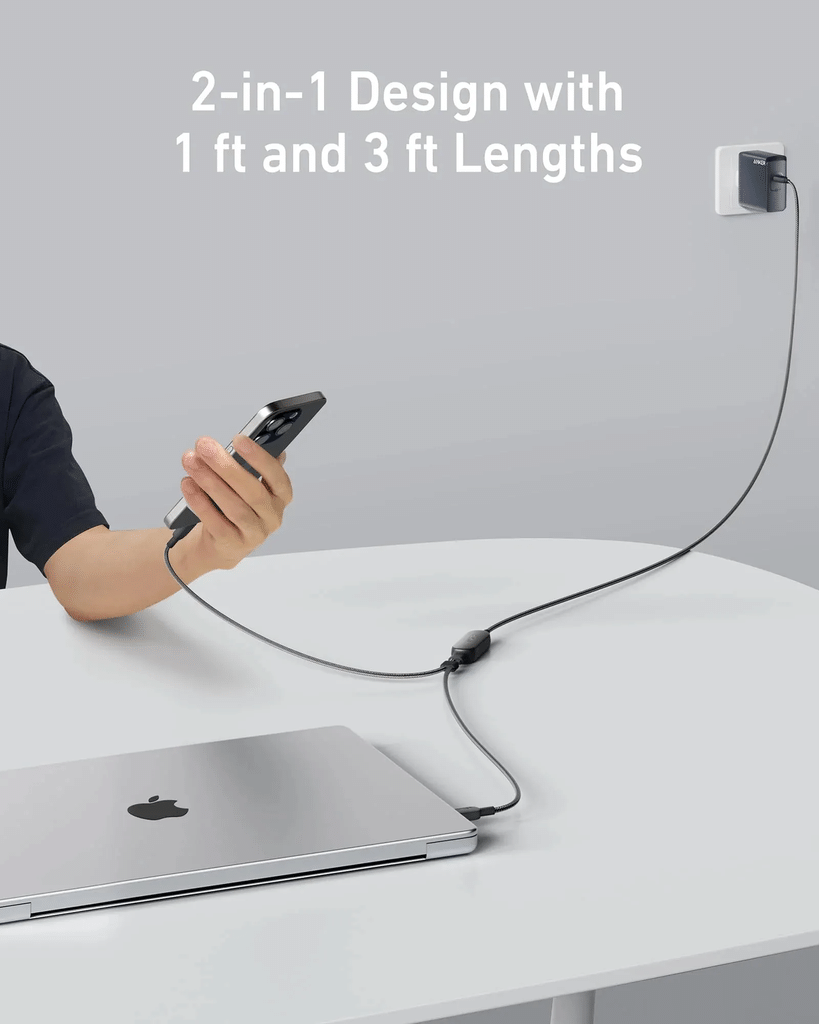
The cable is half the purchase and the half most people ignore. A charger can only deliver what the cable carries, so a thin, unrated cable will cap a fast plug at a slow trickle and leave the phone warm for nothing. Match the connector at both ends, choose a cable rated for the wattage, and keep one spare in the bag. Adapters add a joint that can fail, so use them for travel rather than as a permanent arrangement at the bedside. Length matters more than people expect: a metre reaches a bedside table and half a metre reaches nothing. Braided cables survive bags better than rubber ones.
Step Two: Decide Where to Buy It
Manufacturer Stores, Retailers and Marketplaces
Where you buy decides what happens when something goes wrong. Manufacturer stores sell the current model with a proper receipt and a warranty that is straightforward to claim; retailers offer returns and occasionally a bundle; marketplaces are the cheapest and the least predictable, with stock that may be older than the photo or not the same product at all. For a device that sits plugged in overnight, the few pounds saved are rarely worth the uncertainty. Ask what the returns window is before paying, because a charger bought in a hurry is often the wrong one, and a receipt stored in the cloud still counts. Keep the box until the returns window closes, because it is the one thing a marketplace will ask for.
Bundles, Multipacks and What Comes in the Box
Bundles look generous and often are not. A charger with a cable included saves a purchase, but the cable may be short or slower than the plug; a two-pack is good value if both will be used and wasteful if one lives in a drawer. Check the contents before comparing prices, because a plug sold without a cable is not a bargain when you need one that day. Buy for the devices on the table now, not the ones you might own next year. A multipack only saves money if the second plug has a home, and the cable listed on the box matters more than the picture on it.
Step Three: Weigh the Specs That Matter
Power Output, Port Count and Size
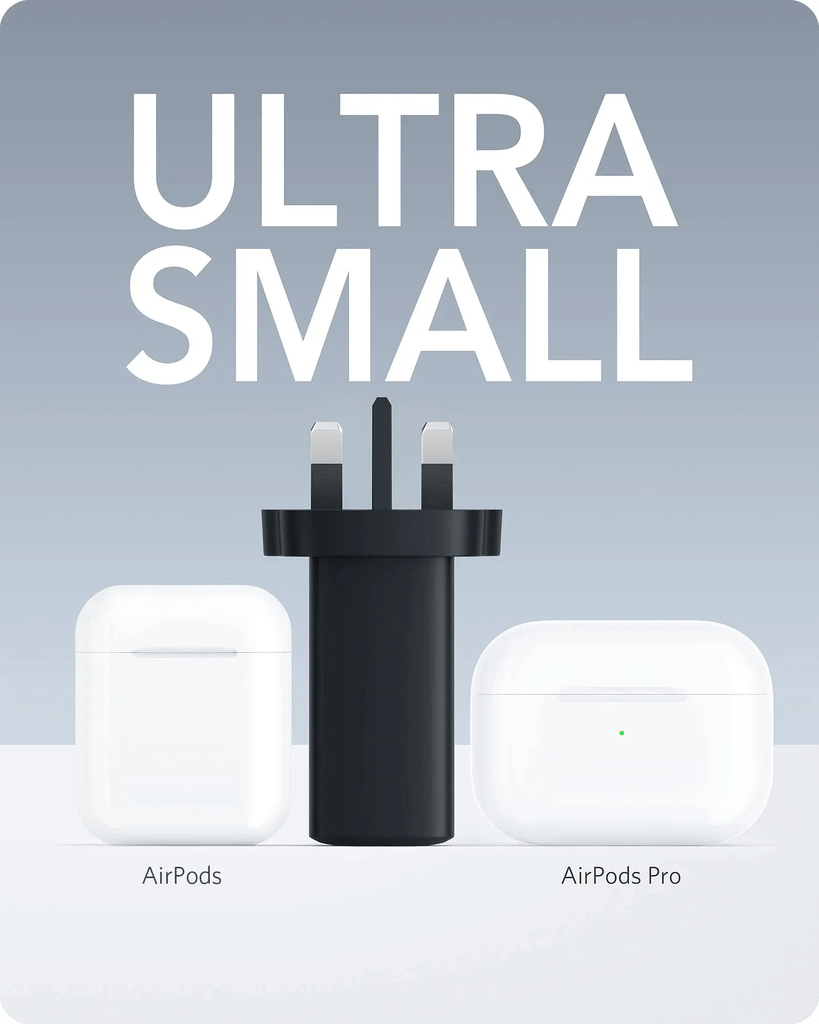
The numbers worth comparing are output, port count and size. Output decides how quickly a single device charges, port count decides whether one plug can replace three, and size decides whether it travels or stays on a desk. The Anker 735 Charger (Nano II 65W) delivers up to 65W to one device and shares that across three ports when the household charges together, in a body about the size of an earbuds case, which is the combination most bags actually need. Port count also decides where it lives: three ports belong on a desk, one belongs in a pocket, and wattage beyond what the phone accepts turns into heat. Buying for the household rather than for one phone is the change that makes three ports worth the extra size.
Safety Marks, Certification and Warranty
Certification is the part nobody photographs. Look for a recognised safety mark, a stated warranty and a brand that will still answer an email in two years. A charger that runs warm when idle, buzzes quietly, or arrives with no paperwork at all is telling you something about how it was made. Buy from the company whose name is on the plug, or from a retailer you would trust with a return, rather than from a listing that has changed its brand name twice. A warranty that requires the original box is a warranty designed not to be used. Keep the receipt where you will find it in two years rather than two days.
Conclusion
Choosing a charger is a sequence rather than a comparison: port first, seller second, specifications last. Get the port wrong and nothing else matters; get the seller wrong and the warranty is theoretical; only then do watts, ports and size decide between two sensible options. Done in that order, the purchase takes ten minutes, and the plug lasts until the phone after next, which is a longer relationship than most people expect from an accessory. The cheapest charger is the one that does not need replacing in eighteen months, and one that is worth the ten minutes spent choosing it.