Where Should Security Cameras Go Around a Home?
Most useless footage was not badly recorded—it was recorded from the wrong place. Placement decides what a lens can see long before resolution, storage or app features matter, and it is the part of a system hardest to change once the holes are drilled. A camera mounted too high catches the top of a hood and nothing else; the same unit lower down may capture a face. The useful work happens before drilling, walking the property and asking what each corner needs to prove. This guide covers the entrances people actually use, the ground around the building, and the height and angle that turn a view into evidence.
The Entrances People Actually Use
The Front Door and the Path to It
The front door is where footage is expected to matter most, and it is also where most security cameras are hung too high. A lens two and a half metres above the step records the top of a head and the parcel left behind, but rarely the face of whoever rang the bell. Eye level, offset to one side so the door itself does not block the view, gives a cleaner angle and a better chance of identification. The path counts as much as the threshold: a camera that sees the gate but not the walk between gate and door leaves ground someone can cross unseen. Two views, one at each end, often cost less than a single wide lens that does neither job well.
Side Gates, Back Doors and Utility Entrances
Side gates and back doors are the routes people choose when they would rather not be seen from the street, so they deserve the same thought as the front. A single camera covering the gap between house and fence is usually enough, provided the fence line stays inside the frame. Utility entrances are overlooked altogether, yet a gate beside the bins gives quiet access to a rear wall and the window above it. Where two of these sit close together, one wider view serves better than two narrow ones, because a person walking from one to the other stays in shot for longer. The same logic applies to a shared alley, which is a gate, a path and a wall in one narrow strip.
The Ground Around the Building
Drives, Garages and Parked Cars
A drive is a long, narrow subject, and the mistake is to treat it as a single view. The useful split is between the approach, where a vehicle first appears, and the parking area, where a number plate can actually be read. With one camera, put it where those two overlap rather than at the far end of the gravel. Light matters as much as angle: a lamp behind the camera illuminates the subject, while a lamp in front turns every visitor into a silhouette. Garages need a separate look, because an open door hides more than it shows and a car backed in keeps its plate out of sight.
Gardens, Sheds and Boundary Lines
Gardens and boundaries are where coverage thins out, because they are the least convenient places to run power or fix a bracket. The question is not how much lawn can be seen but which line a person would cross to reach an unlocked window. A view along the boundary beats one across open grass, since it follows the route rather than the space. Sheds, bins and low walls all offer steps up, and a frame that includes them is more honest about the ways a garden can be entered than a tidy shot of the lawn. Where a fence meets a corner, that junction is worth more of the frame than the middle of the beds. In winter, with the leaves gone, the same view opens up and is worth checking again.
Height, Angle and the Frame Itself
Mounting Height Against Identification
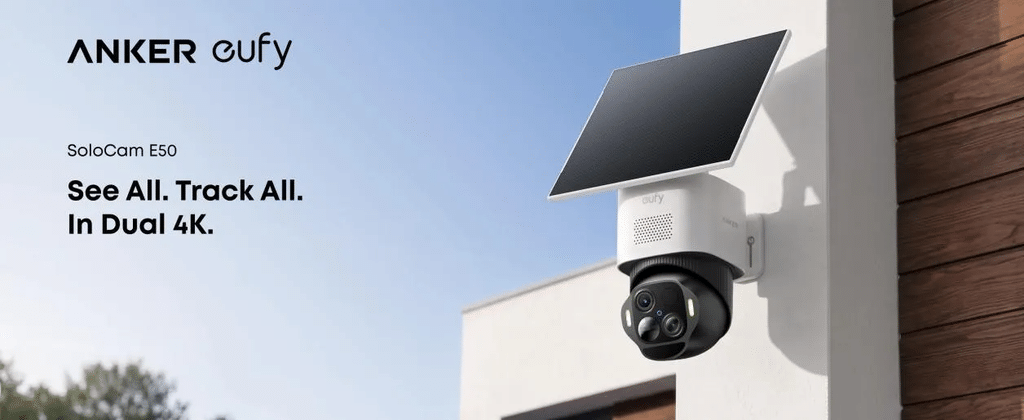
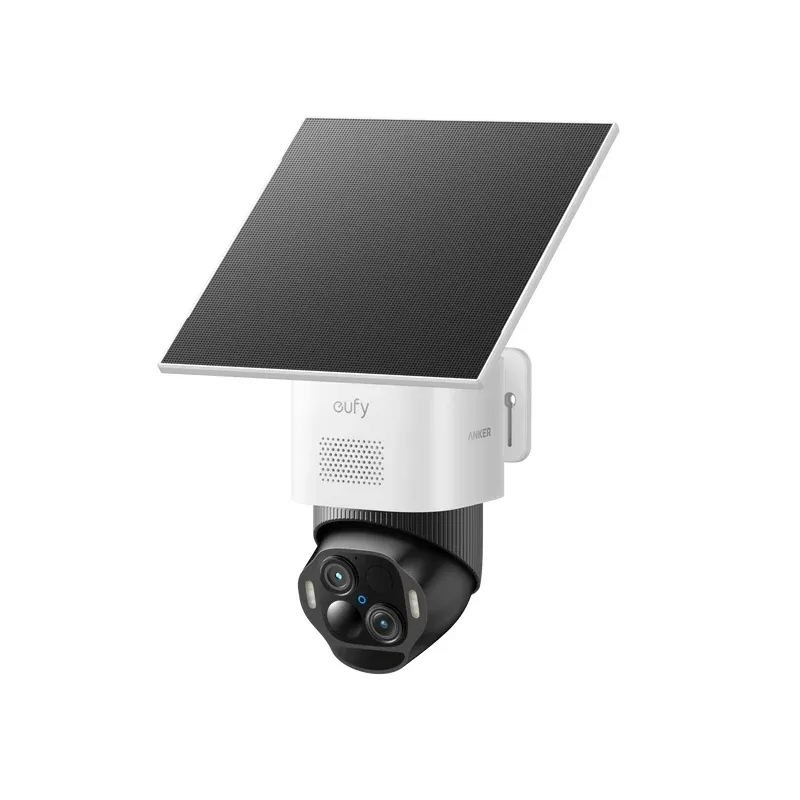
Height is a compromise between deterrence and detail. High mounts are hard to reach and hard to knock, but every centimetre above head height flattens a face and shortens the distance at which a plate stays readable. A camera that pans, tilts and zooms covers the compromise instead of living with it. The eufy SoloCam E50 pairs a wide lens for the yard with a telephoto that reaches 12× hybrid zoom, enough to read a face or a number plate at about 40 ft, and its radar picks out someone standing still rather than movement alone. That is what a fixed lens cannot do once it has been pointed and tightened.
Glare, Foliage and Cropped Views
Glare, foliage and cropped views undo more installations than poor resolution ever does. A lens facing the low sun washes out for an hour each morning, and a shrub that was knee-high in spring covers half the frame by August. Both are easy to check before drilling: stand at the bracket position at the hour that matters, and look again at the height of the planting. Cropping is the quieter problem, because a frame that cuts off the pavement often cuts off the person walking along it. A wider view that keeps the approach in shot often proves more useful than a tight one of the door.
Conclusion
Good placement is mostly a matter of walking the property and asking what each corner needs to prove. The door wants a face, the drive wants a plate, and the boundary wants a route. Once those three are settled, height and angle stop being abstract settings and become answers to a question. A corner that cannot answer any of them is usually the corner that needs a second camera rather than a better lens. The remaining specifications, from resolution to storage, are far easier to judge against a view you have already decided is the right one.