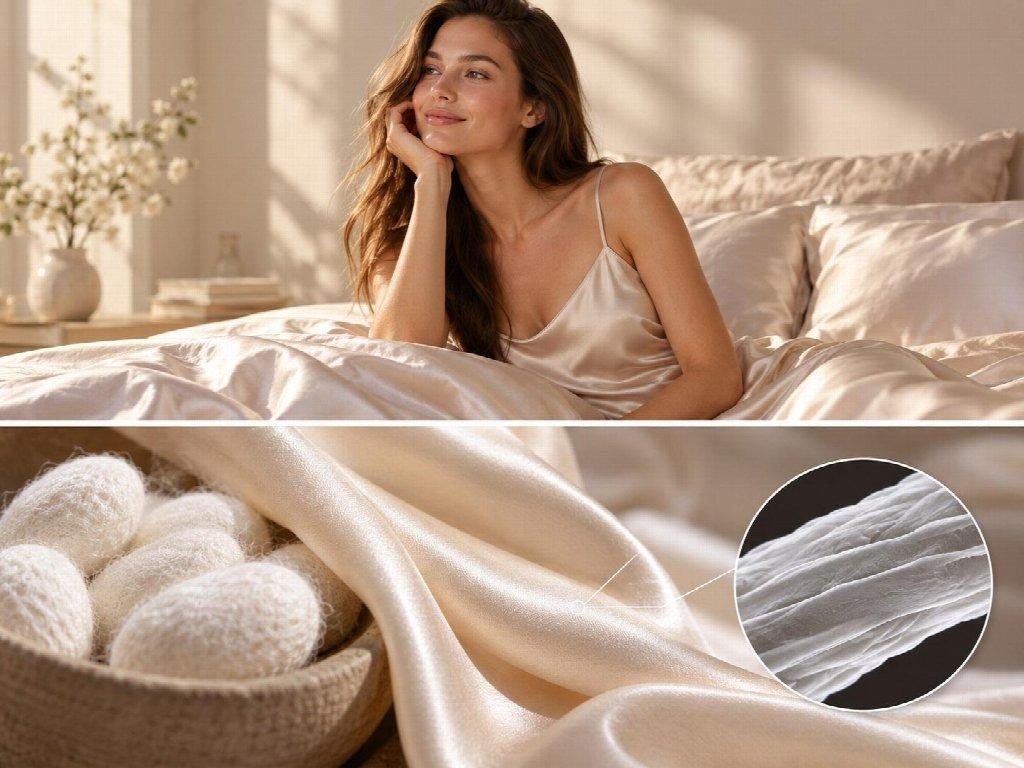
The Science Behind Silk: Why This Natural Fiber Is Truly Extraordinary
Most people understand that silk is luxurious. Far fewer understand why silk is extraordinary in ways that go well beyond aesthetics or tradition. The answer lies in science — in the fascinating chemistry, biology, and physics of a fiber produced by one of nature’s most remarkable biological engineering processes. When you understand the science of silk, the premium attached to genuine mulberry silk stops feeling like a luxury mark-up and starts feeling like entirely fair compensation for one of the most sophisticated materials on Earth.
The Molecular Architecture of Silk
Silk is a natural protein fiber composed primarily of two proteins: fibroin and sericin. Fibroin forms the core structural protein of the silk filament, while sericin serves as a protective coating that is partially removed during processing. The fibroin molecule is composed of repeating sequences of amino acids — primarily glycine, alanine, and serine — arranged in an antiparallel beta-sheet crystal structure that gives silk its remarkable combination of strength and flexibility.
This crystalline protein structure is responsible for several of silk’s most valued properties. The highly ordered molecular arrangement creates a surface of exceptional smoothness at the microscopic level, which translates directly into the characteristic tactile experience of silk — nothing else feels quite the same against human skin because nothing else has quite the same molecular surface architecture. The same structure also gives silk an extraordinary tensile strength — weight for weight, silk filaments are stronger than many metals, a fact that continues to fascinate materials scientists.
Why Silk Reflects Light So Uniquely
The visual luminosity of silk — its characteristic lustrous sheen — is a direct consequence of the fiber’s cross-sectional geometry. Unlike the circular cross-section of most synthetic fibers, silk fibroin filaments have a triangular or multi-lobed cross-section that acts as a prism, refracting incoming light at multiple angles simultaneously. This is why silk appears to change color and depth as it moves — the light interactions are genuinely complex, producing a visual effect that is physically impossible to replicate with circular-section synthetic fibers, regardless of how much they are polished or treated.
Silk’s Thermoregulating Properties: The Physics
One of silk’s most practically useful properties — its ability to keep wearers cool in warm weather and warm in cool weather — has a clear physical explanation. The filament structure of silk creates a complex network of natural microscopic air pockets within the woven fabric. These air pockets have two thermal effects: in warm conditions, they allow moisture and heat to transfer through the fabric efficiently, supporting evaporative cooling; in cool conditions, they trap warmed air close to the body, providing insulation.
The protein chemistry of silk also plays a role. Unlike hydrophobic synthetic fibers that repel moisture, silk’s hydrophilic protein surface absorbs and releases moisture in response to environmental humidity in ways that help regulate the microclimate against the skin. Silk can absorb up to 30% of its weight in moisture without feeling wet, maintaining a comfortable skin environment through a wide range of conditions. This moisture management capability is why silk has been used for temperature-sensitive applications — from high-altitude military garments to medical textiles — well beyond the fashion world.
Biocompatibility: Why Skin Loves Silk
The skin benefits of silk are not merely anecdotal or cosmetic-industry marketing — they have a solid biochemical foundation. Silk fibroin contains 18 amino acids, 16 of which are also found in human skin proteins. This extraordinary similarity in amino acid composition means that silk is one of the most biocompatible textile materials known, creating minimal immunological response even in highly sensitive skin.
The protein sericin in silk has been identified in research as having genuine antioxidant activity, meaning it can help protect the skin’s surface against oxidative damage from environmental factors. Studies have also shown that silk’s smooth fiber surface significantly reduces the friction-mediated mechanical stress on skin that occurs during sleep and wear — a stress that contributes to both irritation in sensitive skin conditions and the formation of fine lines over time.
For individuals with eczema, psoriasis, rosacea, or other inflammatory skin conditions, the combination of silk’s hypoallergenic, anti-friction, and moisture-regulating properties represents a genuinely therapeutic garment choice — one that an increasing number of dermatologists are actively recommending as part of symptom management strategies.
The Strength Paradox: Delicate Yet Incredibly Strong
Silk has a reputation for delicacy that is, in important ways, misleading. Individual silk filaments — finer than human hair — are among the strongest natural fibers known per unit of diameter. A silk filament’s breaking strength can exceed that of many steel alloys by weight, a property that has attracted attention from engineers and materials scientists working on everything from body armor to sutures to implantable medical devices.
What makes silk feel delicate is not weakness but fineness. The gossamer quality that makes silk so pleasurable to wear is the result of extraordinarily fine individual filaments that weave together into a fabric of remarkable thinness. This thinness, combined with the protein fiber’s vulnerability to harsh chemicals and high heat, creates the impression of fragility. But treat silk correctly, and you have a fiber of extraordinary durability — silk garments properly maintained have survived for centuries in museum collections.
Silk and Sustainability: The Science of Biodegradability
In the context of growing global awareness about textile pollution, silk’s biological origin makes it one of the most compelling natural alternatives to synthetic fabrics. Unlike polyester, nylon, or acrylic — which are petroleum-derived and persist in the environment for hundreds of years — silk is a fully biodegradable protein fiber that decomposes naturally in soil within a matter of years.
The mulberry cultivation that feeds silk production is also a relatively sustainable agricultural practice — mulberry trees are resilient, low-pesticide crops that can be grown on marginal land and contribute to local biodiversity. Sourcing silk from responsible producers — those committed to quality grades and ethical production — creates a supply chain that is dramatically more sustainable than the synthetic textile alternatives that dominate the global fashion market.
Choosingpure silk from a trusted brand isn’t just a personal luxury decision — it’s a scientifically informed choice to invest in a material whose properties genuinely justify every aspect of its premium position. The science of silk is, ultimately, the science of choosing something exceptional.