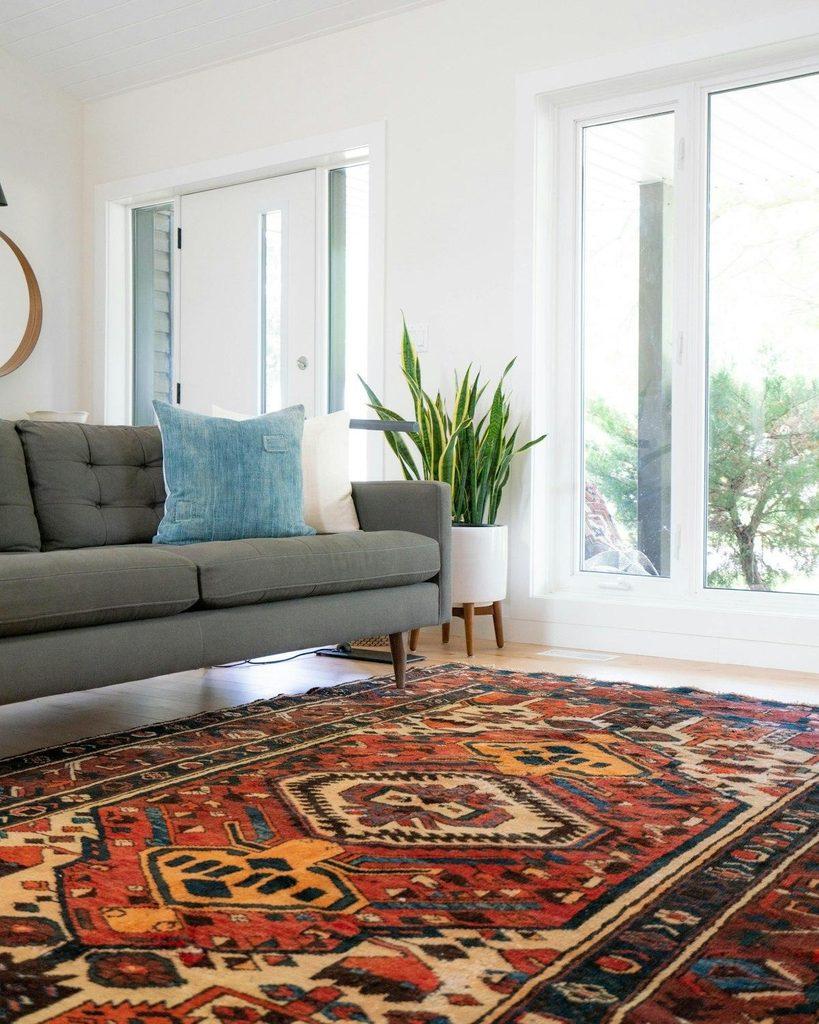
Living With an Oriental Rug in a New York Apartment
A good oriental rug does more for a New York apartment than almost any other single piece. It softens a prewar parquet floor, quiets a loft and gives a room its color. It also lives a harder life here than it would in most places.
City living brings a particular set of problems. Soot and fine street dust travel in on shoes and through open windows. Radiator heat dries wool in winter and humidity swells it in summer. Furniture rarely moves, so the same paths take the wear year after year. Add a dog, a dinner party or a long-running leak from the unit upstairs, and even a very good rug begins to show it.
Why a Rug Is Worth It in a Small Space
New Yorkers think hard about every object that takes up floor space, and a rug earns its place. In a building with thin floors, it absorbs footsteps and keeps the downstairs neighbors happy. Many leases and co-op rules actually require that a large share of each floor be covered for exactly this reason. In a long, narrow living room, a well-placed rug defines a seating area and makes the room feel planned. In a studio, two rugs can quietly divide sleeping and living space without a single wall.
An oriental rug also brings warmth and pattern that is hard to get any other way. It can tie together a mix of furniture collected over the years, and it moves with you from one apartment to the next, which is more than most furniture can say.
The Four Things That Age a Rug in the City
Grit. The dust that settles into the base of the pile is abrasive. Underfoot, it works like sandpaper on the wool. Vacuuming weekly with suction only, and without a beater bar, slows this considerably.
Sunlight. South- and west-facing windows fade one end of a rug long before the other. Turn the rug end to end every six months.
Moisture. A planter, a radiator valve or a slow leak can rot the cotton foundation from underneath while the surface looks fine. Lift the corners now and then and check.
Moths. They favor the quiet, dark stretch under a sofa or bed. Move the furniture and vacuum there a few times a year.
Small Habits That Make a Big Difference
A few simple habits help a rug last much longer in an apartment.
Shoes off at the door. This one change keeps out much of the street grit that does the most damage. A washable mat at the entrance catches what is left.
Use a good pad. A quality rug pad keeps the rug from sliding on hardwood, cuts friction on the back of the rug and adds a layer of sound control. Avoid cheap pads made with rubber that can stick to or stain a finished floor.
Lift, do not drag. When moving chairs or a coffee table, lift them. Dragging pulls at the pile and can catch the fringe.
Use furniture cups. Heavy pieces like pianos, bookcases and beds leave dents. Felt cups spread the weight, and moving the piece slightly every few months lets the pile recover.
Watch the radiator. In winter, steam heat can leave the wool near a radiator dry and brittle. A small humidifier helps both the rug and the people living with it.
Pets and Rugs
Dogs and cats are part of life in many apartments, and they can be hard on rugs. The biggest problem is urine. It soaks through the pile and into the foundation, where it can stain, weaken fibers and leave odor that returns on humid days. Blot accidents right away with plain water and a white cloth, and avoid strong household cleaners. If the odor keeps coming back, the rug needs a full wash, since surface treatment cannot reach the foundation. Regular nail trims and a dedicated pet bed also help keep claws from snagging the pile.
When to Send It Out
Household care only reaches the surface. Every 12 to 18 months, a rug in regular use needs a full wash to remove what a vacuum cannot. The method matters. In-home steam cleaning, which is built for wall-to-wall carpet, leaves a hand-knotted rug wet at its foundation and can make dyes run.
Proper oriental rug cleaning in New York is done off-site, and the SoHo workshop Rug Refinery describes the sequence it follows: inspection and dye testing, dry dust removal, a full hand wash, a clear-water rinse and controlled drying. Turnaround is typically 7 to 10 days from pickup to delivery.
A good time to plan a wash is before a change in season or before a move. Many owners send their rugs out in spring, after a winter of radiator heat and salted sidewalks, so the rug comes back clean for the warmer months.
The Building Question
Anyone who has moved a sofa in Manhattan knows the logistics can be the hard part. Many co-ops and condos ask vendors for a certificate of insurance before they will allow a pickup, and service elevators are booked by the hour. It is worth asking a rug workshop three things before scheduling:
- Do they provide a certificate of insurance for the building?
- Will they coordinate with the doorman or the managing agent directly?
- Is the rug photographed and measured at pickup, with the condition noted in writing?
A workshop that handles fine rugs regularly will answer yes to all three without hesitation.
It also helps to prepare the room before pickup day. Clear furniture off the rug if you can, or ask whether the crew will move it. Vacuum the floor area so the rug is not dragged across loose grit. And let your building staff know the date and time so the elevator is free.
A Short Checklist for the Year
- Weekly: vacuum with suction only, keeping clear of the fringe.
- Every six months: rotate the rug and check beneath the furniture.
- As needed: blot spills with a white cloth and plain water, and call a specialist for anything that stays.
- Every 12 to 18 months: a full hand wash off-site.
Final Word
An oriental rug is built to last a century or more. In New York, it simply needs a little more help getting there.