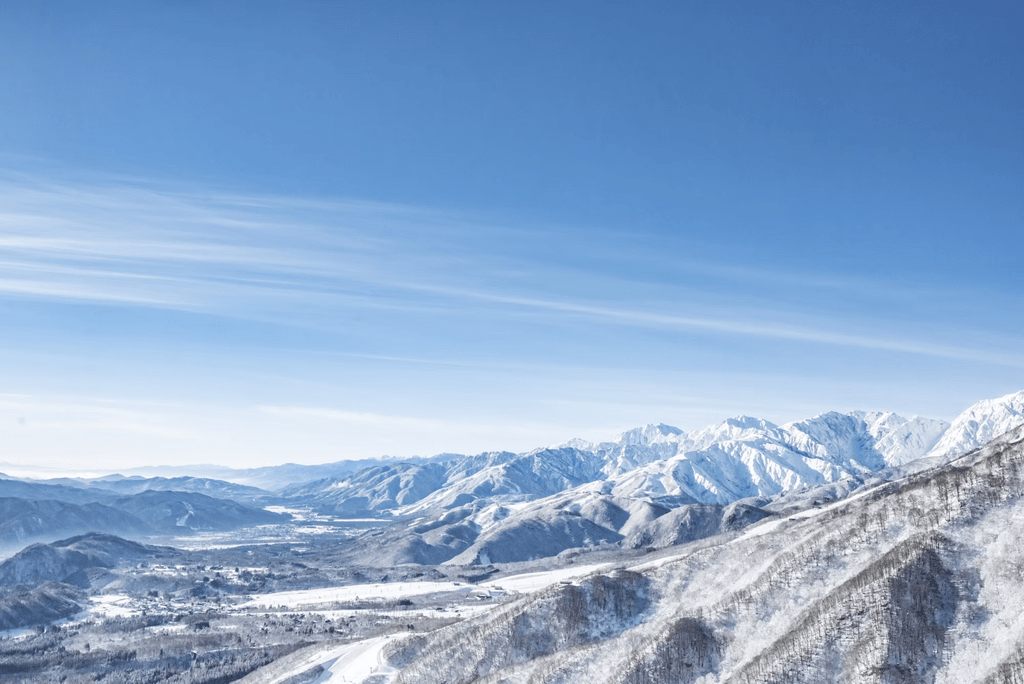
Why New Yorkers Are Skipping the Rockies for Japan’s Hakuba Valley
For most New Yorkers, a serious ski trip means a flight to Denver or Salt Lake City and a week in the Rockies. But more skiers are now choosing a longer flight in the other direction, to a valley in the Japanese Alps that hosted the 1998 Winter Olympics which receives around 30 feet of snow in a normal winter.
Hakuba is in Nagano Prefecture, about 200 miles northwest of Tokyo, just three hours by a combination of bullet train and bus. Ten separate ski resorts share the valley, linked by shuttle and covered by a single lift pass, with around 200 runs and the longest vertical in Japan at just over 3,500 feet top to bottom. If you already hold an Epic Pass, it includes five consecutive days across all ten Hakuba resorts. The terrain is steeper and longer than most first-time visitors expect from Japan, and the snow is the reason people fly 14 hours to reach it. Cold air from Siberia crosses the Sea of Japan, picks up moisture and dumps it on the mountains as light, dry powder, often for days at a time.
Direct flights from JFK land at Tokyo’s Haneda airport in the early afternoon, the bullet train reaches Nagano in 90 minutes, and a bus climbs into the valley in about an hour. Most visitors are at their hotel or chalet the same day they land.
Accommodation is spread across several villages along the valley, each with its own feel. The largest village sits at the foot of the biggest ski area, Happo-One, and has the widest choice of restaurants and bars, while the smaller villages nearby are quieter with streets lined with izakaya and ramen joints. Booking platforms that specialise in the region, such as Japan Ski Experience’s Hakuba accommodation listings, group properties by area and ski-in/ski-out access.
Hakuba has numerous onsen, which are natural hot spring baths, where a long soak is the standard way to end a day on the slopes. Restaurants serve the local specialities of soba noodles, grilled river fish and wagyu beef. Day trips to Matsumoto Castle, and the snow monkeys of Jigokudani, the ones photographed sitting in steaming pools, are a 90 minute drive away.
The valley is at its best in January and February, when it snows most days and there is fresh powder most mornings. A New Yorker used to fighting for first tracks on a Saturday in Vermont will find the snow deeper and lighter, the runs longer, and the days ending in an onsen and an izakaya rather than a base lodge.