Everything You Need to Know About Safely Clearing Trees, Protecting Surrounding Property, Managing Remaining Wood, and Improving Your Landscape
Trees can provide shade, privacy, beauty, wildlife habitat, and many other benefits, but there are situations when keeping a particular tree is no longer practical or safe. A tree may become severely damaged after a storm, develop extensive disease, suffer from structural weakness, or grow in a position that creates ongoing problems for nearby structures. When such conditions occur, carefully planned removal may be necessary to protect people and property while creating opportunities to improve the surrounding landscape.Removing a tree is not simply a matter of cutting through the trunk and allowing it to fall. Mature trees can weigh thousands of pounds, contain large branches, and have complicated structures that are difficult to predict. Nearby buildings, fences, vehicles, gardens, utility infrastructure, and walkways can make the work even more challenging. A professional approach considers the tree’s condition, surrounding environment, access, equipment, and final cleanup requirements before any cutting begins.
Understanding Why Tree Removal May Become Necessary
Not every tree with a problem needs to be removed. Some trees can be preserved through proper maintenance, structural support, or targeted care. However, severe decay, extensive trunk damage, major root problems, dangerous leaning, or large structural cracks may make preservation impractical. A professional assessment can help determine whether the tree can be managed safely or whether removal is the more responsible choice.Location is another important factor. A tree may be healthy but still create conflicts because it has grown too close to a building, driveway, fence, utility line, or other structure. Large branches can extend over roofs or areas where people regularly walk. Roots may also interfere with certain landscape features. In these situations, the decision should consider both the health of the tree and its relationship with the surrounding property.
Assessing the Health and Structure of a Tree
A proper assessment looks at the entire tree rather than concentrating on a single visible issue. The trunk should be checked for cavities, cracks, decay, damaged bark, and unusual growth. Major branches should be inspected for weak attachments, dead sections, splits, and signs of previous damage. The canopy can also provide useful information because significant thinning, dead branches, or uneven development may indicate underlying stress.The root area deserves attention as well. Roots provide stability and help absorb water and nutrients, so serious root damage can affect the entire tree. Construction activity, soil compaction, drainage problems, erosion, and physical damage can weaken roots over time. Because many root problems are difficult to identify from the surface, professional evaluation may be particularly valuable when a mature tree appears unstable or has suddenly declined.
Planning the Removal Before Work Begins
Good preparation is one of the most important parts of a successful removal project. The area surrounding the tree should be inspected carefully to identify buildings, vehicles, fences, garden structures, outdoor furniture, walkways, and other features that could be affected. The removal sequence should be planned according to the tree’s size, shape, condition, and available space.Access should also be considered before equipment arrives. Narrow gates, steep slopes, landscaping, walls, and other obstacles may restrict the movement of machinery. If equipment cannot reach the tree easily, alternative methods may be required. Discussing these conditions with the service provider before the scheduled work allows the team to prepare appropriately and reduces the chance of unexpected complications.
Making Safety the Main Priority
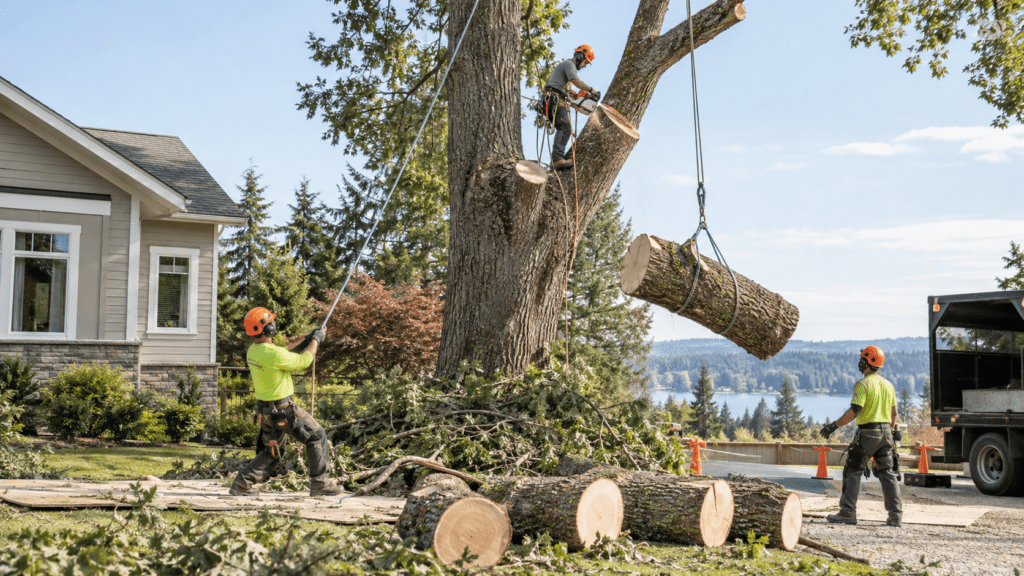
Tree work can involve falling branches, heavy trunks, cutting equipment, ropes, climbing systems, and powerful machinery. These hazards make safety essential from the beginning of the project. People who are not involved in the work should remain outside the designated work zone, while pets should also be kept away from the area.Professional crews use equipment and techniques designed to control the movement of branches and trunk sections. Workers may need to climb, use ropes, lower sections carefully, or operate specialized machinery depending on the tree’s location. Weather conditions should also be considered because high winds, rain, or slippery surfaces can increase the difficulty of the job. When conditions are unsafe, postponing the work may be the most responsible decision.
Protecting Buildings and Other Property
Trees growing near structures require careful handling because falling wood can cause significant damage. Roofs, windows, gutters, fences, vehicles, sheds, and outdoor equipment can all be vulnerable. Even a relatively small branch can cause expensive damage if it falls in the wrong location.Controlled removal techniques can reduce these risks. Rather than allowing large branches to fall freely, trained workers may cut them into smaller sections and lower them using appropriate equipment. The method depends on the size and structure of the tree as well as the surrounding space. Property owners should point out any especially valuable or delicate features before work begins so they can be considered during planning.
Considering Underground Infrastructure
The visible portion of a property does not reveal everything located beneath the soil. Irrigation systems, drainage pipes, electrical cables, communication lines, and other infrastructure may pass near a tree. Heavy equipment can also affect soft or unstable ground.Before major work begins, known underground features should be identified and communicated to the service provider. Root systems can also extend farther than expected, particularly around mature trees. Understanding what may be present below the surface helps professionals plan their equipment placement and removal techniques. Proper preparation can prevent unnecessary damage and reduce the likelihood of unexpected complications.
Managing Large Branches
Large branches can be difficult to control because their weight and shape influence how they move when separated from the tree. A branch that appears stable may shift unexpectedly after a cut is made. For this reason, experienced workers generally plan the order in which branches will be removed rather than cutting randomly.Reducing the canopy in stages can make the remaining trunk easier to manage. Branches may be cut into smaller sections and lowered carefully when the tree is positioned near structures or other obstacles. This controlled approach can reduce the force of falling wood and make it easier to protect the surrounding property. The exact technique depends on the individual tree and site conditions.
Handling the Main Trunk
Once the major branches have been removed, the trunk is usually handled in sections unless there is sufficient open space for a controlled fall. Large trunk sections can be extremely heavy and may require specialized equipment for safe handling. Internal decay can also make the trunk less predictable than it appears from the outside.Experienced professionals assess the condition of the trunk while planning the work. They can determine how sections should be cut, supported, lowered, and transported. This is particularly important for mature trees positioned near buildings or other valuable features. Proper handling of the trunk helps reduce unnecessary risks during the final stages of removal.
Dealing With the Remaining Stump
After the main tree has been cleared, the remaining stump may still occupy valuable space. It can interfere with mowing, planting, landscaping, construction, or general use of the property. Depending on the future plans for the area, the stump may be left in place, reduced below the surface, or removed more completely.If the area is intended for new landscaping, reducing the stump below ground level can provide greater flexibility. The resulting space can be filled with suitable soil and prepared for grass, plants, or other features. However, remaining roots may continue to occupy underground space and gradually decompose. The desired use of the area should therefore be considered before deciding how the stump should be handled.
Managing Wood and Debris
A large tree can generate a substantial quantity of branches, leaves, bark, and trunk sections. Deciding how these materials will be handled before work begins can make the project much easier. Some healthy wood may be suitable for firewood, woodworking, or other forms of reuse, while smaller branches can potentially be processed into mulch.The condition of the wood should be considered before reusing it. Diseased or pest-infested material may need special handling to avoid spreading problems to healthy plants. Large amounts of debris can also make the property difficult to use if they are left on site. Property owners should clarify whether cutting, chipping, hauling, and cleanup are included in the selected service.
Responsible Reuse of Tree Materials
Whenever suitable, tree materials can be reused instead of being treated as ordinary waste. Wood chips may be useful in certain landscaping applications, while larger sections of healthy wood can sometimes be cut into manageable pieces for later use. Reusing materials can reduce unnecessary disposal and provide practical benefits for the property.However, not every type of wood is suitable for every purpose. Fresh chips can influence soil conditions as they decompose, and infected wood may spread pests or diseases. The best use depends on the material’s condition and the intended location. Property owners should use judgment and seek professional guidance when there is uncertainty about whether tree debris can safely be reused.
Restoring the Cleared Area
Once the tree and debris have been removed, the landscape may need additional work to restore its appearance. The former tree location can be transformed into a lawn, planting bed, open space, or another landscape feature. Soil may need to be added or leveled, particularly if roots or the stump have been removed.The restoration plan should consider the reason the original tree was removed. If the tree had become a problem because it was too close to a structure, planting another large tree in the same location may recreate the problem in the future. A better approach is to select vegetation that fits the available space and growing conditions. Thoughtful planning can help the new landscape remain attractive without creating unnecessary conflicts.
Selecting a Suitable Replacement Tree
Replacing a removed tree can be a valuable way to maintain shade and greenery, but species selection should be based on mature characteristics rather than the size of a young plant. Some trees eventually develop wide canopies or extensive root systems that require considerable space. Others may be more suitable for restricted areas.Before planting, consider available sunlight, soil type, drainage, water requirements, mature height, canopy width, and proximity to structures. The tree should have enough room to develop naturally without interfering with buildings or infrastructure. Choosing the right species and location can reduce future maintenance needs and help ensure that the replacement becomes a long-term asset.
When Professional Assistance Is Necessary
Professional help is particularly important when a tree is large, damaged, leaning, difficult to access, or positioned close to buildings and utility infrastructure. Complex work may require climbing equipment, ropes, rigging systems, cranes, or specialized cutting machinery. These tools require training and experience to operate safely.Professional assistance can also save considerable time and physical effort. A large tree may require multiple workers to cut, lower, transport, and clean up the material. Attempting the project without suitable equipment can turn a manageable job into a dangerous and exhausting task. Experienced professionals can coordinate the different stages and complete the work in a controlled manner.
Choosing a Reliable Tree Service
Selecting a suitable provider requires more than simply comparing prices. Property owners should consider the company’s experience, qualifications, equipment, insurance, customer feedback, and range of services. A reliable provider should be willing to explain the proposed approach and identify any concerns associated with the tree or surrounding property.A written estimate can also help clarify expectations. Customers should understand whether the quoted price includes branch removal, trunk cutting, hauling, cleanup, and stump work. Asking these questions before the project begins can prevent misunderstandings and unexpected expenses. Clear communication is especially important when the property contains valuable landscaping or difficult access points.
Preparing the Property for the Work
Property owners can help the removal process by preparing the area before workers arrive. Vehicles, outdoor furniture, toys, tools, decorations, and other movable objects should be relocated away from the work zone. Gates should be unlocked when necessary, and access paths should be kept clear.Neighbors or other people who may be affected by the work should also be informed when appropriate. If equipment will need to pass through a narrow access point, measurements and access requirements should be discussed beforehand. These small preparations can save time and allow workers to focus on the removal itself.
Maintaining the Property After Removal
The work does not necessarily end once the tree has been cleared. The former tree location should be inspected for remaining roots, settling soil, new shoots, drainage changes, or other concerns. If a stump remains, it may require additional treatment or grinding depending on future landscaping plans.The surrounding trees should also continue to receive regular attention. One tree’s removal does not necessarily mean that other trees are healthy and stable. Storm damage, disease, pests, soil problems, and structural weaknesses can affect multiple trees in the same property. Routine observation can help identify problems before they become more difficult to manage.
Avoiding Common Removal Mistakes
One of the most common mistakes is assuming that a tree is easy to remove because it appears manageable from ground level. Height, weight, internal decay, branch structure, and surrounding obstacles can make the work much more complicated. Another mistake is failing to plan for the stump and debris after the main tree has been removed.Choosing a service based solely on the lowest price can also create problems. A very low estimate may not include hauling, cleanup, stump services, insurance, or other important elements. Comparing the complete scope of each service provides a more accurate picture of value. Safety, experience, professionalism, and communication should all be considered alongside price.
Final Thoughts
Tree removal can become necessary when a tree presents a serious safety concern, has suffered extensive damage, is severely diseased, or has become unsuitable for its surroundings. Because mature trees can be heavy and unpredictable, removal should be carefully planned and carried out using appropriate equipment and techniques. Protecting nearby buildings, managing branches and trunk sections, identifying underground infrastructure, and preparing for cleanup are all important parts of the process.Professional tree removal can make complicated projects safer and more efficient, particularly when large trees are close to buildings, fences, vehicles, or utility infrastructure. Once the work is completed, the cleared area can be restored through landscaping, planting, lawn improvement, or another practical use. With careful planning and responsible maintenance, removing an unwanted tree can create a safer, cleaner, and more functional outdoor environment while providing an opportunity to improve the property’s overall landscape.