
The New Luxury of Seeing It First: How AI Is Changing the Pre-Design Experience
In luxury residential design, the most expensive mistakes often happen long before construction begins.
A slab of stone is approved from a small sample. Custom cabinetry moves into production before the homeowner has fully understood its visual weight. A room layout looks balanced on paper but feels different once furniture, art, lighting, and scale enter the picture.
For years, high-end clients accepted uncertainty as part of the process.
Now, the pre-design stage is becoming more visual.
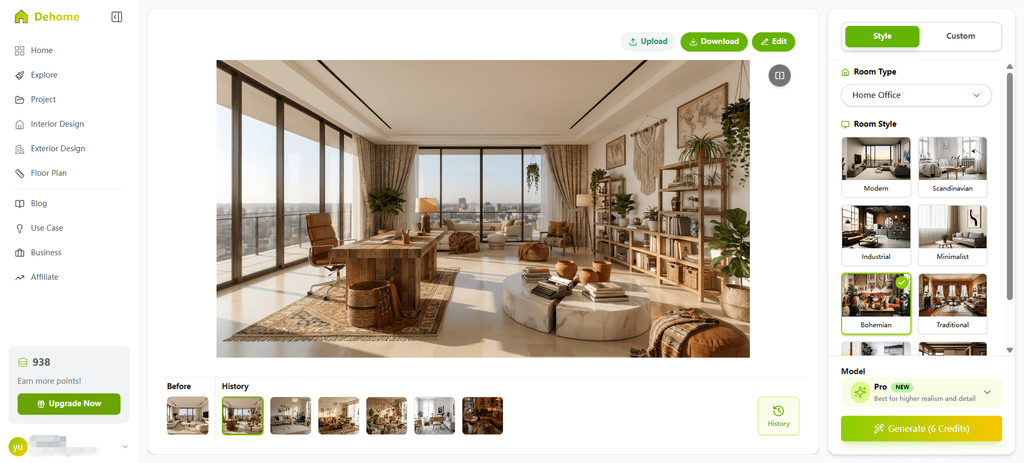
Platforms such as Dehome ai allow homeowners to explore broad interior and home-design ideas before committing to detailed specifications. The technology does not replace the architect or interior designer. In luxury projects, its more interesting role is giving clients a private space to experiment before the expensive decisions begin.
Luxury Design Has Always Required Imagination
The best interiors often begin as something difficult to explain.
A client may want a room to feel quieter without becoming minimal. More formal without feeling old. Richer without looking decorative. Contemporary, but still connected to the architecture of a prewar apartment or traditional house.
Experienced designers understand this language because they translate vague emotional cues into material, proportion, light, furniture, and detail.
Clients do not always have that vocabulary.
They may recognize what they want only when they see it.
This is why the traditional luxury-design process relies heavily on samples, drawings, renderings, references, and carefully constructed presentations.
AI adds another layer to that process: fast visual experimentation before the designer begins refining the answer.
The Digital Moodboard Becomes More Personal
A traditional moodboard shows a direction.
It may combine marble, fabric, timber, furniture, lighting, and reference interiors. The client responds to the atmosphere, but the examples are usually drawn from other spaces.
Generative visualization can place the conversation closer to the client’s own environment.
A homeowner can explore whether a warm contemporary approach feels appropriate for a specific room. A darker material palette can be compared with something quieter. A restrained interior can be tested against a more expressive version.
The value comes from comparison.
Luxury clients are rarely choosing between “good” and “bad.”
They are choosing between several potentially good directions and deciding which one feels most like them.

The Cost of Changing One’s Mind
In an inexpensive refresh, a mistake might mean repainting a wall.
In a high-end renovation, a change of mind can affect custom millwork, imported stone, furniture lead times, electrical positions, lighting, fabrication, and schedules across several trades.
That makes early clarity valuable.
Visual tools allow clients to explore ideas when changing direction is still inexpensive.
A homeowner may discover that a dramatic stone works better as an accent than across an entire room. An oversized island may look impressive but dominate the kitchen. A darker palette may suit an evening entertaining space but feel wrong in a breakfast room.
These are exactly the decisions worth testing before an order is placed.
AI Home Design Is Becoming an Exploratory Layer
A growing category of platforms is built around this early visual stage.
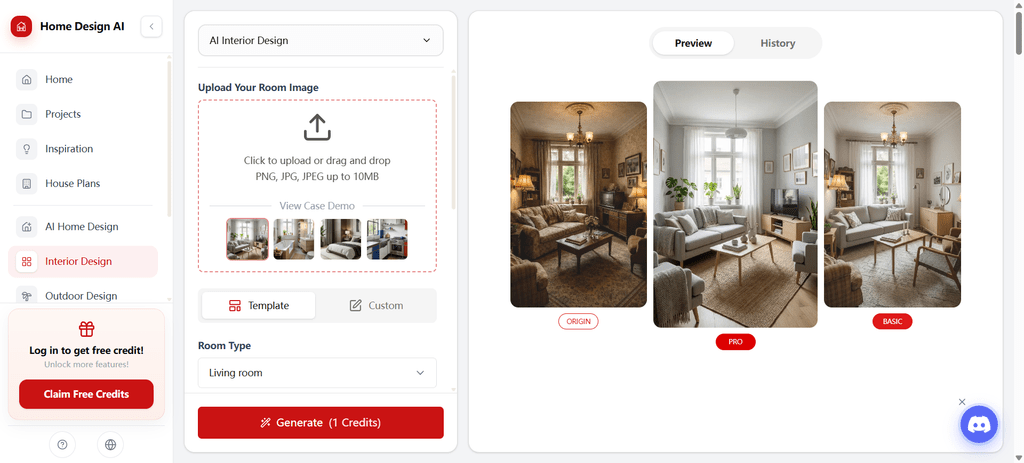
A Home design ai workflow can allow users to move from an image or written idea toward different interior, exterior, and residential design concepts.
The key word is concept.
A convincing render is not a specification.
The exact marble may not exist. The chair may not have the dimensions shown. The lighting may not behave exactly as predicted in a Manhattan apartment with neighboring towers outside the windows.
Used properly, these images answer a narrower question:
Is this direction worth developing?
That is useful information.
Why Designers Still Matter More at the High End
Luxury interiors are defined by details that image generation cannot fully understand.
The weight of a door.
The acoustic quality of a paneled room.
How stone feels underfoot.
The difference between two apparently similar plaster finishes.
The way daylight moves across an apartment from morning to late afternoon.
The craftsmanship of a custom edge detail that might occupy only a few millimeters of a drawing.
These decisions require knowledge of materials, trades, sourcing, construction, and human behavior.
They also require taste.
AI can generate many visually coherent possibilities. It cannot determine which one deserves to become the project.
That is still the designer’s work.
From More Options to Better Editing
Luxury has never been about having the most things.
It is about selection.
The same principle applies to AI-assisted design.
Generating fifty alternatives is easy. The sophisticated part is editing them.
A homeowner working with a designer may begin with several directions and quickly reduce them to two. One may have the correct material warmth. Another may have the stronger furniture proportions. A third may introduce a lighting idea worth keeping even if the rest of the image is rejected.
The designer can then extract what is useful and remove what is superficial.
This resembles the traditional design process more than it first appears.
Designers have always collected references, studied precedents, tested options, and edited aggressively.
AI changes the speed at which some of those visual references can be produced.
It does not change the need for judgment.
Material Reality Comes Next
Once the visual direction is clear, the project must return to physical reality.
This is where samples become essential.
Stone should be viewed as a full slab when possible, not only as a small square. Timber needs to be considered against actual lighting. Metal finishes should be compared beside other materials rather than approved individually.
Textiles need to be touched.
Furniture needs to be measured.
Paint needs to be tested in the room.
A digital concept may suggest that warm stone and dark oak create the right atmosphere. The design team then decides which stone, which oak, which finish, and which craftsmanship will achieve it.
The image begins the conversation.
Materials finish it.
New York Homes Make Context Particularly Important
Residential design in New York rarely happens on a blank canvas.
A prewar apartment may have moldings, old floors, unusual room proportions, radiators, and layers of architectural history. A new condominium may offer glass walls, open plans, mechanical systems, and highly controlled modern finishes.
Neither should be treated like a generic room.
The strongest projects respond to what already exists.
AI-generated concepts can help clients experiment, but the design team must decide how much of the original architecture should remain visible and where new interventions should deliberately contrast with it.
In luxury renovation, restraint can be more difficult than transformation.
The Private Experiment Before the Professional Conversation
There is another reason visual AI may appeal to high-end homeowners: privacy.
Not every idea deserves a formal design presentation.
A client may be curious about a dramatically darker room, a different architectural style, or an unconventional material direction but feel uncertain about asking the design team to develop it.
AI offers a low-pressure space for that curiosity.
If the idea fails, nothing is lost.
If it works, the client can bring the reference into the professional process and explain what they found compelling.
That can make the eventual design conversation more focused.
The Future Is Hybrid, Not Automated
The most likely future for luxury home design is not a fully automated interior.
It is a more layered process.
AI may handle rapid visual exploration.
Designers will interpret the client, the architecture, and the physical reality of the property.
Architects and consultants will resolve technical requirements.
Craftspeople will turn drawings and specifications into objects and spaces that digital images can only approximate.
For homeowners, the advantage is not the elimination of expertise.
It is entering that expert process with a clearer understanding of what they want.
The luxury of the next generation may therefore be less about instant design and more about informed choice.
Seeing more possibilities early allows the final project to become more selective, more deliberate, and ultimately more personal.