How Smarter Pouch Packaging Can Reduce Waste and Control Production Costs
Manufacturers often focus on the purchase price of packaging equipment, but the largest long-term expenses usually appear during daily production. Product giveaway, rejected packages, damaged materials, labor requirements, unplanned downtime, and slow changeovers can gradually reduce profit. A reliable packaging process should therefore be designed to control waste as well as increase output.
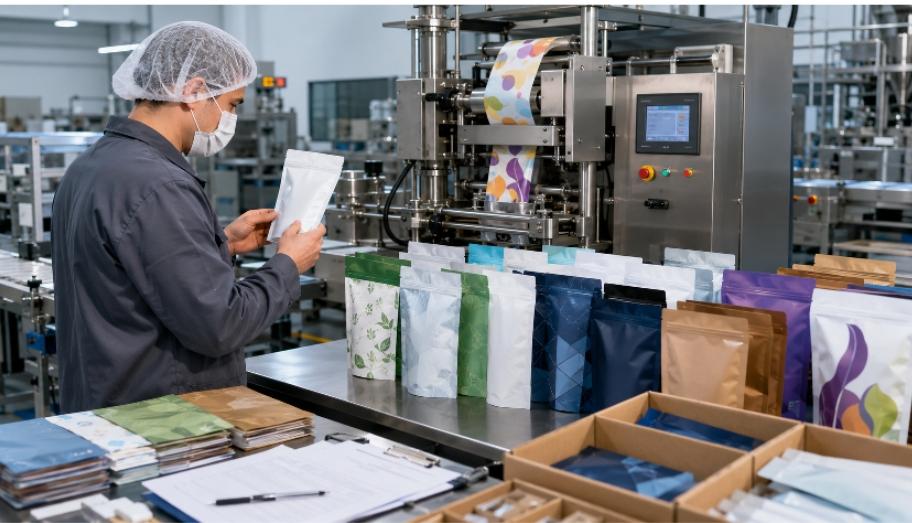
Modern Pouch Packaging Machines can help create a more consistent process by coordinating pouch handling, filling, sealing, and finished-package discharge. When the equipment is correctly matched with the product and packaging material, manufacturers can reduce unnecessary losses while maintaining a professional result across repeated production runs.
Packaging Waste Is More Than Discarded Film
When people hear the term packaging waste, they may think only about unused bags or pieces of plastic film. In a production environment, waste can appear in several different forms.
A pouch may be rejected because it was not opened properly, received the wrong amount of product, or developed a weak seal. Product may also be lost through overfilling, spills, dust, leaks, or damage during handling.
Time is another form of waste. Employees may spend valuable hours correcting preventable errors, cleaning unnecessary spills, waiting for materials, or restarting equipment after repeated stoppages.
A manufacturer should therefore examine the complete process instead of measuring only the number of discarded pouches.
Accurate Filling Helps Prevent Product Giveaway
Overfilling may appear harmless because the customer receives slightly more product. However, a small amount of extra product in every pouch can become a significant cost when thousands of units are produced.
Underfilling creates a different problem. It can lead to customer complaints, failed quality checks, or packages that do not meet the declared weight.
The filling method should be selected according to the product. Powders, liquids, granules, irregular pieces, and fragile items behave differently and cannot always be measured through the same system.
Regular weight checks should be performed throughout production rather than only at startup. If the average fill weight begins to move away from the target, operators can investigate the cause before a large quantity of product is affected.
Consistent Pouch Handling Reduces Rejected Packages
Premade pouches must be picked up, positioned, opened, filled, and sealed correctly. A problem at any stage can create an unusable finished package.
Pouches that stick together, vary in thickness, or arrive with damaged edges may not move smoothly through the process. Incorrect machine settings can also cause poor opening, misalignment, or wrinkling around the seal.
Packaging materials should be stored in a clean, dry, and controlled area. Operators should inspect new deliveries for dimensional changes or visible damage before loading them into production.
The machine must also be adjusted for the actual pouch size and structure. Using one general setting for several different pouch designs may increase the risk of handling errors.
Seal Failures Create Hidden Costs
A failed seal can be more expensive than the value of one rejected pouch. If the problem is not discovered inside the factory, it may lead to leaks during storage, damaged shipping cartons, returned orders, or loss of customer trust.
Sealing quality depends on several factors, including heat, pressure, contact time, pouch material, and cleanliness. Powder, oil, liquid, or small product pieces near the opening may prevent the sealing surfaces from joining correctly.
Operators should inspect the seal area regularly and remove residue before it builds up. Finished packages may also require visual checks, leak testing, or seal-strength testing, depending on the product.
A clear inspection routine allows the production team to identify changes early rather than waiting for failures to become obvious.
Better Material Planning Prevents Unnecessary Losses
Packaging production depends on more than the machine. Pouches, labels, coding materials, product ingredients, cartons, and spare parts must all be available when needed.
Poor planning can stop the line even when the main equipment is operating correctly. In other cases, materials may be ordered in excessive quantities and remain in storage for too long.
Manufacturers should track how many pouches are used, rejected, or damaged during each production run. Comparing expected material use with actual consumption can reveal problems that are not immediately visible.
For example, an increase in pouch usage without a similar increase in finished output may indicate more setup waste, handling errors, or seal failures.
Changeovers Should Be Organized and Measured
Factories often use the same line for several products, flavors, pouch sizes, or fill weights. Every change requires adjustments, cleaning, inspection, and testing before normal production can begin again.
Without a clear procedure, employees may make changes in a different order each time. This can extend downtime and create more rejected packages during startup.
A useful changeover procedure should identify the required parts, approved settings, cleaning steps, test quantities, and final quality checks. Tools and replacement components should be prepared before the current production run ends.
Changeover time should also be recorded. Once the process is measured, the team can identify which steps cause the greatest delays and improve them without reducing safety or quality.
Automation Can Support More Stable Labor Costs
Manual packaging requires employees to repeat several tasks, including opening pouches, measuring product, filling, sealing, and moving finished packages. As production grows, the company may need additional workers simply to keep up with volume.
Well-configured Pouch Packaging Machines can combine several of these steps into a controlled sequence. Employees can then focus on supplying materials, checking quality, monitoring settings, cleaning equipment, and responding to alarms.
The purpose of automation is not only to reduce the number of people near the line. It should also make better use of employee time and reduce physical repetition.
Labor savings should be evaluated realistically. The factory will still need trained operators, maintenance support, sanitation work, material handling, and quality control.
Preventive Maintenance Protects Production Efficiency
A packaging system may lose efficiency gradually before a complete breakdown occurs. Worn grippers may cause poor pouch handling, damaged sealing surfaces may create inconsistent seals, and dirty sensors may trigger unnecessary stops.
Preventive maintenance helps identify these issues before they interrupt an important order.
The maintenance schedule may include cleaning, inspection, lubrication, adjustment, and replacement of wear parts. The exact tasks should follow the equipment requirements and the product environment.
Factories should also keep essential spare parts available. A low-cost component can cause several hours or days of downtime when a replacement is not immediately accessible.
Maintenance records are useful because they show which parts fail repeatedly and how long components normally remain reliable.
Stable Production Is Better Than Maximum Speed
Manufacturers are naturally interested in machine speed, but the highest possible speed is not always the most profitable operating point.
Running too fast can increase pouch-handling errors, inaccurate filling, weak seals, product spills, and frequent stops. A slightly lower but stable speed may produce more acceptable packages by the end of the shift.
Production teams should measure completed and approved packages rather than counting only machine cycles. A line that produces many rejected packages is not truly efficient.
The ideal operating speed is one that balances output, quality, safety, and equipment condition. It may also change when the factory switches to a different product or pouch size.
Production Data Can Reveal the Real Cost of Waste
Many packaging problems remain unnoticed because they are not recorded. Employees may correct the same issue every day without realizing how much time or material it consumes over a month.
Basic production data can make these losses visible. Useful records include:
- Number of acceptable and rejected packages
- Average fill weight and product giveaway
- Reasons for downtime
- Changeover and cleaning time
- Pouches damaged during setup
- Seal failures and product leaks
The information does not need to be complicated. Even a simple, consistent reporting method can help managers recognize repeated patterns.
The goal is not to blame operators. Data should be used to improve training, materials, machine settings, maintenance, and production planning.
Operator Training Reduces Avoidable Mistakes
An automated line still depends on people who understand how to use it correctly. Poor training can lead to incorrect recipes, unsuitable temperature settings, rushed changeovers, or delayed responses to alarms.
Operators should know how to start and stop the machine safely, load pouches, select approved settings, perform basic inspections, and recognize unusual behavior.
They should also understand which adjustments they are permitted to make. Allowing uncontrolled setting changes can make troubleshooting difficult because the original cause of the problem may become hidden.
Cross-training more than one employee protects the factory from relying on a single experienced operator. Written procedures and refresher training can help maintain consistent working methods.
Packaging Quality Protects the Brand
Waste control should not come at the expense of package quality. A cheaper material or faster setting may reduce one immediate cost but create larger problems after the product reaches customers.
The pouch is often the first physical part of the product that a buyer notices. Poor alignment, product residue, unclear coding, weak seals, or inconsistent fill levels can make the brand appear unreliable.
A professional package should protect the contents and remain easy for the customer to store, open, pour, or reseal when necessary.
Quality standards should therefore be defined before production begins. Operators need clear examples of acceptable and unacceptable packages so decisions do not depend on personal judgment.
Evaluate the Total Cost of Ownership
The lowest-priced machine is not always the least expensive option over its working life. Businesses should consider installation, training, energy use, maintenance, spare parts, product loss, material waste, labor, downtime, and future upgrades.
A machine that costs more initially may provide better value if it reduces repeated waste and operates reliably for many years. However, unnecessary features can also increase cost without improving the actual process.
Manufacturers should request realistic production testing with their own product and pouch material. Testing can reveal filling accuracy, seal quality, achievable speed, cleaning requirements, and changeover difficulty.
A careful evaluation makes it easier to compare equipment according to real production value instead of purchase price alone.
Create a Continuous Improvement Process
Waste reduction is not a one-time project. Products, employees, suppliers, packaging materials, and production targets may change over time.
Factories should review performance regularly and select small, measurable areas for improvement. One month may focus on reducing seal failures, while another may target shorter changeovers or more accurate filling.
Changes should be tested carefully and recorded. Making several adjustments at once can make it difficult to determine which one produced the result.
Operators, maintenance staff, quality teams, and production managers should all contribute because each group sees a different part of the process.
Final Thoughts
Efficient pouch packaging depends on controlling many small details. Filling accuracy, pouch quality, sealing conditions, material planning, operator training, maintenance, and production speed all influence the true cost of every finished package.
Automation can create a more repeatable process, but equipment alone cannot eliminate waste. The strongest results come from combining suitable machinery with clear procedures, trained employees, reliable materials, and regular performance reviews.
Manufacturers that study their total production losses can make better investment decisions and protect both profitability and product quality. Businesses researching automated flexible packaging solutions can explore additional equipment information through pallasmt.com.