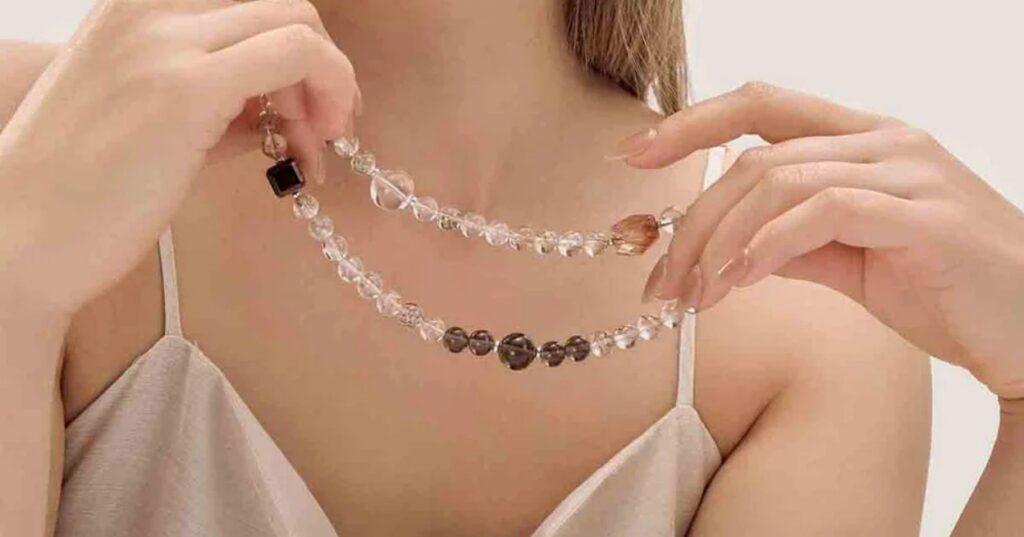
The Art of Stacking Natural Stone Jewelry Without Overdoing It
Stacked jewelry looks effortless when it is done well: a few bracelets at the wrist, a small pendant against a clean neckline, or a ring that quietly picks up the same tone of metal or stone. The effect should feel collected over time, not crowded together in a hurry. That balance is especially important with natural stone jewelry, because stones such as jade, moonstone, obsidian, rutilated quartz, and pyrite already bring their own color, texture, and distinctive visual character to a look.
The challenge is that the same qualities that make natural stones interesting can also make a stack feel busy. Put too many strong colors, bead sizes, and metal finishes together, and the result can quickly move from polished to accidental. A refined stack is less about wearing every favorite piece at once and more about choosing a focal point, controlling proportion, and letting each item have a clear role.
For a modern wardrobe, stacking should work across real settings. It should feel intentional enough for dinner, relaxed enough for a weekend, and refined enough to sit beside tailoring without looking overdone.
Start With One Anchor Piece
A strong jewelry stack usually begins with one anchor piece. This is the item that sets the mood for everything else, whether it is a jade bracelet with a soft green tone, a moonstone piece with a subtle glow, an obsidian bracelet with a darker edge, or a warm metallic design that adds light at the wrist.
Once the anchor is chosen, the supporting pieces should work around it rather than compete with it. If the main piece has color, the rest can stay quieter. If it is beaded, a slim chain can add contrast without adding visual weight. If it has a strong metal tone, repeating that tone once or twice will usually look more intentional than introducing several different finishes.
This approach is especially useful with natural stones because the material already carries enough character. A single jade or moonstone piece can often hold attention on its own, so the surrounding jewelry should create rhythm instead of trying to become a second focal point.
Keep Metal Tones Deliberate
Metal tone is one of the quickest ways to make a stack feel either refined or unfocused. Warm-toned metals tend to work well with jade, pyrite, rutilated quartz, citrine, smoky quartz, and other earthy stones because they add softness and warmth beside cream, camel, ivory, black, denim, and silk. Cooler-toned metals can make moonstone, clear quartz, amethyst, and darker stones feel cleaner or more minimal, especially with white shirts, gray knits, black tailoring, and cooler wardrobe palettes.
Mixing metals can work, but it needs to look deliberate. The easiest method is to choose one dominant tone and let the other appear as a small accent. For example, a mostly warm-toned bracelet stack can include one cooler detail, but if every bracelet uses a different finish, the look starts to lose focus.
It also helps to remember that a bracelet stack does not exist by itself. It sits next to a watch, rings, clasps, sleeves, and sometimes a handbag or phone in the same visual field. When those details share a related metal tone or finish, the entire look feels more considered.
Mix Textures, Not Too Many Colors
Natural stone stacking works best when texture does more of the work than color. A common mistake is choosing several stones simply because each one is beautiful on its own. Green jade, luminous moonstone, black obsidian, golden rutilated quartz, and bright pyrite can all be appealing separately, but when too many appear together, the stack can start to feel visually crowded.
A more elegant approach is to limit the palette and vary the texture. One colored stone, one metal chain, and one quieter accent can create enough movement. A smooth bead bracelet can pair with a fine chain; a polished stone can sit beside a simpler metal detail; a small pendant can echo the tone of a bracelet without repeating it too directly.
This is where curated collections of natural gemstone jewelry can be useful. They make it easier to compare stone color, scale, chain weight, and overall mood before building a stack. The aim is not to make every piece match perfectly, but to make the pieces feel related enough to belong together.
Balance Beaded and Chain Styles
Beaded jewelry and chain jewelry create very different effects. A beaded bracelet feels tactile and substantial, with rhythm, weight, and a stronger natural-stone presence. A chain bracelet feels lighter, more linear, and often more refined. When the two are combined carefully, the contrast can make a stack feel more dimensional.
The problem comes when every piece has the same weight. Three heavy bead bracelets can look crowded, while several very thin chains may disappear or tangle visually. A stronger wrist stack usually combines one piece with presence and one or two quieter pieces around it.
For the wrist, a useful formula is one stone bracelet, one fine chain, and one simple metal or neutral accent. For the neckline, one short chain and one longer pendant often work better than several stone pendants competing for the same space. For rings, it is usually more modern to let one hand carry the statement while the surrounding rings stay plain and low-profile.
Good stacking often depends on editing. Removing one piece can make the whole arrangement look more expensive.
Match the Stack to the Setting
Jewelry stacking should shift slightly depending on where it is being worn. For work, the stack can stay clean and controlled: one small natural stone bracelet beside a watch, or a slim chain bracelet that adds personality without distracting during a meeting or presentation. The jewelry should feel intentional, but it does not need to become the focus of the outfit.
For dinner, there is more room for contrast. A jade piece with warm-toned metal, a moonstone accent with a silk blouse, or a darker stone against black tailoring can create a stronger visual point without feeling theatrical. For weekends, the stack can be more relaxed, especially with denim, knitwear, linen, and simple cotton pieces. Beaded bracelets and softer stones often feel more natural in these settings.
For travel, fewer pieces usually work better. A small stack of two bracelets can be more useful than packing several unrelated options, especially if the stones are neutral or muted enough to work across multiple outfits. The most elegant stacks are not fixed formulas. They adjust with the day.
Let One Stone Set the Mood
Natural stones are visually expressive, so it helps to let one stone define the visual tone of a stack. Jade offers a calm-looking green accent and quiet structure. Moonstone adds softness and light. Obsidian introduces darker contrast. Rutilated quartz shows warm golden detail. Pyrite adds a subtle metallic edge.
Those associations are best understood as cultural or aesthetic references rather than claims about what a stone can do. A polished stack should not feel like a costume or a collection of symbols. Most people choose natural stone jewelry because they appreciate its natural beauty, craftsmanship, color, and design, without attributing any supernatural or spiritual qualities to the stones.
That is one of the reasons natural stone jewelry works well in everyday styling. It can reflect personal taste or remind someone of a special occasion while still functioning as part of a well-edited wardrobe. The focus should remain on its natural beauty, craftsmanship, and timeless design.
Build Around Proportion
Proportion often decides whether a stack looks refined. If the stones are large, the number of pieces should usually stay low. If the stones are small, there is more room to layer. If the chain is delicate, it should not be placed between heavy bracelets where it will visually disappear.
The same idea applies to clothing. A stronger cuff or bead bracelet can work well with a rolled shirt sleeve or a simple black dress. A delicate chain stack suits silk, fine knitwear, or a clean neckline. A pendant with a natural stone needs enough space around it, especially if the neckline already has detail.
When the styling starts to feel crowded, look at the negative space. A little skin between bracelets, a clean neckline around a pendant, or one bare finger among several rings can make the whole arrangement feel more intentional.
A Modern Way to Layer Natural Stones
The most modern stacks avoid the feeling of accumulation for its own sake. They look edited, even when several pieces are involved. That is also the appeal of layering and stacking natural stone jewelry through a more curated approach: instead of combining random favorites, the focus is on building small relationships between color, metal, stone, and scale.
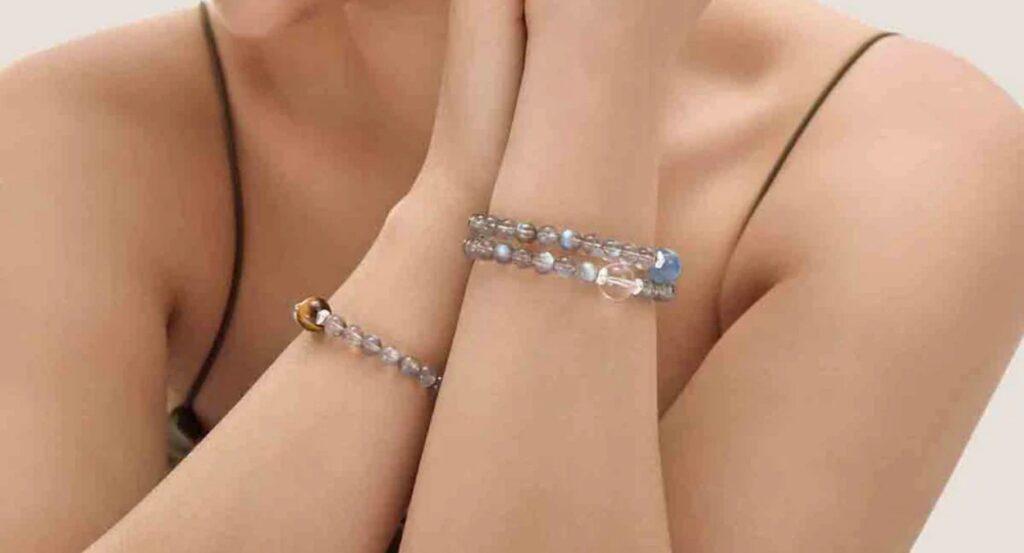
A warm-toned chain can make jade look more luminous. A fine bracelet can soften the look of a beaded piece. A neutral stone can visually quiet a brighter one. A pendant can echo the color at the wrist without repeating it too literally. These small relationships are what make a stack feel personal but still polished.
CHOODO, a jewelry brand focused on natural stones for everyday styling, leans into this balance with pieces that can feel personal while remaining simple enough to enter a daily wardrobe. The result is not jewelry that looks over-arranged, but jewelry that feels wearable and considered.
The Stack Should Still Feel Like You
The best jewelry stack is not always the most complicated one. It is the one that feels believable on the person wearing it. Some people look best in a single jade bracelet and a slim chain, while others can wear three bracelets, several rings, and a pendant without looking overdone because their wardrobe already has more texture and movement.
Personal style matters more than any fixed rule, but the strongest stacks tend to share a few qualities. They have one focal point, a controlled color palette, repeated metal tones, varied texture, and enough space for each piece to be seen. Natural stone jewelry already has a distinctive appearance; stacking it well means presenting that appearance in a balanced and refined way.
When the balance is right, the result does not look like a trend. It looks like a habit, a detail, a small signature that has become part of the way someone dresses. It is noticeable enough to feel intentional and easy enough to be worn again tomorrow.