Motorcycle Chaps: The Complete Buying Guide for Riders Who Actually Ride
If you’ve spent any real time on a bike, you already know the feeling. You’re doing 70 on the highway, the wind’s cutting through your jeans like they’re not even there, and by the time you pull over for gas, your legs feel like they’ve been through a sandblaster. That’s the exact moment most riders start Googling “motorcycle chaps” for the first time.
Chaps aren’t a fashion statement (well, not only a fashion statement). They’re one of the most practical, underrated pieces of gear a rider can own. And yet, most people don’t buy their first pair until after a bad ride, a close call, or a long trip that taught them the hard way. This guide is here so you don’t have to learn it that way.
Let’s break down what chaps actually do, what to look for, and how to pick a pair that’ll last more than one riding season.
What Are Motorcycle Chaps, Really?
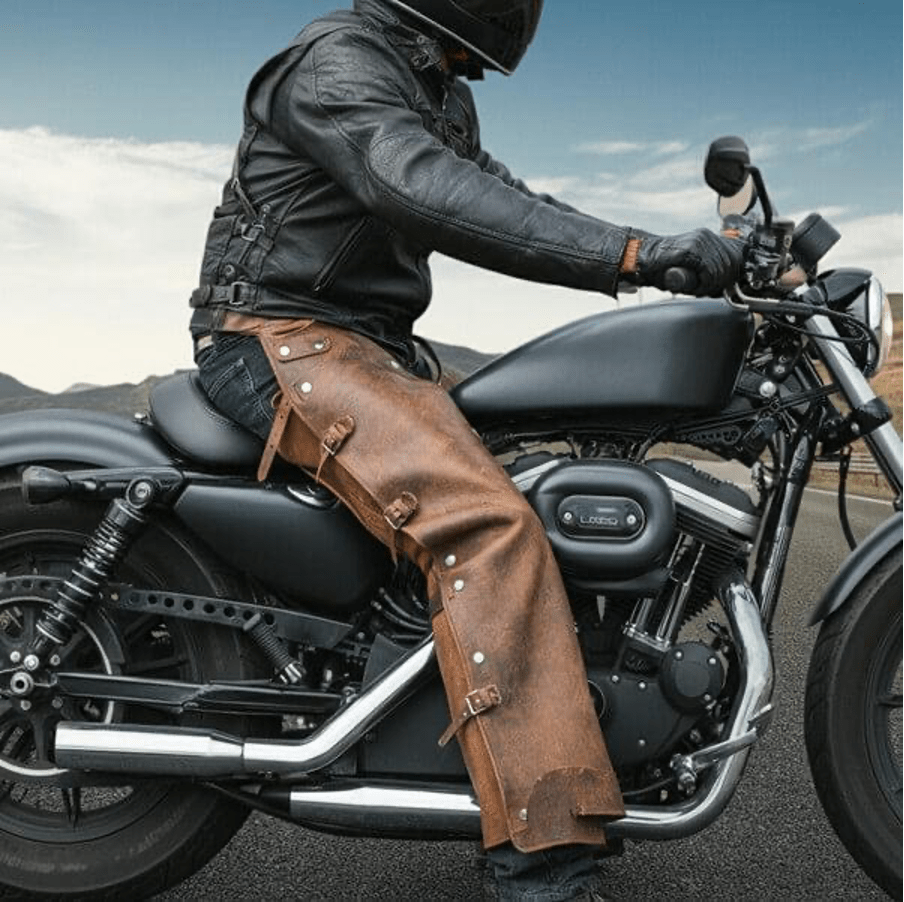
Motorcycle chaps are leg coverings worn over your regular pants, open at the back and secured around the waist and legs with snaps, buckles, or laces. Unlike full riding pants, they don’t have a seat or a crotch panel — they’re designed to slide on over whatever you’re already wearing, which is exactly why riders love them for quick gear-up before a ride.
They trace back to cattle ranching, where cowboys needed leg protection from brush, thorns, and rope burn. Bikers adopted the same idea for a different kind of hazard: asphalt, wind, and heat.
Why Riders Actually Wear Them (It’s Not Just Looks)
Wind and cold protection. Jeans do almost nothing against wind chill at highway speeds. Leather chaps block that cold air completely, which matters a lot more once the temperature drops below 60°F.
Abrasion resistance. If you go down, road rash on your legs is one of the most common and most painful motorcycle injuries. Quality leather chaps buy you a real layer of protection between your skin and the pavement.
Heat shielding. V-twin engines and exhaust pipes run hot. Ask any rider who’s had an exposed calf too close to a header pipe — chaps solve that problem permanently.
Comfort on long rides. Less wind fatigue means less overall fatigue. Anyone doing multi-hour highway stretches notices the difference by the second hour.
Types of Motorcycle Chaps
Not all chaps are built the same, and the right pair depends on how and where you ride.
Standard Leather Chaps The classic choice. Full-grain or top-grain cowhide, built for durability and abrasion resistance. Best for cruiser riders, touring riders, and anyone riding in cooler climates.
Chinks (Short Chaps) Cut off above the ankle instead of running to the boot. Lighter, less bulky, popular with riders who want protection without the extra material bunching around their boots.
Assless Chaps (Traditional Biker Style) The style most people picture when they hear “motorcycle chaps” — open at the back, snug fit, classic Harley culture look. Functional and iconic at the same time.
Textile/Mesh Chaps Built for hot climates. These trade some abrasion resistance for airflow, using ballistic nylon or mesh panels instead of full leather. Good for summer riders who still want leg coverage without overheating.
Insulated Winter Chaps Lined with a thermal layer for cold-weather and winter riders. If you ride year-round, this is the pair that keeps you on the road when everyone else parks the bike.
What to Look for Before You Buy
Leather quality matters more than price alone. Full-grain leather outlasts and outperforms bonded or split leather by a wide margin. It costs more upfront, but a good pair of full-grain leather chaps will outlive several cheaper pairs, which makes it the better deal over time.
Check the stitching. Look for double or triple stitching along stress points — inseams, waist, and snap areas. This is usually the first place cheap chaps fail.
Fit is everything. Chaps should sit snug at the waist and fall straight along the outer leg without bunching. Too loose, and they flap at speed. Too tight, and you’ll lose mobility on the bike. Most brands offer a size chart based on waist and inseam — measure before you order instead of guessing.
Closures. Snap closures are quick and easy for daily riders. Zippers give a closer fit but take longer to get in and out of. Adjustable lacing at the back lets you fine-tune the fit over jeans of different thicknesses.
Ventilation. If you ride somewhere hot, look for chaps with side lacing, mesh panels, or perforated leather. Full solid leather in 100°F heat is miserable, no matter how tough it is.
Reflective or stitched detailing. Small thing, but reflective piping adds visibility at night, which matters more than most riders think about until they’re riding home after dark.
Leather Types Compared
| Leather Type | Durability | Cost | Best For |
| Full-grain cowhide | Highest | Higher upfront | Daily riders, long-term durability |
| Top-grain cowhide | High | Mid-range | Most riders, good balance of cost and protection |
| Split leather | Moderate | Lower | Occasional riders, shorter-term use |
| Textile/mesh blend | Lower abrasion resistance | Varies | Hot climates, short commutes |
How Much Should You Expect to Pay?
Decent leather motorcycle chaps generally start around $70–$100 for entry-level pairs, with quality full-grain leather chaps from established leather manufacturers running $120–$250. Custom or heavily reinforced touring chaps can go higher. As a rule, anything priced dramatically below that range is usually cutting corners on leather thickness or stitching, so it’s worth checking reviews and return policies before buying from an unfamiliar brand.
Caring for Leather Chaps So They Actually Last
Leather is an investment, and a small amount of maintenance adds years to its life:
- Wipe down after wet rides and let them air dry away from direct heat.
- Condition the leather every few months with a proper leather conditioner to prevent cracking.
- Store on a hanger, not folded, to avoid permanent creasing.
- Avoid direct sunlight for long-term storage, since UV exposure dries out and fades leather over time.
Final Thoughts
Motorcycle chaps aren’t just about looking the part — they solve real problems every rider eventually runs into: wind, heat, cold, and the ever-present risk of the pavement winning an argument with your skin. The right pair, in the right leather, fitted correctly, is one of the cheapest forms of insurance you can put on before a ride.
If you’re shopping for your first pair or replacing a worn-out set, take the extra five minutes to measure properly and check the leather grade before you buy. It’s the difference between chaps that last one season and chaps that last a decade.