
Eco-Conscious Silk Tank Tops for Sustainable Fashion
Few garments carry the effortless elegance of a silk tank top. Its smooth drape against the skin, the subtle sheen that catches light, and its ability to transition from a lazy Sunday morning to a polished evening out have made it a wardrobe staple for decades. Yet for the modern consumer, reaching for that beautiful silk piece comes with a nagging question: at what cost to the planet and its people?
Conventional silk production raises legitimate concerns about environmental impact, animal welfare, and labor practices. But here’s the good news—sustainable silk offers a path where luxury and conscience coexist. New farming methods, ethical production standards, and transparent brands are redefining what it means to wear silk responsibly.
This guide is designed for eco-conscious shoppers who refuse to sacrifice style for sustainability. We’ll explore why silk can genuinely be a green fabric choice, how to identify ethical brands worth your investment, ways to style your silk tank top for maximum versatility, and care practices that extend its life for years. Your next silk purchase can be one you feel genuinely good about.
Why Silk is a Sustainable Fabric Choice
A truly sustainable fabric meets several criteria: it must be renewable, have a low environmental footprint during production, biodegrade at end of life, and ideally support ethical labor practices. Silk checks many of these boxes in ways that might surprise you.
As a natural protein fiber, silk is fully biodegradable. Unlike polyester—which sheds microplastics with every wash and persists in landfills for centuries—a silk garment will return to the earth naturally when its life finally ends. Silk production also requires significantly less water than cotton and avoids the petroleum-based chemistry behind synthetics.
Traditional sericulture does involve boiling cocoons with silkworms inside, which raises ethical objections. However, alternatives now exist. Peace Silk, also called Ahimsa Silk, allows the moth to emerge naturally before the cocoon is harvested. Organic mulberry farming eliminates pesticides and synthetic fertilizers from the silkworm’s food source, reducing chemical runoff and protecting local ecosystems.
Perhaps silk’s greatest sustainability advantage is its remarkable durability. A well-made silk tank top resists odors, regulates temperature across seasons, and maintains its structure through years of wear. This longevity supports the “buy less, buy better” philosophy that sits at the heart of conscious consumption. When you invest in one quality silk piece instead of cycling through five synthetic alternatives, you reduce overall resource consumption dramatically. The initial cost per wear drops with every use, making silk not just an ecological choice but an economical one over time.
Identifying Truly Ethical Silk Brands and Practices
Not every brand marketing itself as “sustainable” has earned that label. With greenwashing on the rise, knowing how to separate genuine commitment from clever branding is essential. Truly ethical silk brands demonstrate accountability across three pillars: verified certifications, transparent supply chains, and fair treatment of both workers and animals.
Key Certifications to Look For
Certifications act as third-party proof that a brand meets specific environmental and social standards. The Global Organic Textile Standard (GOTS) verifies that fibers are organically produced and that manufacturers meet strict ecological and labor criteria throughout processing. Oeko-Tex Standard 100 tests finished textiles for harmful substances, ensuring the silk against your skin is free from toxic chemicals. For animal welfare specifically, look for Peace Silk or Ahimsa Silk designations, which confirm that moths were allowed to complete their life cycle before cocoon harvesting. A brand displaying multiple certifications signals a deeper, more holistic commitment to responsible production.
Transparency in the Supply Chain
Certifications matter, but so does a brand’s willingness to show you the full picture. Ethical companies openly share where their silk is farmed, how cocoons are processed, which dyeing methods are used, and where garments are sewn. Before purchasing, dig into the brand’s website for a dedicated sustainability or sourcing page. If that information is absent, reach out directly and ask: Can you trace this silk back to the farm? What are the labor conditions in your factories? How do you handle wastewater from dyeing? Brands like Reformation, Eileen Fisher, and smaller labels such as Lanius publish detailed impact reports and name their production partners. This level of openness isn’t just admirable—it’s the minimum standard you should expect when paying a premium for ethical silk.
Supporting Artisan and Slow Fashion Brands
Small-scale silk producers and artisan cooperatives offer something mass manufacturing cannot: human connection to every thread. When you buy from a slow fashion brand, your purchase often supports traditional weaving communities, preserves heritage techniques passed through generations, and ensures artisans earn fair, living wages. These producers typically operate with minimal waste because they craft in small batches rather than overproducing for seasonal trends. Seek out artisan silk brands through ethical fashion directories like Good On You, curated marketplaces such as The Folklore, or by exploring regional textile cooperatives directly. Choosing these makers turns your silk tank top into more than a garment—it becomes a vote for craftsmanship over convenience.
Styling Your Sustainable Silk Tank Top: Timeless Versatility
A silk tank top earns its place in a conscious wardrobe by working harder than almost any other single piece. Its fluid silhouette adapts to context with minimal effort—pair it with high-waisted linen trousers and flat sandals for a weekend farmers market run, or tuck it into tailored wool pants with pointed-toe flats for a polished office look. Come evening, let it shine under a structured blazer with statement earrings and your favorite dark denim.
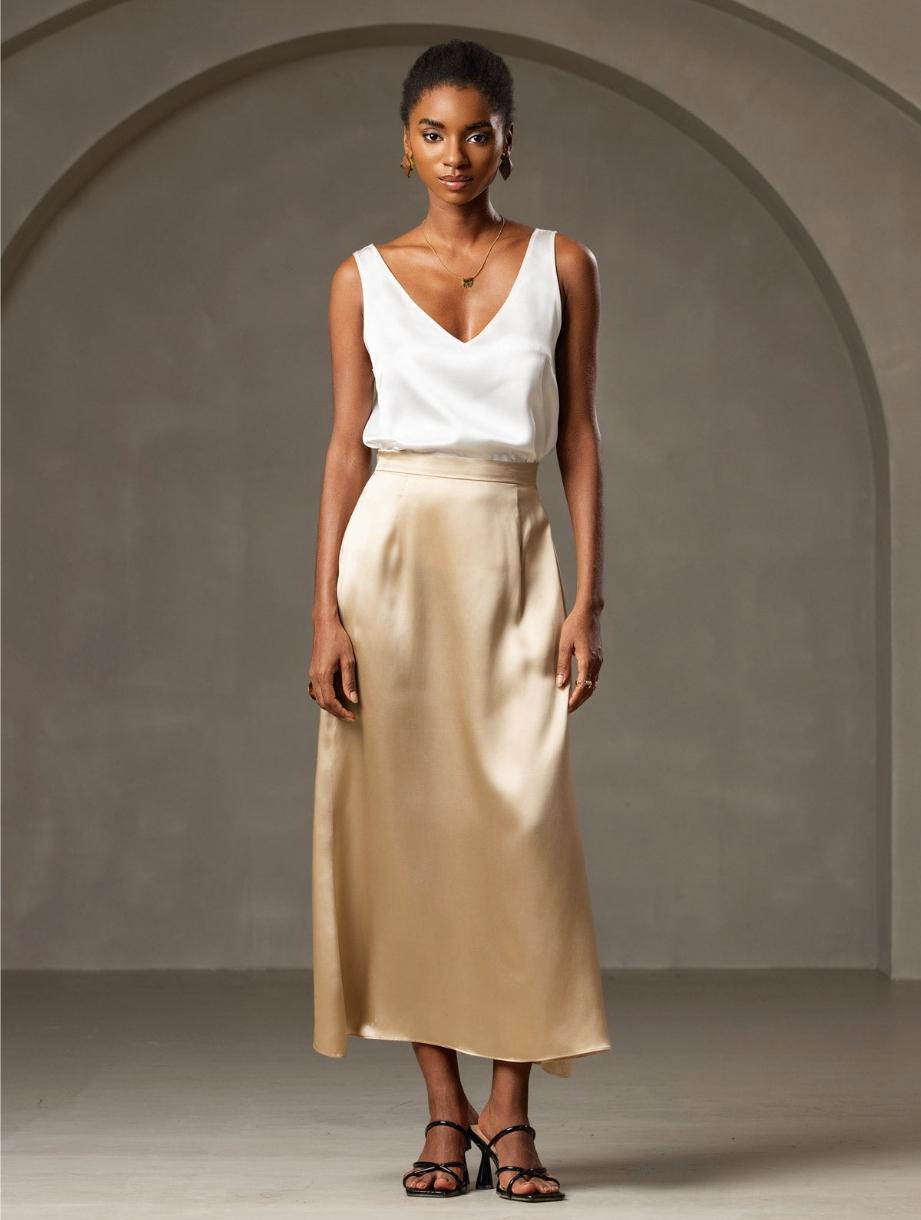
The key to maximizing versatility lies in building around what you already own. Layer your silk tank beneath a chunky knit cardigan in cooler months, or wear it alone with a midi skirt when temperatures rise. It bridges seasons effortlessly because silk naturally thermoregulates, keeping you cool in summer and adding a breathable base layer in winter.
When choosing colors, lean toward shades you’ll reach for repeatedly. Ivory, black, navy, and soft blush integrate seamlessly into most existing wardrobes and resist the pull of fleeting trends. A neutral silk tank top pairs with bold prints and textured fabrics without competing for attention, giving you dozens of outfit combinations from a single thoughtful purchase. This is sustainable style in practice—not accumulating more, but unlocking more from less through intentional, classic choices that reflect your personal aesthetic rather than a passing season.
Caring for Your Silk to Maximize Its Life
The most sustainable garment is one you never need to replace, and proper care is what transforms a silk tank top from a seasonal purchase into a decade-long companion. Silk rewards gentle treatment with lasting beauty, and the care routine itself can align with your eco-conscious values.
Hand washing remains the gold standard. Fill a basin with cool water, add a few drops of a plant-based, pH-neutral detergent—brands like Eucalan or Heritage Park formulate specifically for delicate natural fibers without harsh sulfates—and submerge your tank top for three to five minutes. Gently swirl without wringing or twisting, then rinse in clean cool water until the soap is gone. If you prefer machine washing, place the top inside a mesh laundry bag and select the most delicate cycle with cold water and minimal spin.
Never tumble dry silk. Instead, lay it flat on a clean towel, roll the towel to press out excess moisture, then reshape the garment on a drying rack away from direct sunlight, which can fade color and weaken fibers. For wrinkles, use a steamer or iron on the lowest silk setting while the fabric is still slightly damp, always pressing on the reverse side.
Address stains immediately by blotting—never rubbing—with cold water and a tiny amount of mild detergent. For storage, fold your silk tank with acid-free tissue paper in a breathable cotton bag rather than hanging, which can stretch the delicate fabric over time. Keep it away from cedar and mothballs, as these chemicals can discolor silk. Each of these small acts of care compounds into years of additional wear, reducing your overall consumption and deepening your relationship with the pieces you own.
![[Black] SilkSilky Pure Silk Spaghetti Strap V Neck Camisole Top 001](https://lh7-rt.googleusercontent.com/docsz/AD_4nXdRoh5P_2brU85qiHJdeogxSkKVLohoM5kZMkyyCernfWsemLiOOQ1dgWPgQAsa-qEGuBwu5i8MY4q4fmBx6izfcUZHuz-cjaDSlDrjGZkY0EEcn4ZhTrFciCPLGRiCYS-1nv0LLsRoQ92NYvO9PdfbPlIBgYQ=s2048?key=3jAa7HrnaXjp0hVYjCw4YQ)
Making the Conscious Choice: A Buyer’s Guide
With everything covered so far, the moment of purchase is where knowledge becomes action. Before adding any silk tank top to your cart, run through a simple mental checklist. First, verify the fabric source—is it Peace Silk, organic mulberry silk, or conventionally produced? Second, check for at least one recognized certification such as GOTS or Oeko-Tex. Third, visit the brand’s website and look for named suppliers, factory locations, and published impact data. If any of these details are missing or vague, consider that a red flag worth investigating further.
Price deserves honest consideration. A sustainably produced silk tank top will cost more than its fast-fashion counterpart, and it should. That higher number reflects fair wages for farmers and seamstresses, chemical-free dyeing processes, small-batch production that minimizes waste, and certifications that require ongoing audits. Think of it not as spending more but as paying the true cost of a garment made without cutting ethical corners. A single well-chosen silk camisole that lasts eight to ten years with proper care replaces a cycle of cheap tops that pill, fade, and end up in landfill within a season or two.
When evaluating fit and comfort, prioritize pieces that feel right against your skin immediately—silk should drape without clinging and move with your body. Brands like SilkSilky offer a range of silk tank tops in classic silhouettes and neutral tones, making it easier to find a piece that integrates naturally into your existing wardrobe. Choose a color you already know works for you so the piece gets worn constantly rather than sitting unworn. The most sustainable purchase is one you reach for again and again, not one that looked appealing online but never leaves the drawer. By approaching each buy with this level of intention, you build a closet where every item earns its place through quality, ethics, and genuine personal joy.
Wear Silk Responsibly, One Intentional Choice at a Time
A silk tank top doesn’t have to be a guilty pleasure. When chosen with care, it becomes one of the most responsible items in your closet—a garment that marries genuine luxury with environmental and ethical integrity. The path to getting there isn’t complicated, but it does require intention.
Start with the fabric itself: seek out Peace Silk or organically farmed mulberry silk that respects both ecosystems and animal welfare. Vet the brands you support by looking for credible certifications like GOTS and Oeko-Tex, and reward companies that open their supply chains to scrutiny rather than hiding behind vague marketing language. When styling, treat your silk tank as a versatile foundation piece that earns its keep across seasons and occasions, proving that a conscious wardrobe never means a boring one. And once that beautiful piece is yours, care for it with the gentleness it deserves—hand washing, proper storage, and mindful stain treatment will keep it in rotation for years, not months.
Every purchase is a statement about the world you want to live in. By choosing one thoughtfully made silk tank top over a handful of disposable alternatives, you reduce waste, support fair livelihoods, and build a closet rooted in quality and meaning. Sustainable fashion isn’t about perfection—it’s about progress, one intentional choice at a time. Let your next silk tank top be that choice.