Creative Tech Gifts for Families Who Want More Than Another Toy
The question is quietly changing in design-minded homes. It is no longer only “What can we buy for our child?” It is becoming “What kind of experience can this gift create?” — and that shift is why creative technology has become one of the more considered categories in family gifting.
There is a particular kind of silence that follows the unboxing of a toy. At first, everything feels exciting — the box is opened, the parts come out, the child plays, the family takes a few photos. But a few weeks later, many of those toys settle into the same familiar places: the bottom of a storage bin, the corner of a playroom, a shelf already crowded with last season’s favorites.
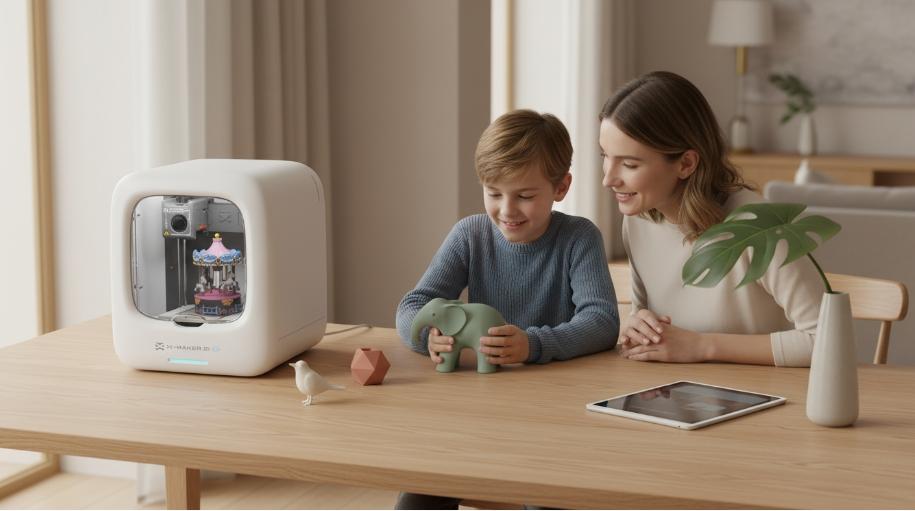
For families who value design, creativity, and meaningful time together, the question is changing. The best products in the creative-technology space are not simply devices — they give children a way to imagine, design, build, play, and return to the experience again. AOSEED falls into this newer category of family-friendly creative tech. Rather than presenting children with another finished toy, it gives them a way to create their own: through kid-friendly 3D printing, AI-assisted modeling, guided toy design, and a large toy library, it turns the idea of a gift into something more active — a home toy workshop.
A better gift is one that keeps opening
The most memorable children’s gifts often have a life beyond the first day. A book becomes a bedtime ritual. A musical instrument becomes a practice routine. A set of building blocks becomes a small city, rebuilt differently each weekend. These gifts last because they create repeatable experiences.
The value of a premium family gift is not only how impressive it looks when opened. It is whether the child can keep discovering new ways to use it. A toy with one fixed function has a shorter story; a creative tool can support many. With a guided 3D printing system, a child can make a small animal one week, a race car the next, a game piece for family night, a room decoration, or a gift for a teacher. The object changes, but the routine remains: choose, customize, print, play, and imagine what comes next.
| That is the difference between a toy and a platform for play. |
From screen time to something tangible
Parents often talk about screen time as if all screen use is the same. It is not. A child watching autoplay videos is having one type of experience; a child using an app to design a toy, personalize a model, and then print something they can hold is having another. Both involve a screen — only one ends with a physical creation.
This is where AOSEED’s approach becomes especially relevant. It does not pretend screens are absent from children’s lives; instead, it gives the screen a better role. The app becomes a design doorway, not the destination. A child can use it to start an idea, choose a model, or explore a playful design path — then the activity moves offline into printing, touching, testing, gifting, and playing.
For families exploring AOSEED’s home toy-workshop ecosystem, the appeal is not only that a child can use technology. It is that technology leads somewhere real.
Why toy-making feels more personal than toy-buying
There is a subtle but powerful difference between receiving a toy and making one. A purchased toy is designed elsewhere; the creative decisions have already been made. A child-made toy carries a different feeling. It may not be perfect. It may be simple. But it is personal.
A small dinosaur printed at home can become part of a story. A custom race car can be tested across the living room floor. A game token can become part of family night. A name tag can make a child’s desk feel more their own. A small printed gift can become a moment of pride. The luxury here is not extravagance. It is agency — the child gets to say, “I made this.” That sentence sits at the center of AOSEED’s value: it shifts children from toy consumers to toy creators.
What makes AOSEED different as a family creative tool
Many 3D printers were originally designed for hobbyists, makers, and engineers who enjoy technical settings. That world can be exciting, but it is not always welcoming for families buying a first creative-technology product for a child. AOSEED’s advantage is that it translates 3D printing into a more guided family experience.
Instead of beginning with a blank professional design screen, children can start with AI-assisted ideas, game-style toy customization, and beginner-friendly modeling tools. This matters because the hardest part of creativity is often not imagination — it is getting started. AI-assisted prompts can spark an idea; game-style design makes customization feel playful rather than technical; beginner-friendly modeling gives children room to grow. A child does not need to understand professional CAD software to begin. They need a clear path, a few meaningful choices, and a result they can use.
For first-time families, a guided 3D printer for first-time young makers can make that first step feel more approachable.

The 5,000+ toy library solves the “what next?” problem
One of the most common problems with creative gifts is momentum. The first project is exciting. The second is harder to choose. By the third week, many families stop because they don’t know what to make next. A large toy library helps solve that.
AOSEED’s 5,000+ toy library gives children a wide range of project ideas — animals, vehicles, characters, game pieces, gifts, decorations, pretend-play objects, and more. This is not just a convenience feature; it is the reason the product can stay active over time. Parents don’t have to invent a new activity every weekend, and children don’t have to stare at a blank screen. The library gives the family a starting point, and the child personalizes from there.
For families comparing options, this guided project ecosystem often matters more than raw specifications — the question is not only “What can this printer do?” but “Will our family know what to make next?” And because curiosity grows, a creative 3D printer that grows with curious kids can carry a child from their first simple toy toward more detailed, design-led projects over the years — answering the “what next?” question long after the novelty of the first print has passed.
Why ease and design matter in a premium family product
A family creative tool has to feel different from a hobbyist machine. Parents care about whether the product suits the home, whether the process is manageable, whether the child can participate meaningfully, and whether the adult’s role is clear. AOSEED’s family-friendly design supports that experience:
| Design detail | Why it matters in a home |
|---|---|
| Rounded-corner design | Feels more appropriate in a child-centered environment |
| Fully enclosed structure | More peace of mind than open-frame machines |
| Quiet printing | Easier to live with in a shared living space |
| Fast printing up to 400 mm/s | Shortens the wait between idea and finished object |
These details matter because a premium product is not only about what it can produce — it is about how comfortably it fits into daily life. The best family technology should not ask parents to become technicians. It should help children create while giving parents a clear, supportive role.
Educational value, without feeling like homework
Parents often want gifts that offer educational value, but children rarely want gifts that feel like assignments. AOSEED’s strongest educational value comes from making learning feel like play, through a natural creative loop:
THE CREATIVE LOOP
| IDEA | DESIGN | TEST | PLAY | IMPROVE |
That loop introduces early design thinking without turning the activity into a formal lesson. A toy car that doesn’t roll well becomes a reason to ask why. A printed animal can become part of a story world. A gift project can teach personalization, patience, and purpose. AOSEED supports this growth through 20+ fun modeling and AI modeling app experiences, along with creativity-focused video content — younger children begin with simple customization, while older kids explore more detailed projects over time. That makes the product more than a seasonal toy. It becomes a tool that can grow with a child’s curiosity.
The home toy workshop as a modern family ritual
The most beautiful family products are the ones that quietly become rituals. A coffee-table book becomes a Sunday-morning conversation. A kitchen tool becomes a shared recipe. A piano becomes evening practice. A creative-technology tool can become weekend maker time — and the ritual doesn’t need to be complicated.
A child chooses a project. A parent helps set up. The child customizes one detail. The object is printed. The family plays with it, displays it, gives it away, or talks about what to change next time. That small routine is where the real value lives. A printed object is not only an object — it becomes a memory of making, proof that the child had an idea and brought it into the room. That is why AOSEED’s positioning as a home toy workshop feels stronger than a simple product description: it gives families an experience to repeat, not just an item to store.
Why creative tech fits the premium lifestyle conversation
For a discerning audience, the word “premium” should not only mean expensive. It should mean considered. A premium children’s gift should be well designed, useful beyond one occasion, and aligned with the family’s values — creating moments that feel richer than consumption alone.
Creative tech fits this conversation because it connects technology with creativity, family time, and tangible output. It is not a passive entertainment device, and it is not another fixed toy. It is a system for turning a child’s ideas into physical things — which is a more meaningful kind of gift. It gives children creative agency, gives parents a way to participate, gives families a reason to return, and gives technology a purpose beyond the screen.
A more thoughtful kind of toy
Children will always love toys. That will not change. What is changing is what a toy can be. A toy can be something bought, opened, and played with — but it can also be something imagined, designed, printed, customized, gifted, tested, and improved.
AOSEED represents that second idea, bringing AI-assisted toy design, a 5,000+ toy library, family-friendly hardware, and guided creative workflows into one experience built for children and parents to use together. For families who want more than another toy, the better gift may be a tool that helps a child become the creator of their own play. In a home already full of objects, the most meaningful gift may be the one that teaches a child they can make something of their own.