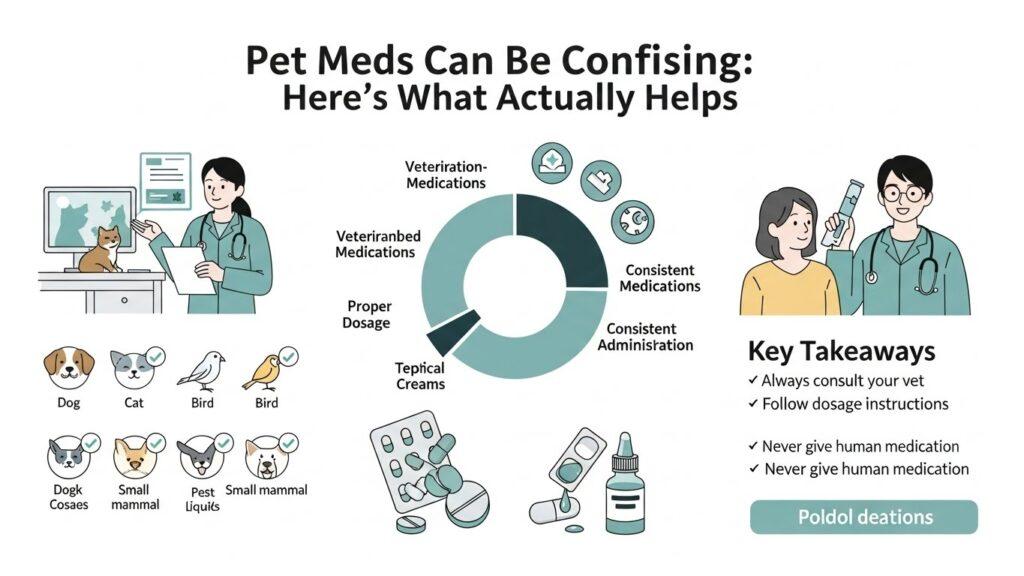
Pet Meds Can Be Confusing—Here’s What Actually Helps
If you’ve ever stood in a pet store aisle feeling completely overwhelmed by the sheer number of medications, supplements, and treatments on the shelves, you’re not alone. The world of pet medications can feel like it requires a pharmacy degree to navigate. Between prescription drugs, over-the-counter options, supplements, and preventatives, it’s easy to feel lost. But it doesn’t have to be this complicated.
Let’s cut through the noise and focus on what actually helps when it comes to understanding and managing your pet’s medications.
Start With the Basics: What Type of Medication Is This?
Pet medications generally fall into a few categories, and understanding these can help you make sense of what you’re dealing with. Prescription medications require a veterinarian’s authorization—these include antibiotics, pain medications, heart medications, and treatments for specific conditions. They require professional oversight because dosing, interactions, and monitoring matter.
Over-the-counter options include things like certain flea and tick preventatives, some dewormers, and basic supplements. Many routine preventatives are available as pet meds without vet prescription, which can simplify ongoing care for healthy pets. These products have wider safety margins and are designed for general use without individualized medical guidance.
Supplements occupy a gray area—they include everything from joint support products to probiotics to calming aids. They’re not regulated as strictly as medications, which means quality can vary significantly between brands.
Reading Labels Without Getting a Headache
Medication labels pack a lot of information into a small space, and not all of it is equally important for day-to-day use. The essentials you need to identify include the active ingredient (what actually does the work), the concentration or strength, dosing instructions, and any warnings or contraindications.
For prescription medications, your vet will provide specific instructions that override whatever the general label says. Write these down or ask for printed instructions—relying on memory when you’re worried about a sick pet isn’t ideal.
With over-the-counter products, pay close attention to weight ranges and species specifications. A product safe for dogs might be dangerous for cats, and dosing for a Chihuahua looks very different than dosing for a Great Dane.
Creating a System That Works
One of the biggest challenges with pet medications isn’t understanding them—it’s remembering to give them consistently. If your pet takes daily medication, tie it to something you already do every day, like your morning coffee or feeding time. Consistency in timing helps maintain steady levels of medication in your pet’s system.
For monthly preventatives, set a recurring reminder on your phone. Pick the same day each month so it becomes routine. Some people find it helpful to keep preventatives somewhere visible—not hidden in a cabinet where they’re out of sight and out of mind.
If you have multiple pets or complex medication schedules, a written chart or spreadsheet can prevent confusion. Note what each pet takes, when, and any special instructions like “give with food” or “separate from other medications by two hours.”
When Something Doesn’t Seem Right
Trust your instincts. If your pet starts acting differently after beginning a new medication, that’s worth noting. Common side effects might include drowsiness, stomach upset, or changes in appetite. While some of these are expected and temporary, others could indicate a problem.
Keep a simple log of any changes you observe—what you noticed, when it started, and how long it lasted. This information is incredibly helpful for your vet in determining whether the medication is working as intended or whether adjustments are needed.
Don’t hesitate to call your vet’s office with questions. A quick phone call can often clarify whether what you’re seeing is normal or concerning, and it’s better to ask than to worry in silence or stop medication without guidance.
Making Medication Time Less Stressful
Getting medication into a reluctant pet is an art form that most pet owners eventually master through trial and error. Pills can be hidden in soft treats, cheese, peanut butter, or commercial pill pockets. Some pets do better if you pretend the pill-wrapped treat is a special reward rather than medicine time.
Liquid medications can be mixed with food for some pets, while others need them administered directly with a syringe. Aim for the side of the mouth, between the cheek and teeth, rather than straight down the throat—this reduces the risk of aspiration and is generally better tolerated.
If your pet absolutely refuses one form of medication, ask about alternatives. Many medications come in multiple formulations—pills, liquids, chewables, and even transdermal gels that absorb through the skin. A little creativity can make a big difference in compliance.
Knowing When to Ask for Help
There’s no shame in admitting you’re confused. Veterinary medicine has become increasingly specialized and sophisticated, and even medical professionals sometimes need to look things up. If you’re unsure about why a medication was prescribed, how it works, or what to watch for, ask your vet to explain.
Good veterinarians want informed clients. They’d rather spend time answering your questions than deal with the consequences of miscommunication or medication errors. Most clinics also have veterinary technicians who can provide guidance on administration techniques and answer basic questions about medications.
Pet medications might seem complicated at first, but with a little organization and the right questions, it becomes manageable. The goal isn’t to become an expert—it’s to feel confident enough to give your pet the care they need.