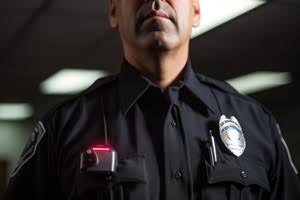
6 Details Defense Attorneys May Look for in Police Video Evidence
Police video can become some of the most closely examined evidence in a criminal case. Body-worn cameras, dashboard cameras, booking-room recordings, and other law-enforcement video may capture statements, searches, arrests, officer instructions, or interactions between witnesses and police. Yet a recording does not automatically provide a complete account of what occurred.
A Gainesville criminal defense legal team may compare police video with reports, witness statements, physical evidence, dispatch records, and other recordings before deciding what the footage actually establishes. Florida law requires agencies that use body cameras to create policies governing their use, maintenance, storage, and retention. Federal Bureau of Justice Assistance guidance also warns that body cameras may miss important events because of activation timing, camera angle, lighting, obstruction, or other technical limitations.
1. What Happened Before the Recording Started
One of the first questions is whether the recording begins at the start of the relevant encounter or after significant events have already occurred. A video that begins with an arrest, argument, or physical struggle may not reveal what led to that moment.
The U.S. Department of Justice has recognized this limitation in its review of body-worn camera research. Critical incidents can develop quickly, and an officer may activate a camera only after an encounter is already underway. Some camera systems can retain buffered footage from before activation, but the availability and length of that footage depend on the system and its settings.
Florida law requires law-enforcement agencies using body cameras to establish their own policies concerning when and how cameras are used. Examining the agency’s policy together with the actual footage can help determine whether an earlier portion of the encounter may be missing.
2. Whether the Video Matches the Written Police Report
Police reports often contain descriptions of what officers say they observed, heard, or did. Video allows those descriptions to be compared with an independent recording of at least part of the event.
Differences may involve the sequence of commands, where people were standing, how quickly events occurred, when an item became visible, or what a person actually said. A discrepancy does not automatically mean the report is false. The question is whether the difference concerns an important fact and whether the video provides a clearer account.
Florida evidence law permits witness credibility to be challenged through inconsistent statements, while the state’s rules governing prior statements establish procedures for confronting a witness with a previous account. Recorded evidence can therefore become relevant when testimony or a written account changes over time.
3. What the Camera Could—and Could Not—See
A body camera records from the camera’s position, not from the officer’s eyes. The Bureau of Justice Assistance specifically warns that body-camera footage may be affected by viewing angle, focus, lighting, body movement, and obstructions. An officer may turn their head without turning their torso, meaning something visible to the officer may remain outside the camera frame.
The opposite problem can also occur. A recording may appear to give a clear view to someone watching it later while the officer was simultaneously dealing with movement, noise, multiple people, or another event outside the frame.
During pursuits or physical struggles, video can become unstable or partially blocked. DOJ’s body-camera research also notes that audio may remain useful when the video image becomes difficult to interpret.
A defense review therefore needs to distinguish between what the recording proves and what remains outside its field of view.
4. Whether the Timeline Is Complete and Internally Consistent
Timestamps, activation points, pauses, separate camera files, and changes between recordings can help establish the sequence of events. If several officers were present, their individual cameras may have started and stopped at different times or captured the encounter from different locations.
Florida law requires agencies using body cameras to establish procedures for storage and retention of recorded data and to review actual body-camera practices periodically for compliance with agency policy.
Questions may arise when a recording ends unexpectedly, begins after other footage, contains unexplained gaps, or does not align with dispatch or report times. Those issues do not necessarily establish that evidence was altered, but they may require an explanation.
Florida Evidence Code § 90.901 also requires evidence to be authenticated before admission, meaning sufficient evidence must support a finding that an item is what its proponent claims it to be. Metadata, witnesses familiar with the recording, and information about how the file was created or stored can become relevant to that process.
5. Statements Captured Before and After the Main Event
Police video can record more than the conduct leading directly to an arrest. It may capture conversations between officers, spontaneous statements from witnesses, descriptions given by alleged victims, or comments made by the accused.
The timing and context of these statements can matter. An early description may differ from one given later after witnesses have spoken with other people or learned additional information. Similarly, a short clip may sound different when surrounding conversation is included.
Florida’s rule of completeness addresses this problem. Under § 90.108, when one party introduces part of a recorded statement, the opposing party may require contemporaneous introduction of another portion that fairness requires to be considered with it.
Reviewing the full recording can therefore prevent a sentence or exchange from being evaluated without the conversation that came immediately before or after it.
6. Whether Other Evidence Confirms the Video’s Apparent Story
A single recording does not need to be evaluated alone. Another officer’s body camera may show the same event from a different direction. A dashboard camera, store surveillance system, 911 recording, dispatch communication, photograph, or physical item may add information that one camera missed.
DOJ investigations routinely describe reviewing body-camera footage together with security video, witness accounts, physical evidence, radio communications, forensic material, and police reports. That approach reflects a basic limitation of video evidence: one camera captures one perspective.
Comparing several sources can reveal whether the recordings support each other or whether significant conflicts remain. A claimed object may not appear in one camera angle but may be visible from another. A witness’s description of timing may fit dispatch records while conflicting with an officer’s recollection.
Police Video Is Evidence, Not the Entire Investigation
Body-camera and other police recordings can provide valuable evidence because they preserve sound and images that do not depend entirely on later memory. Florida also requires agencies using body cameras to maintain formal policies governing the technology and recorded data.
Still, federal guidance stresses that body cameras cannot capture every aspect of an encounter and cannot replace a complete investigation. The strongest review examines when recording began, whether reports match the footage, what remained outside the camera’s view, whether the timeline is complete, what statements were captured, and how the recording compares with independent evidence.
Those details can determine whether police video strongly supports the prosecution’s account, raises questions about a key allegation, or leaves important parts of the case unresolved.