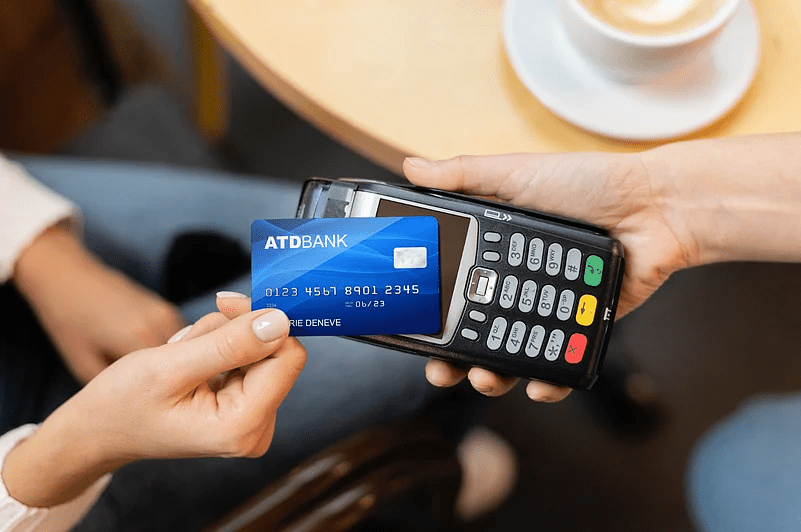
Your Card Swipe Abroad Costs More Than You Think
There’s a particular kind of sticker shock that doesn’t hit you at the register — it shows days later, buried in a bank statement. You’re reviewing charges from a recent trip and notice the numbers don’t quite add up. The café in Paris, the taxi in Tokyo, the boutique in Buenos Aires — each transaction came with a silent surcharge you never agreed to out loud.
Welcome to the fine print of spending money overseas.
The Markup Nobody Announces
When you use a debit or credit card internationally, the transaction flows through a chain of financial intermediaries — your card network, your issuing bank, and sometimes a local processing partner. Each one takes a cut. Foreign transaction fees typically run between 1% and 3% of every purchase. On a two-week trip with $4,000 in spending, that’s potentially $120 gone before you’ve even looked at your photos.
Then there’s a dynamic currency conversion. At checkout, a terminal might offer to process your payment in U.S. dollars rather than the local currency. It sounds convenient
— and that’s exactly why merchants push it. The exchange rate applied in those moments is rarely competitive. Accepting the offer can cost you an additional 3% to 7% on the spot.
Cash Still Has a Role
Physical currency hasn’t become obsolete, even as digital payments dominate daily life. In many parts of the world, cash remains the only accepted form of payment at local markets, rural transportation, and smaller accommodations. Even in tech-forward cities, there are moments when a card reader is down; a minimum charge requirement cuts you off, or a vendor simply prefers bills.
Carrying a reasonable amount of local currency at the start of a trip removes friction and often saves money. Planning — rather than pulling cash from an airport ATM at 11 p.m. after a long flight — matters more than most travelers realize. Airport kiosks and hotel exchange desks are notoriously expensive. Ordering through a currency exchange service before departure typically offers better rates and eliminates the scramble.
The Psychology of Spending Abroad
There’s something worth acknowledging about how we spend differently when money looks unfamiliar. Handing over a stack of colorful bills for a meal that costs the equivalent of $12 feels different from tapping a card. Research on consumer behavior consistently shows that abstract payment methods reduce the perceived “pain” of spending. That’s not a flaw — it’s a feature card companies have long understood.
Travelers who convert a set amount of cash before departure tend to budget more deliberately. The physical constraint of a finite wallet is a surprisingly effective spending tool. It doesn’t mean abandoning your card; it means using both strategically.
Before You Book the Flight
Preparation is where real savings happen. Review your cards before traveling and identify which ones carry no foreign transaction fees — many travel-focused cards have eliminated them entirely. Know whether your bank reimburses international ATM fees. If you’re visiting multiple countries, consider which currencies you’ll actually need and in what quantities.
Some currencies are difficult to obtain abroad or come with poor local rates. The Vietnamese dong, Indonesian rupiah, and certain African currencies are examples where pre-ordering from a stateside provider can make a significant difference both in availability and rate.
What Smart Travelers Actually Do
The travelers who spend the least on currency friction aren’t necessarily the most financially sophisticated — they’re just the most prepared. They check rates in advance, carry a modest amount of local cash for small purchases and emergencies, and reserve their cards for larger, traceable transactions where fraud protection matters.
They also know that exchanging money doesn’t have to be a last-minute chore handled in an airport terminal under fluorescent lights. It can be a five-minute task done from home, with currency delivered before the bags are even packed.
Spending abroad should feel like freedom. The fees are the part that shouldn’t sneak up on you.