Why Your Home’s Electrical Panel Is the Most Underrated Upgrade
Your water heater gets replaced every decade. Your roof gets reshingled. Your kitchen gets remodeled. And your electrical panel? It sits in the basement or garage, rusting quietly, handling a load it was never designed for, and nobody thinks about it until something stops working. I’ve walked through enough older homes to tell you the panel is the single most ignored piece of infrastructure you own, and it’s the one thing that determines whether every other upgrade you make actually works.
Here’s the promise: by the end of this piece, you’ll know exactly what your panel is doing, three signs it’s holding your house back, and a simple system for deciding whether a replacement is worth the money. No electrician jargon, no scare tactics. Just the math.
What Your Panel Actually Does for You
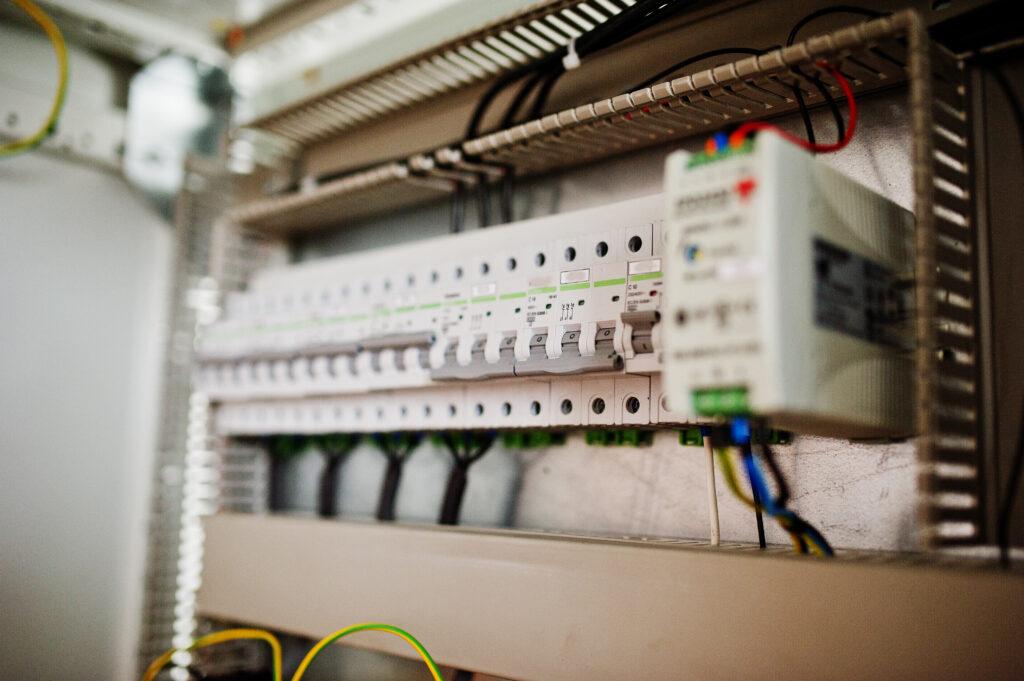
Think of your panel as the air traffic controller for every electron in your house. It takes the power coming in from the utility lines and splits it into individual circuits, each protected by a breaker rated for a specific load. That breaker’s job is to trip when a circuit pulls too much current, preventing wires from overheating and starting a fire.
The Electrical Safety Foundation International reports that home electrical fires account for roughly 51,000 fires each year in the US, with aging panels and overloaded circuits among the leading causes. That number should land differently than a random statistic. Those fires start in walls you can’t see, in panels installed forty years ago with breakers that were never meant to handle modern loads.
Your panel isn’t just a safety device though. It’s also the ceiling on your home’s electric capability. Every circuit you add, every appliance you plug in, every EV charger you dream about, it all flows through that metal box first. If the box is tiny or ancient, nothing downstream matters.
Three Signs Your Panel Is Done
1. You’re Living on 100 Amps
Homes built before the mid-1980s typically came with 100-amp service. That was fine when the biggest loads were a refrigerator, a washing machine, and a couple of window AC units. Your house today probably runs a microwave, a dishwasher, a home office, a gaming setup, and a handful of smart devices all at once. That math doesn’t fit.
The US Energy Information Administration tracks residential electricity consumption, and their data shows the average home now uses roughly 29% more electricity than it did in 1990 (see the residential energy consumption survey). You feel that growth every time a breaker trips while the toaster, the coffee maker, and the microwave run at the same time. Your panel didn’t grow with you.
Here’s the rule of thumb I use: if your main breaker is 100 amps and you’ve added any two of the following in the last decade — a heat pump, an EV charger, a hot tub, a home addition, or a tankless water heater, you’re over budget. Not “might be.” You are.
2. The Breakers Feel Soft or Warm
Throw your main breaker switches off and on once, carefully. A healthy breaker has a crisp, firm snap. A worn one feels mushy, like a pen that’s running out of ink. Warm breakers on a normal day, not after someone ran the dryer for an hour, point to loose connections or failing internals. Both are fire risks that no amount of careful living prevents.
You can also look for scorch marks near the breaker terminals or a faint burning smell near the panel. If any of that shows up, stop poking around and call someone. This is not a DIY moment.
3. Your Panel Is a Brand You Can’t Buy Parts For
Federal Pacific, Zinsco, and Challenger panels were all installed in huge numbers across the Midwest, and all three have documented safety issues that led to them being discontinued. If yours is one of these, replacement isn’t optional. Every electrician who works on these knows the drill: parts are scarce, and the breakers themselves have failure rates that should worry you.
And even if your panel is a perfectly good brand like Square D or Eaton, if it’s more than thirty years old, the internal components degrade. Breakers do wear out through normal thermal cycling. They’re mechanical devices, not permanent fixtures.
How to Run a Quick Load Audit Yourself
Before you spend money on anything, spend twenty minutes understanding what your house actually demands. Here’s the four question system I run through with every homeowner I advise. It’s not engineering. It’s common sense with a clipboard.
First, list every appliance in your home that heats something, cools something, or spins a motor. Oven, dryer, water heater, furnace fan, refrigerator, microwave, AC, space heaters. These are your heavy hitters. Second, write down their wattage. It’s usually printed on a sticker near the power cord or in the manual. Third, add up the wattage for everything you could plausibly run at the same moment on a winter evening. This is the “worst case” number. Fourth, add twenty percent headroom on top of that total. That’s your minimum service capacity in watts.
Now divide your worst-case number by 240 (the standard voltage for US homes). That gives you the amps your panel needs to handle. If your result is above your main breaker rating, your panel is undersized. Straight and simple.
Here’s a concrete texture check. My buddy in Dayton ran this exact audit before buying an EV. His panel was a 100-amp Federal Pacific that had been fine for years, until the moment it wasn’t. The math showed his home needed 135 amps to run the car charger, the AC, and the oven without any one of them stealing from the others. He found a licensed electrician in Cincinnati, OH, to handle the swap to a 200-amp panel with whole-house surge protection, and the difference wasn’t just in the bill. It was in the peace of mind of never watching the lights flicker when the garage door opened.
Why I’d Pay for a 200-Amp Panel Before Any Cosmetic Upgrade
I’ll take an unpopular stance here. If you’re choosing between redoing your kitchen backsplash and upgrading your panel, upgrade the panel. Every time. A backsplash doesn’t trip breakers. A panel does. And a modern 200-amp panel with arc fault breakers and surge protection isn’t just a safety purchase. It’s the single best investment you can make in your home’s resale value, because inspectors flag old panels on every home inspection, and buyers negotiate them hard.
The arc fault breakers alone are worth the swap. Unlike old thermal breakers that only respond to heat, arc fault breakers detect the tiny electrical arcs that happen when wires fray or connections loosen. Those arcs cause fires far more often than full short circuits do, and the old panel generation simply can’t detect them.
Here’s my rule: upgrade the panel when your audit says you’re over budget, when your panel brand is discontinued, or when you’re planning any major appliance addition in the next two years. Otherwise, leave it alone. Panels aren’t like phones. You don’t upgrade them for features. You upgrade them when the physics demand it.
The Real Cost of Waiting
Let’s talk money in a straight line. A panel replacement runs anywhere from $1,500 to $4,000 depending on your home’s wiring, the service size, and local labor rates. That’s not pocket change. But every time an old panel trips during a family dinner, it costs you the meal. Every time a breaker won’t reset and you’re stuck without power to a room, it costs you the inconvenience. And in the worst case, every year you run an undersized panel is a year you’re gambling against fire statistics that are publicly documented by organizations like the Occupational Safety and Health Administration, which publishes clear guidance on the hazards of aging electrical equipment.
OSHA’s guidance is written for workplaces, but the physics apply identically to your living room. Deteriorating insulation, overloaded circuits, and corroded connections don’t care whether the building has a corporate address or a welcome mat.
The smarter frame isn’t “what does a panel cost?” It’s “what does a panel cost per year of safe, uninterrupted power over the next thirty years?” At $3,000 for a 200-amp install, that’s a hundred bucks a year for three decades. Pay that for reliable electricity, or save a hundred dollars a year and hope nothing in your walls ever arcs. I know which side of that math I’d rather be on.
The good news is you don’t have to decide today. Run the audit. Check your panel brand. Feel your breakers. Then ask yourself one question: is my home’s electrical backbone as modern as everything plugged into it? The answer, for most homes, is a quiet no. And that’s exactly why this upgrade matters more than any other you’ll make.