Why Motor Placement Matters More Than Peak Power on an Electric Dirt Bike
Peak power is one of the easiest specifications to notice when comparing electric dirt bikes. A large number suggests stronger acceleration and better climbing ability, so it naturally attracts attention. Yet the location of the motor can influence how a bike behaves just as much as the number printed beside it. Motor placement changes weight distribution, traction, suspension response, and the way power reaches the rear wheel. Two bikes with similar output can therefore feel very different on the same trail.
Understanding that difference is useful because off-road riding rarely happens under perfect conditions. Loose soil, roots, short climbs, ruts, and changing traction demand more than straight-line speed. A bike must put power down predictably while allowing the rider to make quick corrections. Looking at the complete drive layout gives a clearer picture than judging performance by wattage alone.
Hub motors and mid-drive motors solve different problems
A hub motor sits inside one of the wheels, usually the rear. It sends power directly through that wheel without using a chain or belt as part of the drive system. This arrangement can be mechanically simple and relatively quiet. It also separates pedal or crank components from motor power on models that include them. For casual riding and smoother terrain, a well-designed hub system can be effective and easy to understand.
The tradeoff is that the motor adds mass to the wheel itself. That weight is unsprung, which means the suspension must control it as the wheel moves over bumps. On repeated rough impacts, a heavier wheel may react differently from a lighter one. A hub motor also delivers power without taking advantage of gear reduction through the bike’s final drive, so its behavior on steep or technical terrain depends heavily on motor tuning and wheel size.
A mid-drive motor is mounted closer to the center of the frame and transfers power to the rear wheel through a chain or belt. Centralizing this weight can help the bike feel more balanced during direction changes. It also keeps more motor mass off the wheel, allowing the suspension and tire to respond with less unsprung weight. These benefits become easier to notice when the trail is uneven rather than flat.
Balance affects confidence before it affects speed
Riders often experience motor placement as a handling difference rather than a technical specification. A centrally located motor can make the bike easier to settle into a turn because less weight is concentrated at the rear axle. When climbing, balanced mass may help the rider manage front-wheel lift while still maintaining rear traction. When descending, it can make weight transfer feel more predictable under braking.
None of this makes every mid-drive automatically superior or every hub-drive unsuitable for dirt. Frame geometry, battery location, suspension, tires, controller calibration, and rider position still matter. A poorly tuned central motor can be difficult to control, while a thoughtfully designed hub system can be smooth and capable. The important point is to evaluate the system rather than treating the motor as an isolated number.
Power delivery should match the terrain
High output is useful only when the tire can turn it into forward motion. On loose ground, abrupt torque can break traction and force the rider to reduce the throttle. Progressive controller tuning may produce a faster real-world climb than a more powerful system that is difficult to meter. The same principle applies when crossing roots or exiting a tight corner: usable power matters more than a dramatic initial hit.
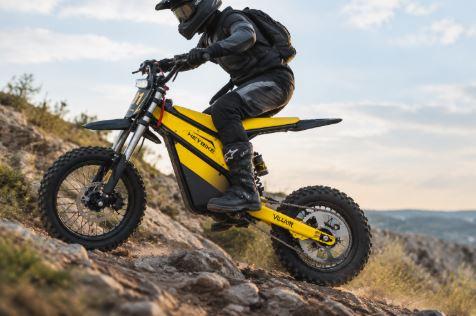
This is where product examples can make specifications easier to interpret. The V1 presented by heybike sports uses a centrally mounted drive and lists a 4,160-watt peak output and 190 Nm of torque. Those figures describe its available performance, but the mid-drive layout is equally relevant because it positions the motor near the center of the bike. Riders comparing it with rear-hub alternatives should consider both the output and where that mass sits.
What shoppers should compare
Begin with the terrain you expect to ride. Smooth dirt roads and open spaces place different demands on a drive system than rocky climbs or tightly spaced turns. Then look at motor location, battery placement, total bike weight, wheel sizes, and suspension travel. Ask whether the throttle has multiple modes or adjustable response, because control at low speed can be more valuable than maximum output in technical sections.
It also helps to compare complete products instead of motor specifications taken from different pages. A collection of electric dirt bikes can show how drive layout is paired with tires, brakes, suspension, and frame dimensions. That context reveals whether the rest of the machine is built to manage the advertised power.
The best number is the one you can use
Peak power remains a meaningful specification, but it is not a complete measure of off-road capability. Motor placement shapes the way a bike carries weight, follows uneven ground, and communicates traction to the rider. Controller tuning determines whether torque arrives as a manageable tool or an unwanted surprise. The frame and suspension then decide how well the entire package stays composed.
For riders, the practical lesson is simple: do not stop at the largest wattage figure. Study where the motor is mounted, how power reaches the rear wheel, and how the bike’s other components support that layout. A balanced system that delivers controllable power will usually be more useful on a real trail than an impressive specification with no supporting design.