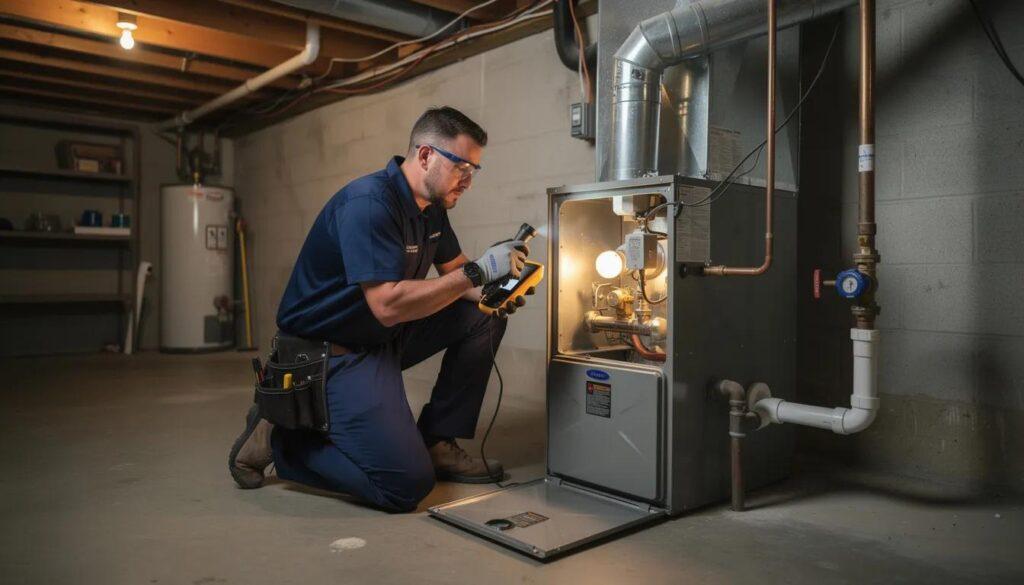
Why Cincinnati Homes Need a Heating and Cooling Tune-Up Before the First Cold Snap
Every January, somebody in Hyde Park wakes up to a house sitting at 54 degrees and a furnace that makes a clicking sound and nothing else. The repair bill lands somewhere between a nice weekend away and a used car. Almost none of it was sudden.
Here’s the promise: by the end of this piece you’ll know what a fall tune-up actually covers, which tasks you can handle yourself, and the exact window to book before every technician in Hamilton County is buried in no-heat calls. You’ll also know the one part most homeowners ignore until it strands them on a Sunday night.
The short version is that a furnace rarely dies without warning. It gives you signals for weeks, and a proper once-over catches them while the calendar is still on your side. If you’d rather hand the whole thing to a crew that already knows the older housing stock around here, HVAC maintenance services in Cincinnati, Ohio covers the tune-up, the parts, and the after-hours calls that follow a cold snap. Everyone else, keep reading and take the free route first.
What a tune-up actually does (and what it doesn’t)
A maintenance visit is not a repair. Think of it as a physical for the equipment. A technician cleans the burners, checks the heat exchanger for cracks, tests the blower, measures refrigerant or gas pressure, tightens electrical connections, and swaps the filter. On the cooling side, they clear the condensate line and check the capacitor, which is the cheap part that fails most often on a hot July afternoon.
What it won’t do is fix a compressor on its last legs or resurrect a twenty-year-old unit you’ve been nursing along. I’d rather a homeowner hear that in September than in a snowstorm.
The reason this matters goes beyond comfort. According to the Department of Energy, heating and cooling make up the largest share of a typical home’s energy use, which means a system running a few degrees off spec quietly drains your budget all winter. You feel that on the gas bill long before you feel it in the living room.
The one filter habit that beats most service calls
If you do nothing else, change the filter. A clogged filter starves the blower, raises the temperature inside the unit, and shortens the life of the motor. In a house with pets or a lot of carpet, that can mean every thirty days instead of every ninety.
Write the date on the filter frame with a Sharpie. That single habit has saved more furnaces than any warranty. You’ll thank yourself when November arrives and you can’t remember the last swap.
When to book in Cincinnati (hint: not the week it snows)
Schedule the heating visit in September or early October. The cooling check belongs in April, before the first humid stretch. That spacing gives a technician time to order a part if something’s worn, instead of paying emergency pricing because the house is cold.
The local weather makes this less optional than it sounds. Data from the National Weather Service shows that Cincinnati regularly swings from mild fall days into hard freezes within a short window, and those first cold nights are exactly when aging equipment gives out. You want your system proven before that swing, not during it.
Your pre-season checklist
- Replace the filter and note the date on the frame.
- Clear at least two feet around the outdoor condenser and vacuum the fins if they’re matted with leaves.
- Run the heat for fifteen minutes on a mild afternoon and listen for rattles or a short cycling pattern.
- Test the carbon monoxide detector near the furnace room.
- Check that every supply vent is open and unobstructed by furniture.
- Note any rooms that stay noticeably colder, and mention them when you book.
That last item is the one people skip. A cold bedroom upstairs usually points to a duct or balancing issue, and it’s far cheaper to address during a scheduled visit than to chase down mid-winter.
The parts nobody thinks about until they fail
Two components quietly decide whether your January goes smoothly. The first is the ignitor, a small ceramic piece that cracks with age and leaves you with a furnace that hums but never lights. The second is the condensate pump on high-efficiency units, which can freeze or clog and shut the system down for reasons that look like a total failure.
A technician who knows the equipment checks both. So does a homeowner with a decent ear and a flashlight. Here’s my rule: if the furnace starts and stops more than three times in an hour, stop ignoring it and call someone. Short cycling wears out the blower and the heat exchanger faster than almost anything else.
What maintenance means for indoor air
There’s a quieter benefit too. A clean system moves air more evenly, and a well-sealed duct run keeps dust and outdoor pollen where they belong. The Environmental Protection Agency notes that indoor air can carry more pollutants than outdoor air, and a neglected filter and dirty blower do the house no favors. If anyone in your home deals with seasonal allergies, this is the least glamorous upgrade you’ll ever make, and possibly the most noticeable.
I’ll be blunt about air purifiers and UV add-ons: most homes don’t need them. Filtration and a sealed duct system do more for the money. Spend there first.
Do it yourself versus calling a pro
You can change a filter, clear debris, and listen for odd noises. You should not open the burner compartment, handle gas lines, or poke around the electrical panel unless you’re licensed and insured. The stakes are high and the savings are small.
Use this rough split to decide:
| Task | DIY friendly? | Why |
|---|---|---|
| Filter swap | Yes | Simple, low risk, high payoff |
| Clearing outdoor unit | Yes | Leaf and debris removal only |
| Burner cleaning | No | Gas and combustion risk |
| Heat exchanger inspection | No | Requires trained eyes and tools |
| Refrigerant check | No | Regulated handling and gauges |
One concrete scenario worth remembering: a homeowner in a 1950s Cape Cod booked a fall check, and the technician found a cracked heat exchanger that had been silently venting for who knows how long. That’s not a repair. That’s the reason maintenance exists.
The bottom line
Your furnace is telling you something all autumn, and the smart move is to listen before the first hard freeze forces the issue. Book the tune-up in September, keep the filter fresh, run the checklist, and know which jobs belong to a pro. Do that, and January becomes a lot less dramatic.
So here’s the question worth asking this week: when did you last look at your filter, and do you actually know what your furnace sounds like when it’s running right?