Whole Home Backup Power Systems Explained
Whole home backup power systems supply electricity to a house when the utility grid goes down, helping lights, refrigeration, internet, HVAC, and other critical equipment stay on. Unlike small portable options, these systems connect directly to the home’s electrical infrastructure and can respond automatically when an outage occurs. They are built around battery storage, power electronics, and controls that manage how energy flows to household circuits. For homeowners dealing with storm-related outages, grid instability, or rising energy demands, understanding how these systems work is the first step toward choosing the right setup. Capacity, output power, recharge speed, and installation design all affect whether a system can support a few loads or provide true whole home backup power across the property.
What Is a Whole Home Backup Power System?
Why Home Backup Power Matters During an Outage
Home backup power matters because outages disrupt more than convenience. Refrigerators warm up, sump pumps stop, routers shut down, medical devices lose support, and heating or cooling systems may go offline at the worst time. A whole home backup power system protects daily routines and reduces the risk of food spoilage, water damage, and unsafe indoor temperatures. It also helps households stay connected for work, school, and emergency updates. For homes in areas with severe weather or unstable grids, backup power becomes part of resilience planning rather than a luxury. Automatic operation is especially valuable because the system can switch on quickly, even if no one is home, keeping key circuits and appliances running without manual intervention during unexpected interruptions.
Whole Home Backup vs. Essential-Load Backup
Whole battery backup for home is designed to support most or all household circuits, while essential-load backup powers only selected items such as refrigeration, lighting, outlets, and communications equipment. The difference comes down to system size, transfer setup, battery capacity, and output power. A whole home system must handle larger starting surges and higher continuous loads, especially if central air conditioning, electric cooking, well pumps, or laundry equipment need to operate during an outage. Essential-load systems are smaller and more affordable, but they require homeowners to prioritize what stays on. Whole home backup offers a more seamless experience because the house continues to function normally. That makes it appealing for larger families, all-electric homes, and anyone who wants stronger protection against longer disruptions.
How Whole Home Backup Power Systems Work
From Grid Outage to Automatic Backup Power
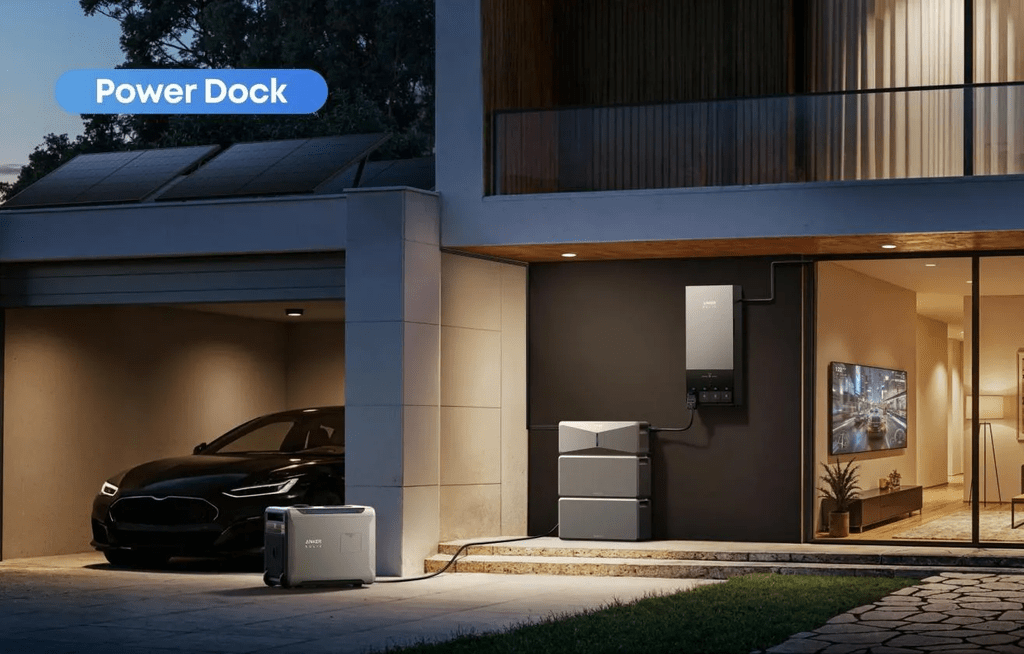
When utility power fails, the backup system detects the outage and isolates the home from the grid through transfer equipment. That separation protects utility workers and prevents backfeed. The inverter then begins supplying stored battery energy to the home’s electrical panel, restoring power to supported circuits within a short time. In a split-phase home, the system must deliver 120/240 VAC at 60Hz so standard household loads and larger 240V appliances can operate correctly. Equipment such as the Anker SOLIX E10 is built for this role, with up to 7,680W continuous output at 32A with battery support and 10,000W turbo backup output for 90 minutes with two batteries. Proper system design determines whether backup feels limited or nearly seamless across the entire home.
Batteries, Inverters, and Energy Management
Batteries store energy for use during an outage, the inverter converts that stored DC power into usable household AC electricity, and the energy management system decides how power is distributed. Together, these components determine runtime, appliance compatibility, and recharge performance. A well-designed setup also supports solar input, generator charging, and smart monitoring. For example, the E10 Power Module works with the B6000 Battery Module and supports 2 x 4,500W solar inputs from 30 to 450V DC, a 4,500W DC generator input, and 9,600W AC input bypass at 240V/40A. It includes Wi-Fi and Bluetooth connectivity, a NEMA Type 4 IP66 enclosure, and operates from -4°F to 131°F. These details matter because they affect durability, flexibility, and how well the system performs in real-world conditions.
Getting More Value From Whole Home Backup Power
Prepare for Longer and More Frequent Power Outages
Whole home backup becomes more valuable as outages last longer and happen more often. A system sized only for short interruptions may struggle during multiday events, especially when refrigeration, HVAC, cooking, and water systems all need support. Planning for longer outages means looking at battery storage, recharge options, and surge capability rather than focusing on wattage alone. Solar charging can extend runtime during daylight, while generator integration adds another layer of resilience when weather limits solar production. Homeowners should also consider seasonal energy use, because summer cooling and winter heating can sharply increase demand. A thoughtful backup design gives the household more than temporary relief. It creates a practical energy plan that keeps the home safer, more functional, and more comfortable through repeated grid disruptions.
Use Stored Energy Beyond Emergency Situations
Stored energy can do more than sit idle waiting for a blackout. Many whole home backup systems can support everyday energy management by storing electricity for later use and reducing reliance on grid power during expensive peak-rate periods. That flexibility can help homeowners improve self-consumption from rooftop solar, manage demand more intelligently, and keep power available for important loads even when utility conditions are unstable. Some systems also provide app-based monitoring, making it easier to track battery status, charging sources, and household consumption. Using stored energy strategically can turn backup power into a broader home energy asset rather than a single-purpose purchase. The result is better return on the system, greater control over electricity use, and stronger readiness when the next outage happens.
Conclusion
Whole home backup power systems are designed to keep a house operating when the grid fails, and they do that by combining batteries, inverters, transfer equipment, and intelligent energy controls. The right system can power far more than a few emergency outlets, supporting normal household function with less disruption during storms, equipment failures, or planned shutoffs. When evaluating options, homeowners should focus on continuous output, surge support, battery capacity, recharge paths, and how the system integrates with the home’s electrical panel. They should also think beyond emergencies and consider how stored energy can support daily energy management. A well-matched whole home backup solution delivers resilience, convenience, and better control over household power when reliability matters most for long-term home energy security.