When to Replace Your Deck Instead of Repairing It: 7 Signs You Shouldn’t Ignore
Your deck might look fine from the porch. New stain, no missing boards, nothing screaming for attention. But problems with decks rarely start on the surface. They start underneath, in the frame, where you can’t see them until something actually gives way.
I’ve walked a lot of backyards and talked to a lot of homeowners who patched the same soft spot three summers in a row before finally asking the real question: is this thing even worth fixing anymore? The answer usually comes down to three things: how old the deck is, how much damage has spread, and whether it’s still safe to stand on. Let’s go through the seven signs that tell you which side of that line you’re on.
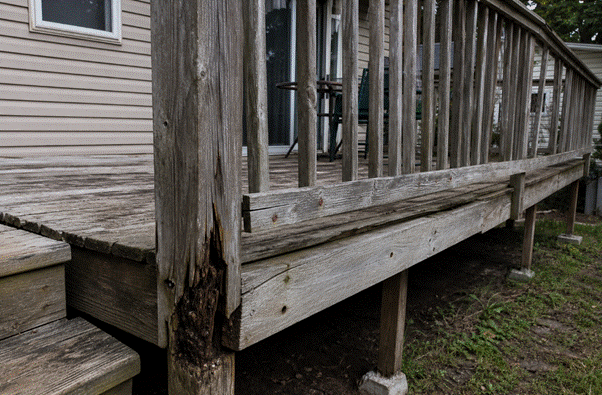
1. Rot in the Structural Parts, Not Just the Boards
There’s a big difference between a rotten deck board and a rotten support post. A board is easy to swap out. A post, beam, or joist that’s rotting is a whole different problem.
Here’s a simple test. Take a screwdriver and press it into the wood at the base of a post, right where it meets the ground. If the tip sinks in without much effort, or the wood feels crumbly and soft, that’s rot working its way through something that’s supposed to hold the whole structure up. I’ve seen posts that looked solid from three feet away turn into mush the second someone leaned a screwdriver into them.
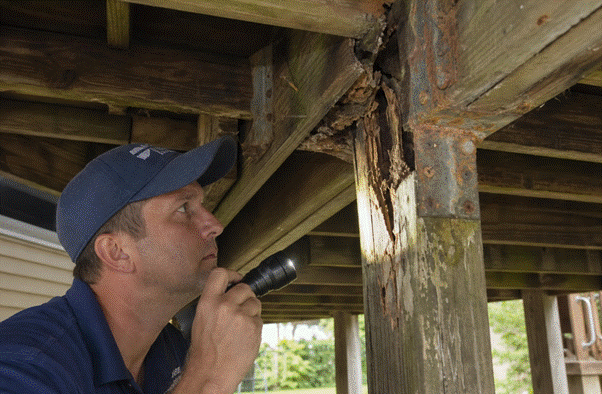
2. The Ledger Board Is Pulling Away From the House
The ledger board is the piece that bolts your deck to your house. It’s not glamorous, but it’s arguably the most important board on the entire structure.
Watch for rust streaks running down from the bolts, a gap forming between the ledger and the siding, or damp patches on the exterior wall right below where the deck attaches. Any one of these is a warning that water has been getting in for a while. And when a ledger fails, decks don’t sag gently. They can drop suddenly, which is exactly why this spot deserves more attention than people usually give it.
3. The Deck Sags, Bounces, or Shifts When You Walk On It
Take a walk across your deck, slowly, and pay attention to how it feels. Does it dip in the middle? Does it bounce a little with each step? Do the support posts seem to shift or wobble?
A deck that moves under normal foot traffic isn’t just annoying, it’s telling you the frame has lost some of its ability to carry weight. That kind of movement doesn’t fix itself, and it rarely stays the same. It tends to get worse.
4. Fasteners Are Rusting or Falling Out Everywhere
One rusty nail isn’t a big deal. But if you’re finding rust streaks all over the deck, nails backing themselves out of the wood, or joist hangers that have pulled loose from the frame, that’s a pattern, not a fluke.
Swapping out a handful of screws might buy you a season, but if the corrosion is spread across the whole structure, you’re just delaying the inevitable. At that point you’re not fixing the deck, you’re just rearranging the problem.
5. A Large Portion of the Decking Itself Is Damaged
A few cracked or splintered boards? That’s a normal repair, nothing to stress over. But once you’re looking at 30 to 40 percent of the boards showing cracking, cupping, or soft spots, the math starts to change.
Replacing board by board at that point often costs close to what a full deck resurface would run, minus the benefit of everything looking and performing the same way. If you’re patching more than a third of your deck, it usually makes more sense to just redo the whole surface at once.
6. The Railings Wobble and the Stairs Feel Unstable
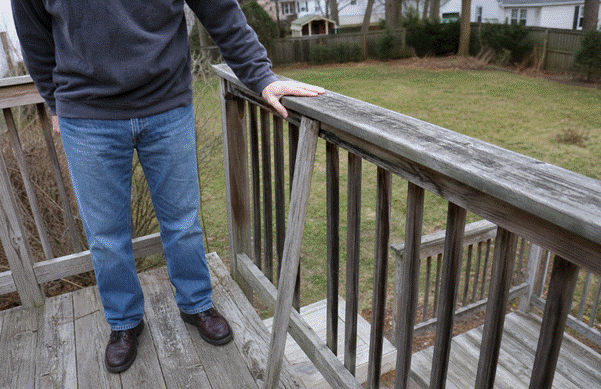
Railings and stairs are where safety concerns get real, fast. Push on your railing. Does it move? Are any balusters cracked or missing? Do the stair treads flex or feel spongy when you step on them?
This isn’t just about comfort. A loose railing is one of the most common causes of deck related injuries, and if someone gets hurt on your property, that’s a liability question you really don’t want to deal with. If your railings or stairs feel even a little sketchy, treat that as a serious red flag, not a minor annoyance.
7. The Deck Has Outlived Its Expected Lifespan and the Code Has Changed
Most wood decks are built to last somewhere between 15 and 25 years, depending on the material and how well it was maintained. Even if your deck looks okay for its age, building codes have shifted over the past couple of decades, especially around railing height, baluster spacing, and how ledger boards are supposed to be attached.
Bringing an older deck up to current code can end up costing nearly as much as building a new one, since you’re often replacing large sections of the frame anyway just to meet the new requirements.
What to Do If You Spotted a Few of These Signs
Finding one or two of these signs doesn’t mean panic mode. But finding three or more usually means the deck is past the point where small fixes make sense.
The tricky part is that some of this damage isn’t something you can judge accurately just by looking. Rot inside a beam, corrosion under a joist hanger, or a ledger board that’s slowly separating from the house aren’t always visible from the surface. That’s where it helps to have someone who actually knows what they’re looking for take a walk around the structure with you.
If you’re not sure which category your deck falls into, it’s worth getting a second opinion before you spend money on a repair that might not hold. A quick search for a deck company near me will usually turn up a few local pros who can give you an honest read on whether repair or replacement makes more sense for your specific situation. Most reputable contractors will do a walkthrough and tell you straight, without trying to upsell you into a full rebuild you don’t actually need.
Bottom Line
Catching these problems early saves you money and headaches down the road. A rotted post or a failing ledger board doesn’t get cheaper to fix the longer you wait, it gets more expensive and more dangerous. Take fifteen minutes this weekend, walk your deck, press on the railings, check the posts near the ground, and see how many of these seven signs show up. If it’s more than a couple, that’s your answer.