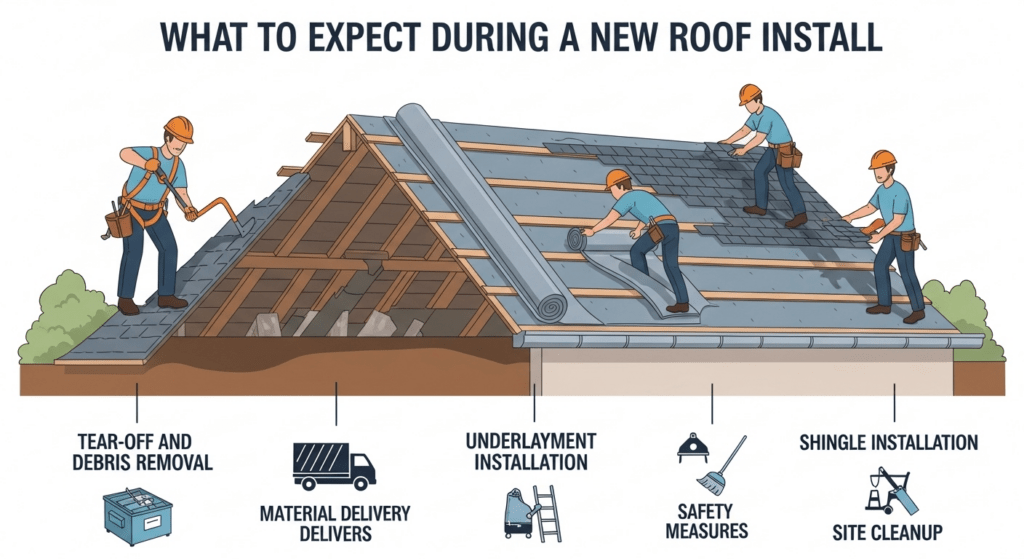
What to Expect During a New Roof Install
A new roof is one of the most important investments you can make for your home, yet many homeowners go into the process not fully knowing what to expect. If you’ve never been through a roof installation before, it’s completely normal to have questions about timelines, noise, disruptions, and the overall experience. The good news is that once you understand how the roof installation process works, everything starts to feel much more manageable.
From the initial inspection to the final cleanup, each phase of a roof installation plays a role in ensuring your home is protected for years to come. A professional roofing contractor will guide you through each step, but having your own understanding helps you feel confident, prepared, and in control. Let’s walk through what really happens during a roof installation so you know exactly what’s ahead.
The Initial Inspection and Planning Phase
Before any materials arrive or work begins, your roofing contractor will start with a thorough inspection of your existing roof. This step sets the foundation for the entire project.
What happens during the inspection
- Evaluation of your current roof condition
- Identification of leaks, weak spots, or structural concerns
- Measurement of your roof’s size and layout
- Assessment of ventilation and drainage systems
Planning and preparation includes
- Recommending the best materials for your home
- Providing a detailed estimate and timeline
- Discussing color, style, and durability options
- Scheduling the installation date
This phase ensures that there are no surprises once the project begins.
Choosing the Right Roofing Materials
One of the most important decisions you’ll make is selecting the materials for your new roof. The type of material affects not only the look of your home but also its durability and long-term performance.
Common roofing material options
- Asphalt shingles, known for affordability and versatility
- Metal roofing, valued for durability and energy efficiency
- Tile roofing, popular for its longevity and aesthetic appeal
- Flat roofing systems for modern or low-slope homes
Factors to consider
- Climate and weather conditions in your area
- Budget and long-term value
- Maintenance requirements
- Energy efficiency
Your contractor will help guide you, but understanding your options helps you make a more informed decision.
Preparing Your Home for Roof Installation
Before installation day arrives, there are a few steps homeowners should take to prepare their property. A little preparation goes a long way in making the process smoother.
How to get your home ready
- Move vehicles away from the driveway and work area
- Remove fragile items from walls and shelves inside your home
- Cover or protect items in the attic
- Trim nearby tree branches if necessary
What your contractor will handle
- Delivering materials to your property
- Setting up equipment and safety measures
- Protecting landscaping and surrounding areas
Preparation helps minimize disruptions and protects your belongings during the project.
Removing the Old Roof
The first major step in the roof installation process is removing the existing roof. This stage can be noisy and messy, but it is essential for a proper installation.
What to expect during removal
- Shingles or roofing materials are stripped down to the decking
- Debris is collected and disposed of in designated containers
- The underlying structure is exposed for inspection
Why this step matters
- Allows contractors to identify hidden damage
- Ensures a clean surface for the new roof
- Prevents layering issues that could cause future problems
This phase usually moves quickly, but it is one of the most important parts of the entire process.
Inspecting and Repairing the Roof Deck
Once the old materials are removed, the roof deck becomes visible. This is where any structural issues are addressed.
What contractors look for
- Rotting or weakened wood
- Water damage or mold
- Loose or damaged boards
Possible repairs
- Replacing sections of the decking
- Reinforcing structural components
- Ensuring a solid, level foundation
Skipping this step would compromise the integrity of the entire roof, so it is never rushed.
Installing Underlayment and Protection Layers
Before the final roofing material is installed, several protective layers are added to improve durability and weather resistance.
Key components installed
- Water-resistant underlayment
- Ice and water shields in vulnerable areas
- Drip edges along roof edges
- Flashing around chimneys, vents, and valleys
Why these layers matter
- Provide additional protection against moisture
- Help prevent leaks in high-risk areas
- Improve the overall lifespan of the roof
These elements work together to create a strong barrier against the elements.
Installing the New Roofing Material
This is the stage most homeowners picture when they think about roof installation. It is where your new roof begins to take shape.
What happens during installation
- Roofing materials are placed and secured in layers
- Shingles, tiles, or panels are aligned for proper coverage
- Ridge caps are installed along the peaks
- Ventilation components are integrated as needed
What you might notice
- Increased noise during active work hours
- Crews moving efficiently across the roof
- Visible progress throughout the day
Depending on the size and complexity of your roof, this step can take anywhere from a day to several days.
Ventilation and Final Components
Proper ventilation is a key part of a successful roof installation. Without it, heat and moisture can build up inside your attic.
Common ventilation features
- Ridge vents
- Soffit vents
- Roof vents or exhaust systems
Why ventilation is important
- Helps regulate attic temperature
- Prevents moisture buildup and mold
- Extends the life of your roofing materials
Your contractor will ensure that your ventilation system is properly installed and functioning.
Cleanup and Final Inspection
Once the installation is complete, the job is not finished until everything is cleaned up and inspected.
What happens during cleanup
- Removal of debris and leftover materials
- Magnetic sweep to collect nails from the ground
- Clearing of gutters and surrounding areas
For local property owners, this step may also bring an opportunity to consider gutter installation in Wisconsin alongside roof‑replacement work.
Final inspection includes
- Checking for proper installation and alignment
- Ensuring all components are secure
- Addressing any remaining details
A thorough cleanup and inspection leave your property looking as good as your new roof.
How Long Does a Roof Installation Take?
The timeline for a roof installation can vary depending on several factors, but most projects are completed relatively quickly.
Factors that affect the timeline
- Size and complexity of the roof
- Type of roofing materials used
- Weather conditions
- Extent of repairs needed
Typical timeframe
- Small to متوسط-sized homes: 1 to 3 days
- Larger or more complex projects: several days to a week
Your contractor should provide a clear timeline before the project begins.
Common Concerns Homeowners Have
It’s natural to have a few concerns before your roof installation starts. Knowing what to expect can help ease those worries.
Noise and disruption
- Roofing work can be loud, especially during removal
- Most crews work during daytime hours to minimize inconvenience
Safety
- Professional contractors follow strict safety protocols
- Work areas are secured to protect your family and property
Weather delays
- Rain or extreme conditions may pause the project temporarily
- Contractors will communicate any schedule changes
Understanding these factors helps you feel more prepared and less stressed.
Frequently Asked Questions
How do I know if I need a new roof?
Signs include missing shingles, leaks, sagging areas, and visible wear. A professional inspection can confirm whether replacement is necessary.
Will I need to leave my home during installation?
In most cases, you can stay in your home, although it may be noisy during the day.
What happens if bad weather occurs during installation?
Contractors will pause work and protect your roof until conditions improve.
How long will my new roof last?
This depends on the material, but many roofs last 20 years or more with proper maintenance.
Is cleanup included in the roof installation process?
Yes, reputable contractors handle full cleanup and ensure your property is left in good condition.
A Fresh Start Right Over Your Head
A new roof installation is more than just a construction project. It is a fresh start for your home, offering improved protection, better energy efficiency, and a renewed appearance that can transform your entire property. While the process may seem complex at first, understanding each stage helps you feel more at ease from beginning to end.
By working with a trusted professional and knowing what to expect throughout the roof installation process, you can approach the project with confidence instead of uncertainty. From the first inspection to the final nail, every step plays a role in creating a roof that will stand strong for years to come.