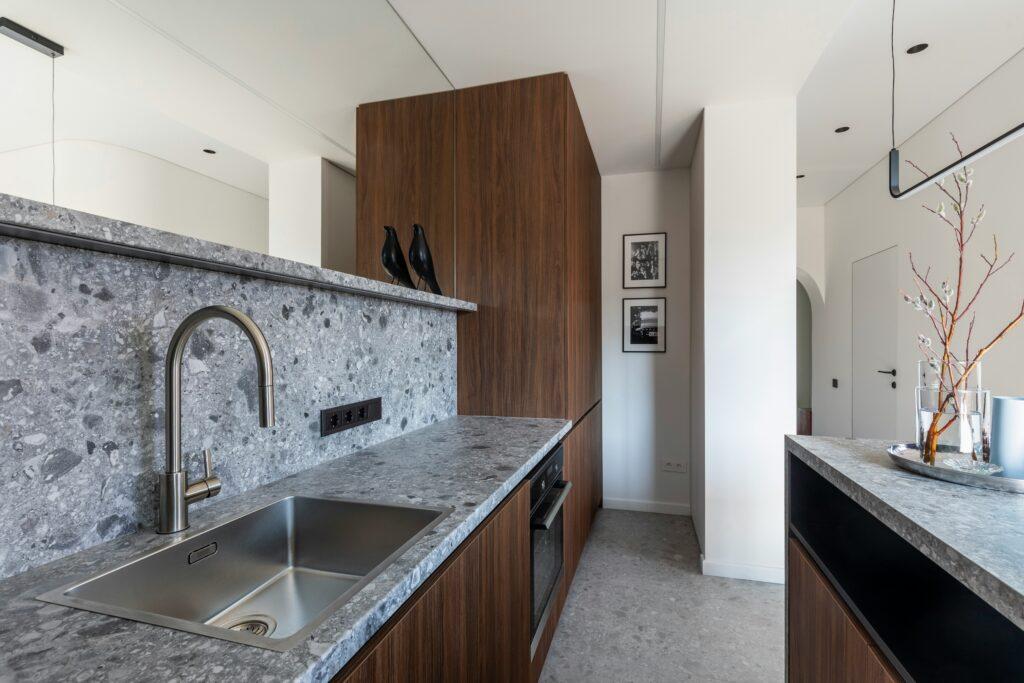
What Designers Consider When Pairing Sinks With Countertops and Cabinetry
While sinks are a fundamental and functional part of a kitchen, designers recognize that they can be so much more than just something chosen solely for their size and configuration. Experienced designers treat sinks, and how they pair with countertops and cabinetry, as an integral component of a kitchen’s overall style because the material, profile, and mounting style of a sink can either reinforce or detract from the visual appeal of the entire space.
How Sink Material Interacts With Countertop Stone
Designers have to consider how the sink material and countertop stone will work together to set the tone for a kitchen. Undermount sinks in stainless steel or composite tend to be the most versatile, disappearing beneath the countertop surface and allowing it to shine. This pairing works particularly well with heavily veined marbles or quartzite where the countertop is meant to be the star.
Fireclay and cast iron sinks work well when you want a sink that makes a statement. A white farmhouse sink against a veined stone countertop creates a contrast that looks intentional and curated. Be careful though – if the countertop has strong movement and the cabinetry is also decorative, a bold sink can make the space feel visually cluttered. In these cases, a simpler sink profile helps bring balance. Exploring sink options alongside stone selections helps designers evaluate how these elements interact before finalizing either choice.
Cabinetry and the Sink’s Role in the Design Composition
Cabinetry colors need to correlate with the sink and countertops in order establish a cohesive design composition. Depending on the desired look, designers might consider cabinetry in:
- White or Light Shades: These offer the most flexibility. Almost any sink material will work, but an integrated or tone-matched sink creates a clean, seamless look.
- Dark Colors: Dark cabinetry benefits from a sink that provides contrast. For example, a bright white fireclay or a light stone composite against deep navy or forest green reads as intentional rather than stark.
- Natural Wood Tones: These pair well with undermount stainless steel or matte black sinks, which complement the warmth without competing with it.
- Two-Tone Looks: An island in a different color than the perimeter may call for two separate sink considerations – one for the main area and a prep sink for the island.
It is important to note that certain types of sinks such as fireclay, cast iron, and natural stone sinks are extremely heavy and often need extra cabinet support, so that should be taken into account as well.
Profile, Edge, and the Question of Visual Weight
A sink’s rim profile and the countertop’s edge detail need to feel consistent in their proportions. A thick, eased edge countertop pairs naturally with a sink that has some visual weight, such as a deeper bowl and more substantial rim. A countertop with a delicate mitered or thin edge looks better with a cleaner, less bulky sink profile.
Apron-front sinks, regardless of material, introduce a horizontal band across the front of the cabinetry that affects cabinet door sizing as well as the overall vertical proportion of the base run. Designers must plan the cabinet layout around the sink’s face rather than just treating it as an insert.
Bringing It All Together
The best way to make these pairing decisions is to evaluate all three – countertop slab, sink, and cabinetry finish – together before ordering anything. Viewing slabs and sinks in the same space allows for a more accurate picture of how the materials will interact and may even reveal combinations that wouldn’t have been obvious from individual samples alone.