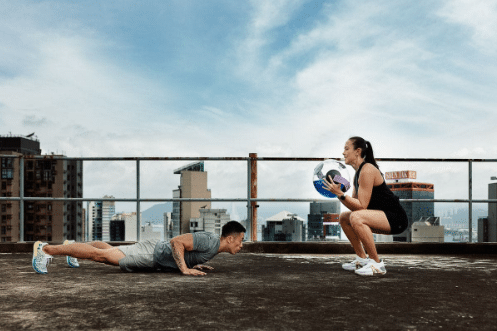
Water-Filled Weights at Home: A Beginner’s Guide
A dumbbell set takes up floor space that a studio apartment rarely has to spare. A soft exercise bag that holds water and air can be filled for training and emptied for storage. Before choosing one, consider how a moving load feels, which shape you can handle comfortably and what setup involves.
Key takeaways
- The water inside shifts as you move, creating a different handling challenge from a dumbbell.
- Compare shape, handles, filled size and setup instructions before maximum capacity.
- Start light, move slowly and follow your model’s filling, draining and storage directions.
What Makes a Moving Load Different?
A water fitness training bag is a handheld exercise bag filled partially with water and air. Unlike a dumbbell’s fixed weight, the water shifts as you squat, curl or carry, changing how the bag feels in your hands.
Not pool floats or punching bags. These are handheld bags built for lifting and carrying. Floating pool dumbbells and hanging water-filled punching bags are separate categories, so check which type a product listing describes.
What the evidence supports. A shifting load takes practice to control, but it doesn’t guarantee better results. A 2026 laboratory study measured short-term core muscle activation in twelve college-aged men with moderate resistance-training experience. That limited study doesn’t establish long-term benefits for beginners training at home.
Why it can feel heavier. Expect the bag to feel more demanding than its number suggests. Manufacturers in this category, including Tidal Tank, note that a water load can feel heavier than a fixed weight because the water keeps moving with every tilt of the bag. That’s one more reason to judge a bag by how it handles, not by its maximum capacity alone.
Choose a Bag You Can Handle Comfortably
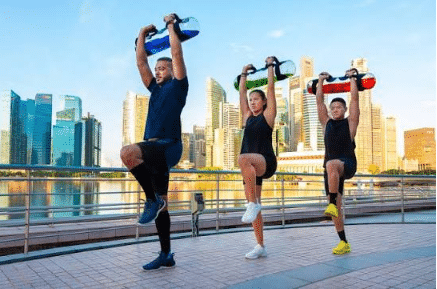
Shape and grip. Bags come as cubes, balls, tubes and other shapes. Tidal Tank’s Classic is a long tube, while FORZA also sells a ball and a curved Bulgarian bag. Compare shape alongside handle placement. Some tube-style bags have two sets of handles for more grip options. Picture holding the bag for a squat or curl, and check whether the handles sit where your hands naturally fall.
Capacity is a ceiling. Listed weights are maximum water capacities, not suggested starting loads. FORZA’s ball, for example, holds up to 15 kg. Choose a size you can hold comfortably with a light water load.
If you’re exploring aqua fitness with a water-filled bag at home, Fluid X offers five models with maximum water weights from 5 kg to 20 kg, from compact options for lighter work to larger tank-style bags. Compare each model’s capacity and handle design against the exercises you plan to do.
What comes in the box. Many bags ship with an air pump and filling instructions, but confirm this on the product page. FORZA, for instance, lists an air pump with a valve attachment and a step-by-step filling guide. Also review the filled dimensions, how the valve works and whether the bag drains and rolls flat for storage, as FORZA describes its bags doing.
Make Your First Session About Control
Prepare the space and bag. Clear a dry patch of floor with room to step in each direction, and fill the bag away from rugs and electronics. Check the cap, seams and handles for damage or loose fittings. Follow your model’s instructions, since valve designs, water temperature limits and care requirements vary. Some manufacturers advise against warm or hot water because it can soften the PVC. Use a light water load you can hold and move steadily.
If you have a chronic condition or safety concerns, Mayo Clinic recommends talking with your healthcare professional before beginning a strength-training program.
Warm up and breathe. Mayo Clinic’s weight-training guidance also warns against skipping the warmup and holding your breath during a lift. A few minutes of easy movement before you pick up the bag, and steady breathing through each rep, make it easier to stay in control. If you’re new to strength training, Mayo Clinic suggests working with a physical therapist, athletic trainer or other fitness specialist who knows proper technique.
Practice familiar movements. Water bags can be used for squats, lunges, lifts, curls and swings, but a first session doesn’t need all of them. Try a bodyweight squat, then the same squat holding a lightly filled bag at your chest. Add a slow two-handed curl with a pause at the top, and a standing hold for a few breaths while the water settles. These are examples for getting familiar with the bag, not a complete program.
Mayo Clinic’s weight-training guidance advises controlled movement without hurrying and stopping any exercise that causes pain. Keep slamming, throwing and overhead swings out of the first session. Check permitted uses, too: FORZA, for instance, says its bags aren’t designed for slamming.
Keep simple notes. After each session, jot down roughly how full the bag was, which movements you tried and how the water felt as it shifted. A short log makes it easier to add water gradually rather than guessing, and it shows when a movement still feels unsteady and needs more practice at the same load.
Build a repeatable routine. ACSM’s 2026 guidance recommends training all major muscle groups at least two days per week and building gradually. The same position stand found that the biggest gains come from moving from no resistance training to any resistance training, and that home-based routines can produce measurable improvements. A few introductory bag movements won’t cover a whole program, though. If soreness turns into lingering muscle pain, get it checked before adding more water or new movements. After each session, drain and store the bag according to its manufacturer’s instructions.
Conclusion
These bags can be a practical way to add adjustable resistance without keeping a full rack of weights at home. Choose a manageable size, learn the setup and focus on steady movement and careful storage before increasing the load.
FAQs
Do I need a swimming pool?
No. These are handheld bags you fill with water, and most people use them at home or in the gym. Floating pool dumbbells and hanging punching bags are separate categories.
How heavy should I start?
No single starting load fits everyone. Begin with a light load you can hold and move steadily. Add water gradually as control improves, and stop any exercise that causes pain.
Can this replace regular weights?
That depends on your goals and which exercises you plan to do. The shifting load changes the handling challenge, but the small study described above doesn’t establish better long-term results than conventional weights. Either option needs to fit a broader training routine.
How should I store it between sessions?
Follow your model’s instructions. FORZA describes draining and rolling its bags flat for compact storage. Check your bag’s draining, deflating and storage directions before putting it away.