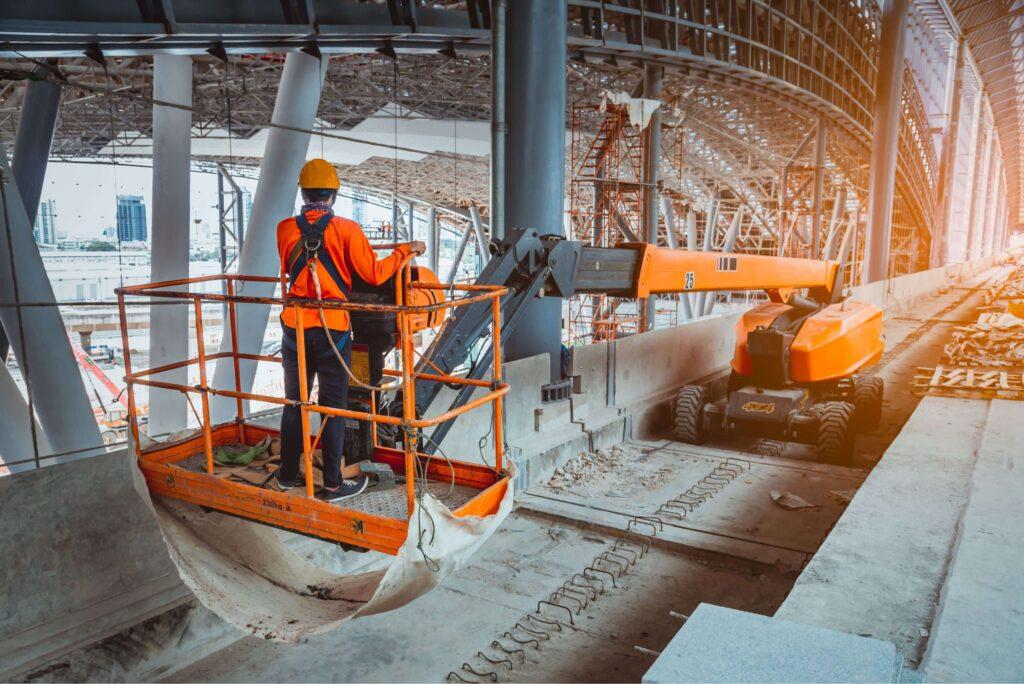
Using an Aerial Work Platform Safely at Height
Any work performed above ground (about 6 feet in construction and 4 feet in general industry) poses inherent fall risks. That’s why OSHA rules require workers to use proper fall protection at these and higher elevations. At the same time, equipment like aerial work platforms has been designed to make tasks at height safer and easier to perform. Trained operators and crew members can safely position them at height and access controls from both the ground and the platform. Many models are suitable for both indoor and outdoor environments, although some are designed specifically for one or the other. They can accommodate different site conditions and height requirements. Because these machines solve accessibility issues at elevation and help minimize fall risks, various industries rely on them today.
Nevertheless, even the most efficient equipment cannot guarantee your safety unless you take the necessary safety measures and pay attention to the crucial points. Here are some insights to help you use aerial lifts safely.
Things to consider when using mobile elevated work platforms
When positioning the work platform at height, you must be extremely careful. Ensure you monitor its load center stability. In some models, the load stays within the platform’s tipping lines. The load includes the weight of people, tools, and materials on the platform. If you use the equipment correctly and position the load properly, the platform will remain stable, reducing the risk of tipping over. These platforms are particularly suitable for tasks where stability is a critical factor. Workers can perform their jobs at height with confidence; they know that the equipment’s design reduces the risk of accidental overturning under normal work conditions. Of course, staff must be trained, and manufacturer guidelines must be followed.
Furthermore, some aerial lifts can have the load extend beyond the platform’s tipping lines. Using proper setup and safe operating practices is essential to prevent tipping. An incorrectly positioned load or improper handling of the equipment can increase the risk of tipping. To avoid or minimize these risks, use features such as stabilizers or outriggers, and strictly adhere to the manufacturer’s guidelines. Because these lifts are designed for higher reach and greater flexibility, they may be inherently less stable than other platforms where the load remains within the tipping lines.
Another critical area to consider is whether operators can exit the basket at height. If you review OSHA rules and ANSI standards, you will see that operators cannot leave the work platform. An exception may apply in emergencies if a risk assessment indicates that remaining on the platform at height would be more hazardous than leaving it.
Safety mistakes leading to falls from aerial lifts
A large number of accidents involving mobile elevated work platforms have occurred due to the failure to follow required safety procedures and systems. Common examples include a lack of personal protective equipment (PPE), failure to follow the manufacturer’s guidelines regarding load center, and exiting the lift at height. Other risk factors include falling objects, failure to use guardrails, and similar hazards.
If you want your workers to be safe and complete your projects on schedule, make sure they follow all safety rules. For equipment rental, you can visit https://www.bladeplatforms.com/. They offer everything from spider lifts to truck-mounted boom lifts.