The New York Renaissance
Inside Bruce Blakeman’s High-Stakes Crusade to Restore Prosperity in the Empire State
For generations, the Empire State was the ultimate incubator for the American Dream—a roaring powerhouse of commerce where small shopkeepers, union trade workers, corporate visionaries, and manufacturing giants collectively drove global prosperity.
But talk to almost any business owner today, and they will tell you that the engine is sputtering under Kathy Hochul.
The state is facing a historic exodus as thousands of businesses pack their bags, taking billions of dollars in economic activity, tax revenue, and generational jobs with them. The narrative of New York as a premier destination for builders and creators has been replaced by a harsher reality: a regulatory and fiscal climate that treats the private sector not as a vital partner to protect, but as an endless revenue source to exploit.
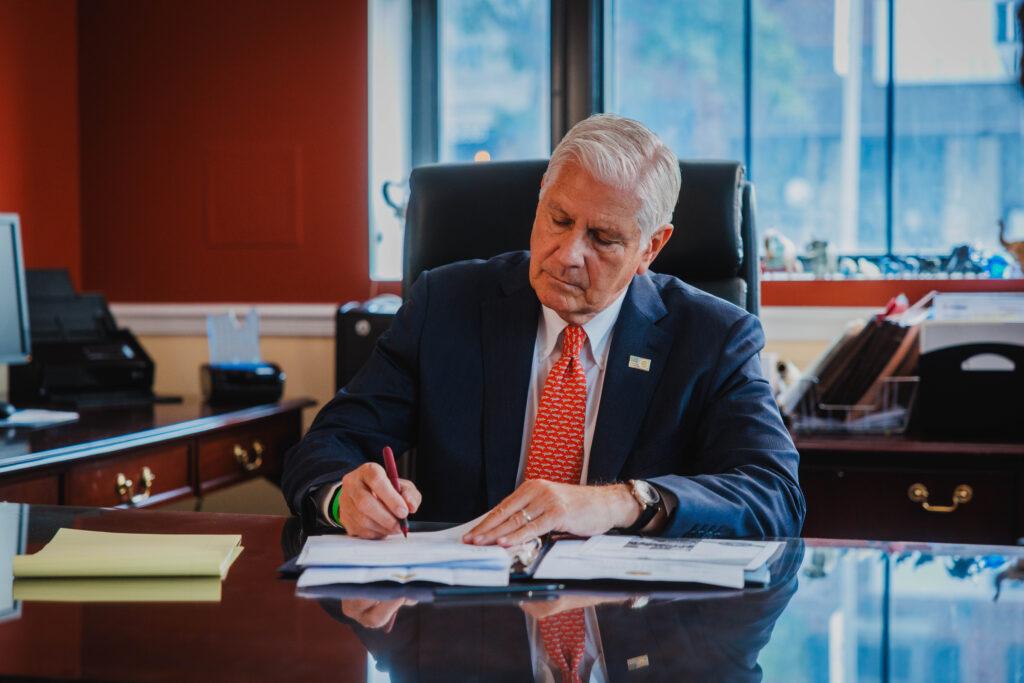
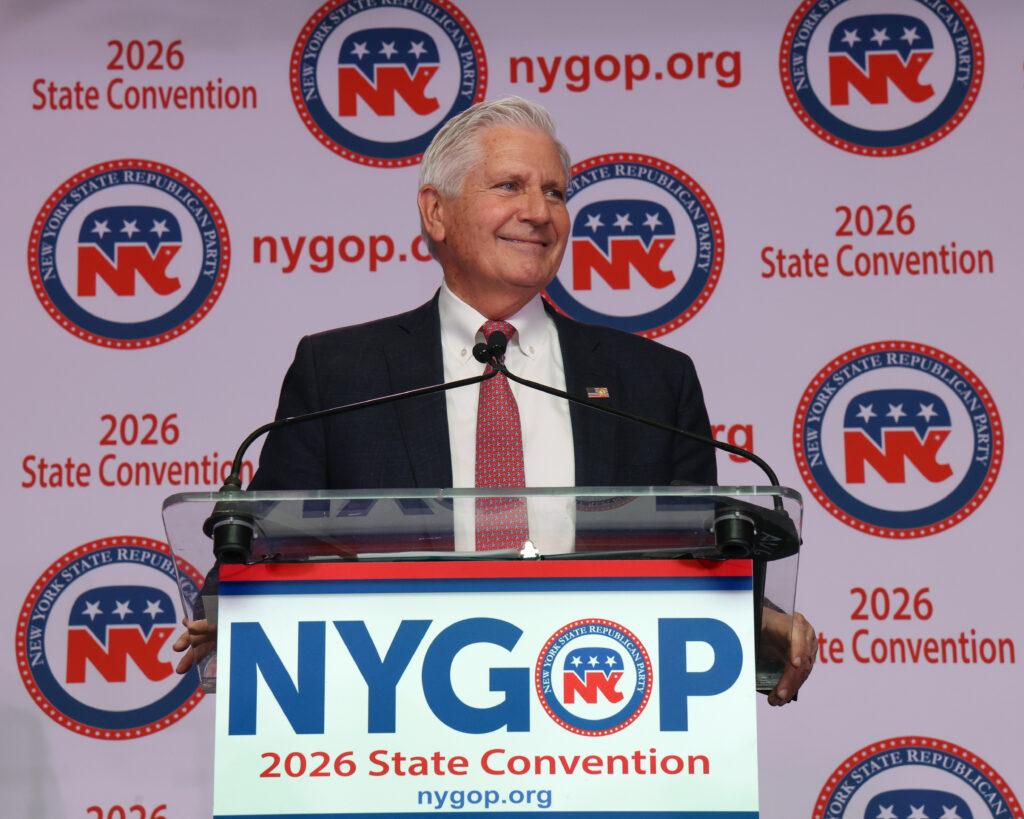
Enter Bruce Blakeman.
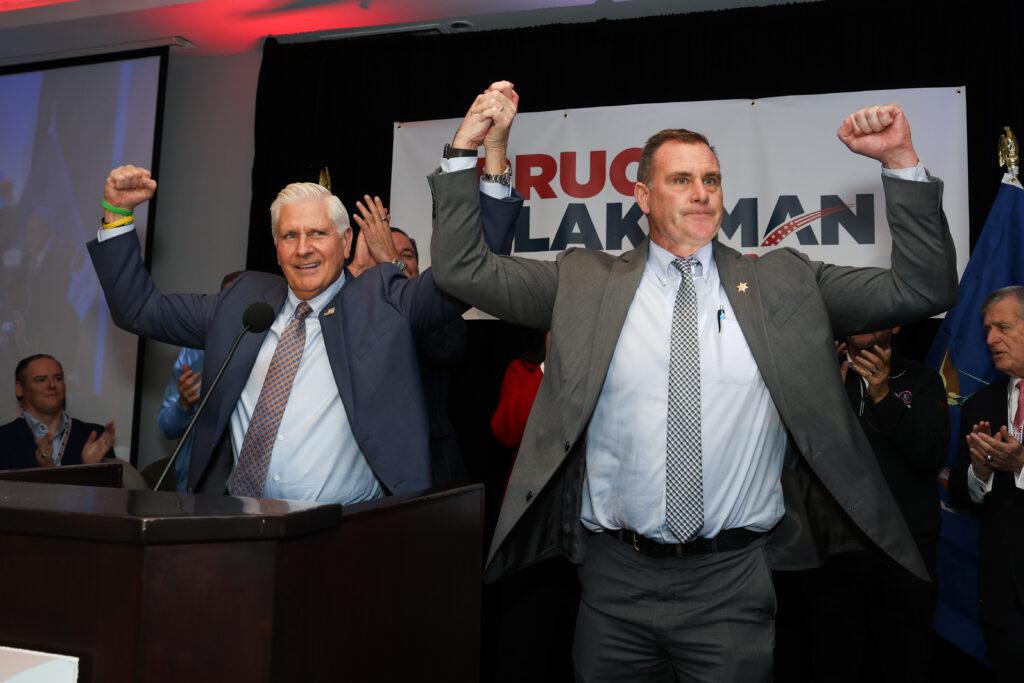
While Republicans faced nationwide political headwinds in 2025, Blakeman secured a commanding re-election victory as Nassau County Executive—dominating a purple county that carries a historic voter registration advantage of more than 100,000 Democrats. His landslide victory caught the attention of business leaders from Wall Street to Main Street who urged him to take his blueprint for prosperity statewide.
Since then, Blakeman has built a powerhouse campaign for Governor based on a searing critique of the status quo under Governor Kathy Hochul, framing the election as an urgent battle to launch an economic renaissance for all New Yorkers.
“If you are working hard every single day to provide for your family,” Blakeman tells an audience of local entrepreneurs and workforce leaders, “it doesn’t matter if you’re pulling a shift in a union, responding to an emergency call, or managing a business. You know the struggle. You feel it the moment you open your bills and see the highest taxes and utility costs in the entire country. It doesn’t have to be this way.”

The Dignity of Grit
Blakeman’s intense focus on reducing the cost of living in New York is rooted in his own DNA. Long before he was an attorney or an executive managing a county larger than eight states, Blakeman was punching a time clock in the service industry. He has lived the very grind he talks about on the stump, having worked shifts as a bartender, a busboy, and a janitor.
“I know what it means to work on your feet all day and go home wondering if the numbers are going to add up at the end of the month,” Blakeman says quietly. “I know the dignity of hard, manual labor, and I know how frustrating it is when a government that didn’t help you earn a single dollar tries to tell you how to spend it.”
Blakeman later served as a commissioner of the Port Authority of New York and New Jersey in the wake of 9/11, tasked with the monumental challenge of securing the region’s vital infrastructure—including airports, bridges, tunnels, and the ports that fuel billions in international commerce.
He attributes his commitment to service to his family. His mother, Betty, answered the call to serve during World War II by serving in the Women’s Army Corps. His father, Robert, was a Merchant Marine who later continued his service as a Naval Reserve Officer.
Today, as a husband, father, and grandfather, Blakeman views the current economic landscape through a multi-generational lens. For him, keeping job creators in New York is about making sure the next generation doesn’t have to move across the country just to find opportunity.
“We are losing our families because we are losing our businesses,” Blakeman warns. “When Kathy Hochul punishes the job creators who keep this state afloat, she is fracturing the future for our kids and grandkids. I want to keep them here. I want them to build their lives right here in New York.”
New York’s Assault on Job Creators
Between 2019 and 2023 alone, nearly 160 powerhouse Wall Street firms packed up and abandoned New York, taking a monumental $1 trillion in managed assets with them to business-friendly states. New York lost an additional 892 companies and $47 Billion in income to states like Florida, North Carolina, and Texas – which is now home to more Fortune 500 headquarters than New York.
Instead of diagnosing this crisis and reversing course, Blakeman warns that Governor Hochul and New York City Mayor Zohran Mamdani are actively doubling down, continuously hunting for new ways to penalize achievement and raid the private sector. The latest weapon in their regulatory arsenal is an aggressive push for an annual pied-à-terre tax—a sweeping real estate surcharge on secondary properties.
“It is no wonder our businesses can’t stay here,” Blakeman tells workforce leaders. “Kathy Hochul is forcing our employers to pay the highest taxes and utility bills in the entire nation. But it goes deeper than that. If workers can’t afford to pay rent, buy groceries, or heat their homes, businesses cannot attract or retain top-tier talent. By driving up the cost of living for everyday people, this administration is starving our companies of the human capital they need to survive.”

Kathy Hochul’s War on Affordability
To understand Blakeman’s political calculus is to look directly at the economic ledger of the people who keep New York running. He arrives on the campaign trail armed with statistics that paint a stark picture of a state punishing its own productivity.
“The cost of everything is higher in Kathy Hochul’s New York, from income taxes, utility bills, and rent to car insurance, health insurance, and even groceries. And Hochul’s policies are to blame for all of it,” he says on the trail.
Blakeman points to Hochul’s energy policies as the prime example. New York’s electric bills currently hover at more than 70% above the national average—a crippling premium that local companies must absorb or pass on to struggling consumers. Blakeman attributes this crisis directly to 48 separate utility rate hikes sanctioned by the Hochul administration, alongside a mountain of green-energy mandates that send bills soaring while having little environmental impact.
“Think about it,” Blakeman urges, leaning forward. “Nearly 70% of the average utility bill in this state has absolutely nothing to do with the electricity you actually consume. It is a dense web of delivery charges, regulatory taxes, and policy mandates shifted from Albany onto the back of the consumer and the job creator. I will repeal those mandates as Governor and cut your utility bill in half.”
The Nassau County Proof of Concept
Against this backdrop of systemic critique, Blakeman offers his own tenure as Nassau County Executive as empirical proof that he can make New York affordable. In Nassau, Blakeman eliminated a $150 million tax hike scheduled by the prior administration and refused to raise property or sales taxes by a single penny. Concurrently, his team invested heavily in law enforcement, earning the county national recognition as the safest county in America. “We showed that if you lower the burden on job creators and back the blue, the economy responds, and communities flourish,” Blakeman reflects. “I want to bring those results to all of New York.”

A Blueprint for the Future
As Governor, Blakeman’s day-one priority is an economic rescue package designed to slash income taxes and eliminate the mandates driving up utility bills. He plans to export his Nassau County safety record statewide by investing in law enforcement, repealing cashless bail laws, and drawing a hard line against the surge of antisemitism on campuses. His platform also balances growth with the environment, focusing on clean water infrastructure and common-sense conservation rather than punitive mandates.
The campaign has a clear path to victory that mirrors Blakeman’s historic crossover success in Nassau County—a purple territory with a voter registration advantage of over 100,000 Democrats. By building a powerful coalition of suburban moderates, frustrated independent business owners, blue-collar union members, and urban voters who can’t afford to live here, the campaign is actively realigning the state’s traditional voting blocs. It is a proven, math-driven blueprint.
As the election approaches, Blakeman’s message across the state is defined by an unmistakable sense of urgency—and an enduring optimism. “We do not have to accept this decline as our permanent reality,” Blakeman says as he prepares for the next campaign stop. “The exodus stops here. Hope is on the way, better times are coming, and together, we are going to build a New York that is safe, prosperous, and affordable for the next generation.”