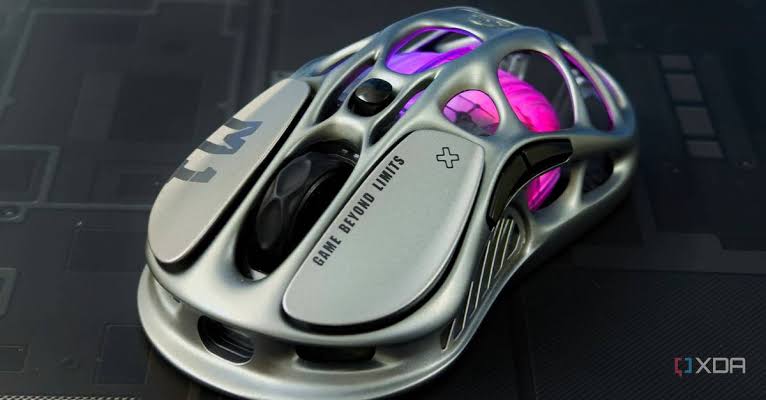
The Gaming Mouse as a Design Object: How GravaStar Is Bringing Sci-Fi Style to Modern Desks
For decades, the computer mouse has been one of the most familiar yet visually unremarkable objects on a desk. Its shape has remained largely predictable: a curved shell, a pair of buttons, and a scroll wheel. Manufacturers have refined its performance, improved its ergonomics, and reduced its weight, but the basic visual formula has changed remarkably little.
GravaStar is among the brands challenging that convention.
Known for its science-fiction-inspired approach to consumer electronics, the company has developed gaming peripherals that look less like ordinary computer accessories and more like objects from a futuristic industrial design exhibition. Its Mercury gaming mice, with their unconventional structures, exposed frames, and distinctive finishes, represent a different way of thinking about desktop technology.
They also raise an interesting question: Why should the tools people use every day be visually ordinary?
When Performance Meets Industrial Design
Gaming peripherals have traditionally been evaluated through measurable characteristics: sensor accuracy, response time, weight, connectivity, and durability. These remain essential considerations, particularly for competitive players who depend on consistent performance.
Yet the appearance of a device can be important, too.
A gaming mouse sits prominently beside a keyboard, often within a carefully arranged workspace. For enthusiasts who invest in premium monitors, contemporary furniture, and thoughtfully selected accessories, the design of the mouse becomes part of the overall environment.
GravaStar approaches this intersection through an aesthetic influenced by mechanical structures, futuristic machinery, and science-fiction imagery.
Rather than concealing every structural element beneath a conventional outer shell, some of its mice feature dramatic cutouts and skeletal frames. The result is a visual language that communicates engineering as much as decoration.
The appeal is not simply that these products look unusual. It is that their appearance forms part of a recognizable design identity.
The Mercury Collection: Different Interpretations of a Familiar Object
GravaStar’s Mercury lineup demonstrates how different materials and construction methods can transform the character of a gaming mouse.
The Mercury M2 explores transparency and lighting through a hollow, lightweight composite structure. Its exposed internal appearance gives it a distinctly technological identity, while its PAW3395 optical sensor and 1,000Hz polling rate provide the functional foundation expected of a modern wireless gaming mouse.
The Mercury M1 Pro takes a more industrial approach. Its magnesium-alloy skeletal frame creates the impression of a miniature mechanical structure, complemented by sculptural contours and customizable lighting. The mouse supports polling rates of up to 4,000Hz with a compatible receiver, combining its unconventional appearance with performance-oriented hardware.
The Mercury X Pro pushes the design philosophy toward lightweight construction and competitive responsiveness. With a magnesium-alloy frame, a weight of approximately 49 grams, and support for up to 8,000Hz polling, it demonstrates how striking design and practical performance can coexist.
Each model expresses a different interpretation of the same underlying idea: a computer mouse can be both a precision instrument and an intentionally designed object.
That does not mean unconventional construction is automatically superior. Grip comfort, weight distribution, battery life, and personal preference remain important. A dramatic silhouette may attract attention, but it must still feel comfortable during everyday use.
The most successful designs are those that create an identity without compromising the purpose of the product.
Why Materials and Finishes Matter
Material selection plays an important role in how a device is perceived.
Magnesium alloy, for example, allows manufacturers to create relatively lightweight structures with a distinctly metallic appearance. Transparent composite materials offer another visual direction, revealing internal forms and allowing lighting to become part of the object itself.
These choices influence not only appearance but also the tactile experience of using a product.
The difference is familiar in other areas of industrial design. Mechanical watches, premium cameras, and high-end audio equipment often appeal to their owners through a combination of craftsmanship, material quality, and recognizable visual character.
Gaming peripherals are increasingly capable of occupying a similar space.
A distinctive mouse can become an expression of personal taste rather than merely another piece of equipment connected to a computer.
Building a Cohesive Desktop Aesthetic
A thoughtfully designed workspace is rarely defined by one object. The relationship between the keyboard, mouse, monitor, lighting, and surrounding furniture creates the overall impression.
For this reason, the visual consistency of gaming peripherals has become an interesting design consideration.
GravaStar extends its aesthetic beyond mice into mechanical keyboards, where sculptural metal frames, unconventional shapes, and illuminated structural elements create a recognizable family resemblance.
The Mercury K1 Pro, for instance, features an aluminum-alloy frame, a compact 75% layout, and a gasket-mounted construction designed to influence typing feel and acoustics.
For enthusiasts interested in creating a visually coordinated workspace, collections of GravaStar mechanical keyboards offer another way to explore the brand’s approach to desktop design.
The broader point is that a keyboard and mouse no longer need to be selected solely as independent technical purchases. They can also be considered together as part of a larger interior and personal design decision.
How Specialty Retailers Are Bringing Distinctive Hardware to New Markets
The popularity of visually distinctive gaming equipment also highlights the role of independent technology retailers.
While conventional electronics stores often concentrate on widely recognized brands and mainstream product categories, specialty retailers can introduce consumers to more unusual designs and emerging product lines.
This is particularly relevant in developing technology markets, where enthusiasts may be familiar with international hardware trends but have fewer local opportunities to explore niche products.
In Bangladesh, Pokobai, an authorized GravaStar reseller, is one example of a specialist retailer bringing these products to a growing community of gaming enthusiasts. Its curated selection of GravaStar gaming mice includes models from the Mercury family, making the brand’s distinctive approach to design more accessible to local buyers.
Such retailers contribute to a broader shift in consumer expectations. Instead of choosing exclusively from familiar, mass-market options, enthusiasts can explore products that better reflect their individual preferences in design, functionality, and materials.
As interest in specialized gaming hardware develops, access to carefully selected international products becomes increasingly relevant.
The Future of Personal Technology Is More Expressive
The evolution of gaming peripherals reflects a wider change in the relationship between people and technology.
Devices are no longer judged exclusively by how efficiently they perform a task. Their appearance, materials, tactile qualities, and compatibility with personal spaces can influence purchasing decisions as well.
This does not diminish the importance of technical performance. A beautifully designed mouse that performs poorly will struggle to satisfy demanding users. Likewise, an exceptionally capable device may have limited appeal to someone who values the aesthetic character of their workspace.
The opportunity lies in combining both priorities.
GravaStar’s Mercury collection illustrates one possible direction: gaming equipment that embraces technological sophistication without hiding its visual identity.
Its unusual shapes will not appeal to everyone, nor are they intended to. But they demonstrate that familiar products can still be reconsidered through industrial design.
The humble computer mouse may remain an essential everyday tool. What it looks and feels like, however, is becoming a much more interesting choice.