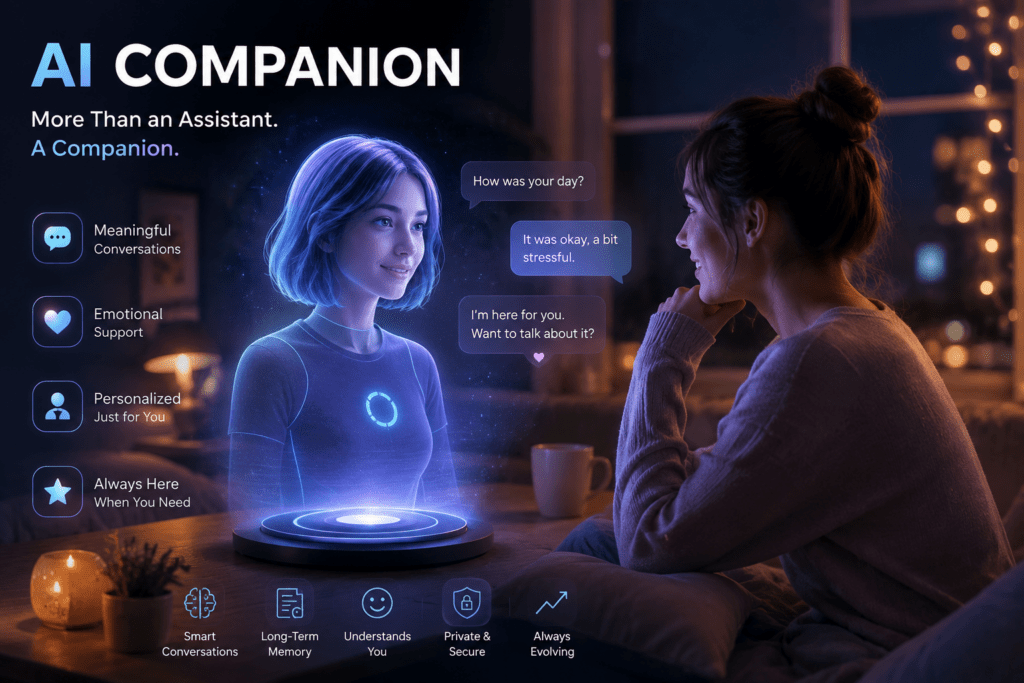
The Future of Personalized AI Companions
Artificial intelligence has moved far beyond answering simple questions or completing routine tasks. Today, digital companions are becoming more personal, responsive, and capable of adapting to different communication styles. People now expect conversations that feel natural, remember previous interactions, and respond with greater emotional awareness. The future of personalized AI companions is being shaped through better language models, voice interaction, visual content, and adaptive memory. As technology continues to improve, these systems are gradually becoming part of entertainment, education, creativity, customer support, and everyday communication across different age groups.
This article explains how personalized AI companions are changing, the technologies driving them, current trends, research findings, future possibilities, and what users can expect in the coming years.
Why Personalized AI Companions Continue to Gain Attention
Digital communication has changed significantly during the last few years. Instead of using software only for information, many people now prefer interactive conversations that feel more engaging and responsive.
Several factors continue to support this growth:
- Better natural language processing
- Faster AI response times
- Improved voice conversations
- Memory-based interactions
- Personalized recommendations
- Image and video generation capabilities
Similarly, businesses also recognize that users remain engaged longer when conversations feel relevant instead of repetitive. This shift continues to shape the future of personalized AI companions across different industries.
Smarter Conversations Through Long-Term Memory
Earlier AI systems often forgot previous conversations once a session ended. Modern systems are gradually changing this limitation through memory features that remember user preferences, favorite topics, writing styles, and conversation history.
Instead of repeating information every time, future systems are expected to build stronger conversational continuity. Consequently, users receive responses that feel more consistent across multiple sessions.
Research from several AI companies also shows that memory-enabled assistants improve user satisfaction because conversations become more natural over time rather than starting from the beginning every day.
Personalization Goes Beyond Text
The next generation of AI is no longer focused only on written conversations. Voice, images, animations, and video generation are becoming important parts of daily interaction.
Future systems may personalize experiences through:
- Voice tone preferences
- Speaking speed adjustments
- Visual avatar customization
- Personalized storytelling
- Mood-aware conversations
- Creative collaboration
Meanwhile, personalization continues extending into entertainment, education, business productivity, and digital companionship.
Many users now prefer an AI companion app that remembers preferences instead of offering identical conversations to everyone.
Research Shows Strong Market Growth
Industry reports indicate that demand for conversational AI continues to increase worldwide. According to Grand View Research, the global conversational AI market is expected to grow at a strong compound annual growth rate throughout the coming decade, driven by improvements in large language models, enterprise adoption, and consumer applications.
Likewise, market analysts continue reporting increasing investment in personalized artificial intelligence because companies recognize growing interest in interactive digital experiences.
Research Snapshot
- Consumer interest in conversational AI continues rising every year.
- Enterprise investment in AI assistants keeps expanding.
- Memory-based personalization receives increasing development funding.
- Voice-enabled interaction continues becoming more accurate.
- Multimodal AI remains one of the fastest-growing technology segments.
These trends clearly indicate that the future of personalized AI companions will depend heavily on personalization rather than simple automation..
Emotional Intelligence Continues Improving
Modern AI models increasingly recognize conversational context instead of responding only to keywords. Although these systems do not experience emotions, they are becoming better at identifying communication patterns and adapting responses appropriately.
Consequently, conversations feel more balanced during casual discussions, brainstorming sessions, creative writing, or emotional support scenarios.
In comparison to earlier chatbot generations, newer systems generate responses that remain more context-aware throughout longer conversations.
This progress also contributes to the future of AI companions, where personalization becomes increasingly valuable for long-term engagement.
Visual Personalization Will Become More Advanced
Images, avatars, animated characters, and interactive personalities continue becoming more realistic every year. Instead of static profile pictures, future AI systems may provide fully animated digital personalities capable of expressing reactions through facial expressions and natural voice conversations.
Meanwhile, creators continue searching for flexible customization tools that allow unique appearances, personalities, interests, and communication styles.
Platforms discussed across communities, including AI Girlfriend Wiki, frequently highlight how customization options continue expanding as new technologies become available.
Better AI Character Customization Creates Richer Experiences
Future personalization is expected to extend well beyond appearance. Users increasingly prefer companions that adapt naturally throughout ongoing conversations.
Future customization may involve:
- Personality development
- Conversation preferences
- Favorite hobbies
- Humor style
- Language preferences
- Creative collaboration
- Learning interests
- Daily interaction habits
Eventually, adaptive personalities may become one of the biggest competitive differences between AI platforms.
Similarly, improvements in AI character chatbots continue allowing more flexible conversations across creative storytelling, roleplay, entertainment, and educational experiences.
Privacy Will Remain an Important Priority
As personalization improves, data privacy becomes increasingly important. People expect transparency regarding stored information, conversation history, and memory management.
Future platforms are likely to provide:
- Better privacy controls
- Easier memory management
- User-controlled personalization
- Optional conversation history
- Improved account security
- Transparent data settings
Consequently, trust will become just as important as technological capability.
Many industry observers, including discussions published through AI Girlfriend Wiki, continue emphasizing responsible development alongside increasingly personalized digital interactions.
Technologies Driving Future Innovation
Several technologies continue working together to improve personalized AI experiences.
- Large Language Models
- Voice recognition
- Speech synthesis
- Long-term memory systems
- Computer vision
- Image generation
- Video generation
- Real-time translation
- Multimodal artificial intelligence
Not only do these technologies improve conversations, but also they help create richer digital experiences across multiple devices.
What the Next Few Years May Bring
Although predictions always involve uncertainty, several trends appear increasingly likely.
Future AI companions may eventually provide:
- Real-time multilingual conversations
- Personalized educational coaching
- Smarter creative collaboration
- Interactive video conversations
- Better emotional context recognition
- More realistic virtual personalities
- Seamless integration across devices
- Improved accessibility for different users
As a result, personalization may become the defining characteristic separating basic assistants from highly interactive companions.
The future of personalized AI companions will likely depend on balancing intelligence, customization, privacy, and responsible innovation rather than focusing only on larger language models.
Conclusion
Artificial intelligence continues moving toward richer, more personalized digital interactions that adapt to individual preferences and communication styles. Memory, multimodal capabilities, emotional awareness, and stronger privacy controls are shaping experiences that feel increasingly natural across many everyday situations. Consequently, the future of personalized AI companions appears focused on creating meaningful long-term interactions instead of simple question-and-answer conversations.
Although technology will continue changing, responsible development, transparent privacy practices, and thoughtful personalization will remain essential. The future of personalized AI companions will ultimately be defined by trust, adaptability, and genuine usefulness for people across different parts of daily life.