The Couture Comeback of Botanical Embroidery in Bridal Fashion
Botanical embroidery has returned to the very heart of bridal fashion, unfurling across bodices and trailing down skirts in some of the most quietly breathtaking gowns of the season. What was once a whisper of tradition — a delicate detail tucked into a hem — has been reimagined as a bold couture statement. Designers are embracing hand-stitched vines, dimensional petals, and intricate floral motifs that turn a wedding gown into a wearable garden. This is more than a passing trend; it is a genuine renaissance of one of fashion’s most demanding and most beautiful crafts, rediscovered by a generation of brides hungry for artistry, intimacy, and meaning in what they wear.
Why flowers speak so powerfully in bridal design
Flowers have always been woven into the language of weddings, from bouquets and centerpieces to the single blossom tucked into a veil. Their symbolism of love, growth, and new beginnings makes them a natural companion to the occasion, so it is little wonder that designers have moved those motifs from the bride’s hands directly onto the gown itself. Botanical embroidery lets a bride carry that meaning not only in a bouquet but across the very fabric she wears, embedding the emotion of the day into the garment.
That emotional resonance is much of why the revival has taken hold so firmly. A gown adorned with hand-worked blooms carries a nostalgic romance, evoking history and craftsmanship in a way that flat, unadorned fabric never can. For the bride drawn to the artistry of the past and the softness of the natural world, floral embroidery offers a way to feel tethered to both. It transforms a dress into something personal and storied — precisely what so many modern brides are searching for.
The craft behind the couture
What elevates botanical embroidery from decoration to couture is the extraordinary skill it demands. These are not patterns printed onto cloth but designs built stitch by stitch, often by artisans who have trained for years to reach the necessary mastery. The result is a depth and richness that machine production simply cannot replicate, and it is this handcrafted quality that gives a gown its couture pedigree. A bride searching for a flower bridal gown is often responding, whether she names it or not, to that unmistakable evidence of the human hand.
The heritage of this craft runs remarkably deep. Reporting from Selvedge traces how the celebrated Paris embroidery house Maison Lesage has shaped the decorative language of haute couture since 1924, preserving an archive of tens of thousands of samples. That lineage is a reminder that the florals appearing on today’s bridal runways are not a novelty but the continuation of a century-old tradition, now finding fresh expression in wedding fashion. It is a language that contemporary ateliers continue to speak in their own dialects. At the Tel Aviv couture house Mira Zwillinger — founded in 1992 and led by mother-and-daughter designers Mira and Lihi Zwillinger — floral work is a signature rather than an accent, each gown made to measure and finished by hand. When a designer embroiders a cascade of blooms across a bodice, they are drawing on techniques refined over generations.
From flat motifs to dimensional blooms
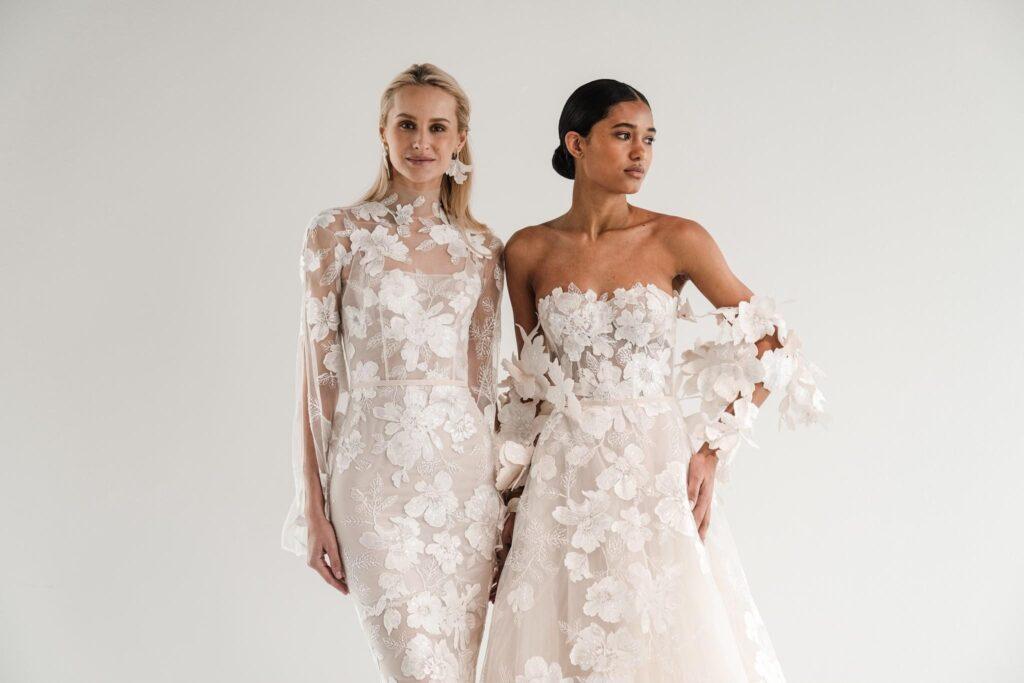
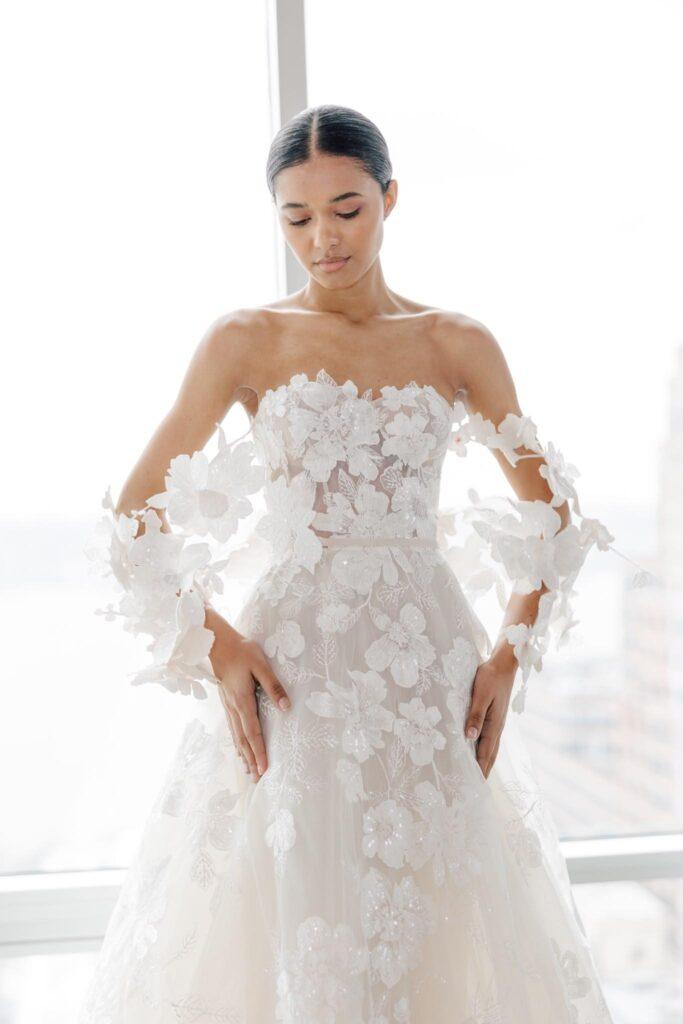
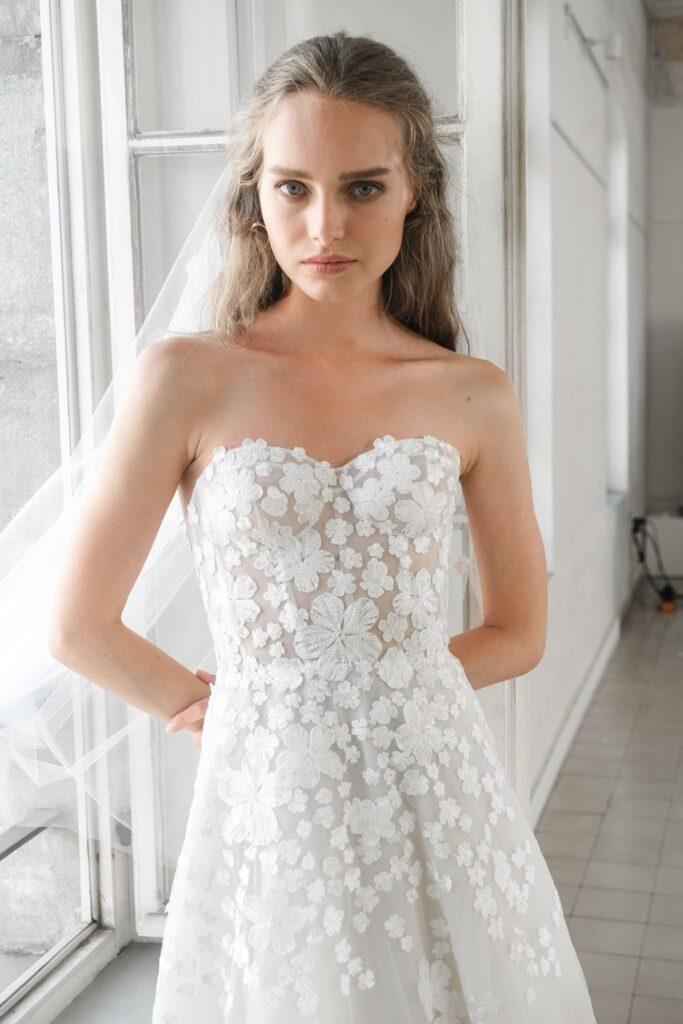
One of the most striking developments in the current revival is the move from flat, two-dimensional patterns to sculptural, three-dimensional florals. Designers are crafting individual petals and blossoms and attaching them by hand, creating flowers that seem to bloom off the surface of the dress. Sewn onto sheer tulle or illusion netting, these appliqués can appear to float across the skin or emerge from the fabric itself, lending movement, texture, and a genuine sense of drama.
This dimensionality is what gives contemporary botanical gowns their couture-level finish. A concentrated cluster of blooms can draw the eye to a single focal point, while a scattering of petals cascading down a skirt introduces softness and motion. The most sophisticated hands mix their textures — pairing organza petals with beaded centers, or layering embroidered vines beneath dimensional flowers for a truly tactile effect. It is an approach the artisans at Mira Zwillinger have long favored, where hand-printed silks, three-dimensional lace, and embroidered blooms are composed together rather than simply applied. It is a sensibility visible in a gown such as Gigi, whose voluminous skirt is washed in gradient floral detailing that deepens as it falls. The artistry lies entirely in the placement, and it is this careful composition that separates a thoughtfully designed floral gown from a merely decorated one.
The hands behind the needle
Behind every embroidered gown stands a tradition of painstaking human labor that is central to the craft’s revival. In the great couture ateliers, the embroidery is worked by skilled artisans — sometimes called the little hands — who spend years mastering their techniques before they are trusted with couture-level pieces. Their expertise is what makes the fast-paced world of high fashion possible, translating a designer’s vision into stitched reality, often under intense pressure.
The methods themselves are storied. Insight from Seamwork describes how ateliers historically used the tambour technique, working beads and threads with a specialized hook to build up their intricate designs. These traditional approaches, passed down and refined over decades, are what give hand-embroidered gowns their unmistakable quality. In an age of mass production, the survival — and revival — of this labor-intensive craft speaks to a renewed appreciation for the handmade, and brides are increasingly drawn to garments that carry that human investment in every stitch.
A trend with versatility for every bride
Part of what has fueled the comeback is the sheer adaptability of botanical embroidery across styles and silhouettes. The trend belongs to no single look; it flatters everything from bohemian to classic, appearing on A-lines, ball gowns, and fit-and-flare shapes alike. A bride may choose a subtle sprinkle of blossoms for a whisper of romance — the delicately scattered florals of a gown like Karla — or embrace a full, dramatic statement of blooms for a bolder vision, as in Sunn, with its richly embroidered bodice, rich floral train, and detachable 3D floral shawl. The embroidery adapts gracefully to either mood.
That versatility means botanical gowns are no longer reserved for spring garden ceremonies. They now appear at weddings across every season and setting, from airy outdoor celebrations to intimate winter gatherings. A designer can curate an entire mood through the choice and placement of florals, tailoring the effect to the individual bride. That range is much of why the trend has resonated so widely, offering something for the romantic traditionalist and the modern trendsetter alike, without ever feeling formulaic.
A blossoming future for bridal artistry
The couture comeback of botanical embroidery reflects a broader shift in bridal fashion toward artistry, individuality, and craftsmanship. Brides today want more than a beautiful dress; they want a garment that tells a story and reveals genuine skill, and hand-embroidered florals deliver exactly that. The revival honors a centuries-old tradition while reinterpreting it for contemporary taste, proving that the most enduring trends are often those with the deepest roots.
As designers — among them Mira Zwillinger — continue to push the technique in new directions, blending traditional methods with imaginative new applications, botanical embroidery seems poised to remain a defining feature of bridal fashion for years to come. It represents the meeting of heritage and modernity, of nature and artistry, all captured in the delicate blooms stitched across a wedding gown. For the bride who sees her dress as a work of art, this flowering of couture craftsmanship offers a way to wear something truly extraordinary on the most meaningful day of her life.