Shipping from the Philippines to the USA: Costs, Options, and What to Expect
Shipping goods from the Philippines to the United States may seem straightforward at first, but in practice, it quickly becomes a series of trade-offs.
Cost, timing, and reliability don’t always align, and decisions made early on tend to have the biggest impact later. This guide breaks down what actually matters in the process, so you’re not left making shipping decisions blindly or reacting to problems after they happen.
Why Shipping from the Philippines to the USA Matters
The Philippines has long been a key export partner for the United States, especially in sectors like electronics, manufacturing, and consumer goods. For many businesses, this route isn’t just an option—it’s part of how their supply chain works.
Most businesses don’t struggle with shipping itself—they struggle with the trade-offs behind it: balancing cost, speed, and reliability. That becomes more noticeable as shipment volume increases or timelines become tighter.
As more companies expand sourcing or distribution across borders, managing shipping from Philippines to USA becomes less about moving goods and more about making consistent, informed decisions.
Where Shipping Gets Complicated
The process rarely goes exactly as planned.
Transit times can shift depending on demand, port conditions, or carrier schedules. What looks predictable on paper often changes once shipments are in motion, which makes inventory planning harder than expected.
Costs behave the same way. Rates move with fuel prices, capacity, and seasonality, and those changes are not always easy to anticipate.
Customs is where even well-planned shipments can start to fall apart. Documentation issues, inspections, or compliance gaps can slow things down quickly, sometimes for reasons that aren’t obvious upfront.
These are the points where shipping stops being routine and starts requiring real judgment.
What to Consider Before You Ship
Several key factors should be evaluated before the shipment even begins.
- Cost vs. transit time – Faster options reduce delivery time but come at a higher cost, while slower methods require planning but help control expenses.
- Cargo type and volume – Size, weight, and product category influence both pricing and the most suitable transport method.
- Delivery urgency – Time-sensitive goods often require air or express services, while less urgent shipments can move by sea.
- Supply chain flexibility – Businesses with more flexible timelines can optimize for cost, while tighter operations tend to prioritize speed and predictability.
Most of the problems that show up later can usually be traced back to decisions made here.
How to Pick the Right Shipping Method for Your Needs
Choosing a shipping method is less about picking the “best” option and more about understanding what each one allows you to trade off.
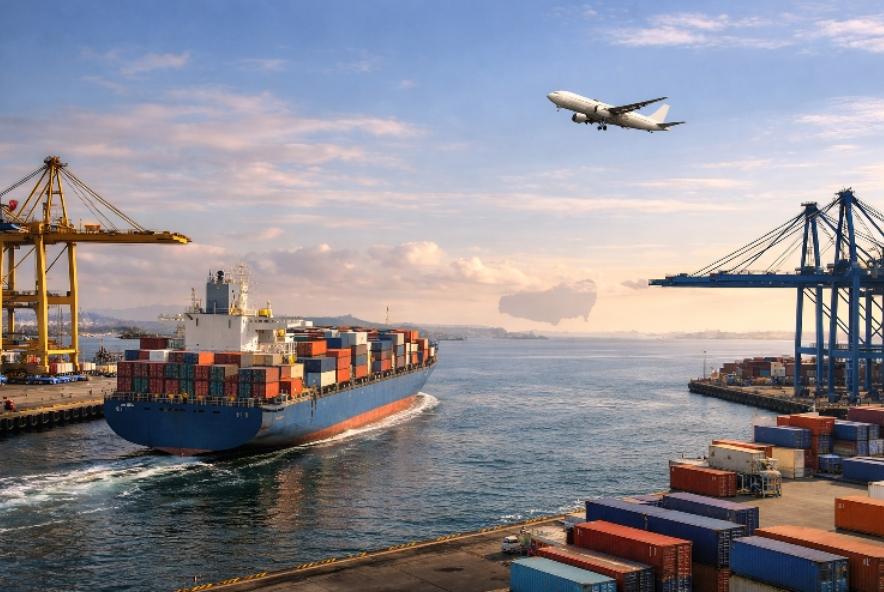
Sea freight is the most cost-effective option for moving large volumes of goods. It works well—if your timeline can afford the wait.
- Speed: Slow, typically 18 to 45 days port-to-port
- Cost: Low
- Best use: Bulk shipments, heavy cargo, non-urgent deliveries
Air freight is used when time becomes the main constraint. The higher cost only makes sense when time actually matters.
- Speed: Fast, usually 5 to 9 days
- Cost: Medium to high
- Best use: Time-sensitive or high-value goods
Express shipping is designed for speed and simplicity. It solves urgency, but not at scale.
- Speed: Very fast, around 1 to 4 days door-to door
- Cost: High
- Best use: Small shipments, samples, urgent deliveries
In practice, most businesses don’t rely on just one method. They mix options depending on what each shipment demands.

What Actually Affects Shipping Costs
Shipping costs rarely stay predictable unless you understand what’s driving them.
Shipment size and weight are the most visible factors, especially for air freight where pricing is tied to chargeable weight. Routing also matters more than it seems—different ports, transit paths, and final delivery points can all shift both cost and timing.
Seasonal demand plays a role as well. During peak periods, limited capacity pushes rates higher, sometimes with very little notice.
Then there’s customs and documentation. Delays here don’t just affect time—they often add storage fees, handling costs, or reprocessing charges.
Shipping costs don’t usually rise because of one single factor. It’s often a combination of things—like higher demand, limited space, or fuel costs—that push prices up together.
What to Expect at Customs When Shipping to the USA
Customs clearance is rarely the part businesses think about first, but it’s often where delays begin.
U.S. import requirements can be strict, especially around documentation. Missing details or inconsistencies can lead to inspections, holds, or additional charges.
Some products are also more sensitive than others. Items like electronics, food products, or regulated goods tend to face closer scrutiny, which increases the importance of getting everything right before shipping.
Preparation matters more than speed at this stage. Once a shipment is held, there are fewer ways to fix the situation quickly.

When It Makes Sense to Work with a Freight Forwarder
At a certain point, handling international shipping in-house becomes less efficient than it seems.
The complexity doesn’t come from any single step—it comes from how many moving parts have to stay aligned. Coordination, documentation, carrier communication, and timing all interact in ways that are hard to manage without experience.
Freight forwarders exist to handle that complexity. Not just by taking over tasks, but by reducing the number of decisions businesses need to manage on their own.
Working with a provider like Gorto Freight, a freight forwarding and international logistics company, doesn’t remove every challenge—but it makes the process more predictable.
Conclusion
There’s no single “right” way to ship between the Philippines and the United States.
What works tends to depend on how clearly you understand the trade-offs. Once those decisions become deliberate, shipping stops feeling unpredictable and starts becoming something you can plan, adjust, and improve over time.