Sephardi Atlantic Passage: From Amsterdam’s Esnoga to Curaçao’s Snoa. One Story, Two Continents
The expulsion of the Jews from Spain and Portugal in the late 1400s was a tragedy and calamity for the Sephardic Jews who had inhabited the Iberian peninsula for centuries. But their forced dispersal led to the growth of a strong and prosperous mercantile community in Amsterdam and the development of trans-Atlantic Jewish trade networks and communities in the New World.
This article explores the extraordinary historical adventure of Sephardi travel in the diaspora by focusing on Amsterdam and the tropical Caribbean Island of Curaçao, both centers of Sephardi-Dutch culture and home to two iconic synagogues, the Amsterdam Esnoga and Curaçao Snoa.
A luxury Jewish tour of either of these places provides fascinating insights into the lost world of the Iberian Sephardi diaspora and the challenges and adventures of the Jewish pioneers who crossed the Atlantic in sailing ships to settle the New World.
Discover the Sephardi Jewish History of Amsterdam
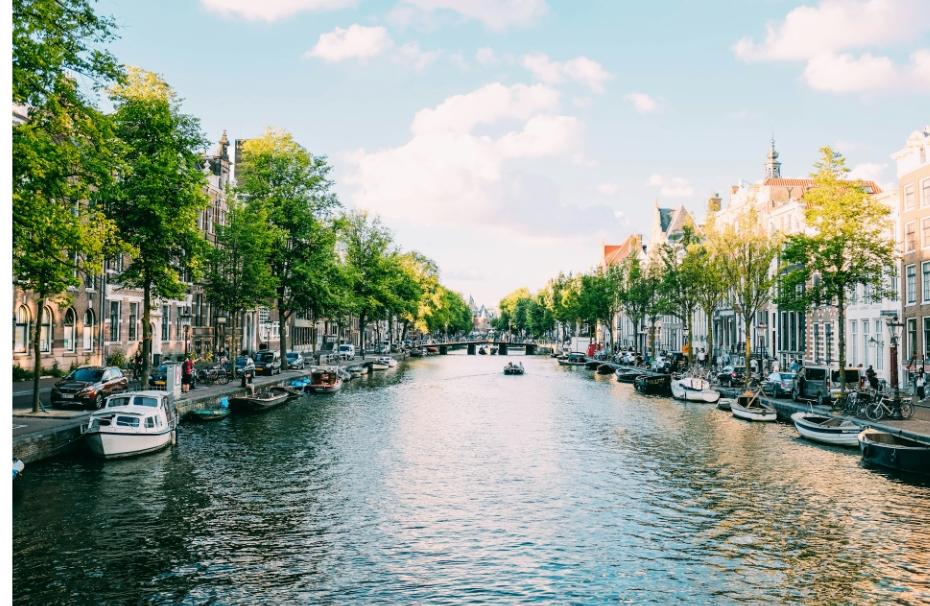
During the 17th century, Amsterdam was one of Europe’s most important ports and the commercial hub of Holland’s thriving overseas empire. The dynamic energy and prosperity of the Dutch Golden Age was due in part to its Jewish community, which produced talented merchants, traders and artisans.
The first major wave of Jewish immigration to Amsterdam was composed of Sephardic Jewish refugees from Spain and Portugal. They found a safer and more tolerant environment in Amsterdam and quickly established a community. Although later outnumbered by Ashkenazi immigrants, the Iberian Jews made their mark. One of the most famous Jewish cultural treasures in Amsterdam is the Esnoga or Portuguese synagogue of Amsterdam.
Completed in 1675, the Esnoga is one of Europe’s great synagogues. Apart from the terrible years of the Nazi occupation, it is one of the oldest continually operating synagogues in the world. The Esnoga is part of the Jewish Cultural Quarter, Amsterdam, an area that includes the Jewish Museum and archives. These lovingly maintained treasure troves preserve and contextualize Sephardi Jewish heritage and history. They also focus on the historic Ashkenazi community and the trade routes and mercantile families of the era, as well as the religious freedoms that made the Netherlands so attractive to Jews.
One of the most important Jewish sites in Amsterdam is the Anne Frank House, a museum built around the refuge shared by the Frank family and other Jews who hid from the Nazis, before being betrayed and deported to Auschwitz. The Germans murdered approximately 75% of Dutch Jews, but the revival has been steady and Amsterdam’s modern Jewish community is now around 15,000 strong. Gil Travel can arrange introductions to community members and private guided tours of the Holocaust Museum, Names Monument and Dutch Theatre (used as a deportation center).
A Brief Overview of Curaçao
Most American Jews are familiar with Amsterdam and know something of its Jewish history. Curaçao is less well known and many people immediately think of the eponymous orange citrus liqueur when they hear the name.
The island of Curaçao lies just over 40 miles off the coast of Venezuela and 400 miles to the south of Puerto Rico. It’s almost the same size as Washington DC and is a beautiful tropical paradise surrounded by the blue waters of the Caribbean Sea.
Curaçao’s role in the development of the Caribbean’s surprising Jewish heritage began in the 1600s. A popular claim is that the very first Jew to arrive on the island was a Dutch-Jewish interpreter called Samuel Cohen who arrived with a Dutch fleet in 1634.
What’s certain is that Sephardic Jews from Spain, Portugal and Amsterdam settled the island from the mid 1600s onwards and built the Mikvé Israel-Emanuel Synagogue also known as the Snoa. Crossing the Atlantic in a sailing ship, while braving tropical storms and pirates, was no mean undertaking with 17th century technologies. The Sephardic Jews who made the crossing were clearly adventurous and determined people.
Exploring the Curaçao Snoa
The Snoa (officially the Mikvé Israel-Emanuel Synagogue) is the oldest synagogue in continuous use in the Americas. It’s famous for its sand-covered floor and still celebrates the ancient Sephardi rituals. The Snoa is located in the capital Willemstad whose old city center is a UNESCO World Heritage Site.
The Snoa is typical of the cheerfully colored colonial style buildings that give Willemstad its charm. Its yellow painted facade contrasts with the cool white interior and mahogany beams and bemah. One unique feature of the Snoa is that its floor is covered in sand. This tradition serves as a reminder of how persecuted Sephardic Jews in the Old World covered their synagogue floors with sand to muffle their footsteps when they risked their lives to worship in secret.
The Curaçao Jewish Heritage Museum does an excellent job of preserving this fascinating chapter of Sephardic history in a rapidly changing world. Exhibits include a mikvah from 1729 and 18 historic Torahs. It also explores Jewish mercantile activity and their role in Caribbean trade and the development of transatlantic family networks. The museum also explores the transatlantic slave trade that flourished in the region, until it was eventually suppressed by Britain’s Royal Navy following the abolition of slavery in 1807.
Curaçao is keen to encourage luxury tourism and has plenty to offer American Jews who want to combine a high end vacation with an exploration of Sephardi Jewish history. The island has miles of pristine beaches and warm Caribbean waters, and is noted for the top quality diving experiences on offer. Your Jewish travel agency can also recommend world class kosher friendly hotels and arrange introductions to members of the island’s tiny remaining Jewish community (about 350 strong). It’s also possible to arrange attendance at Shabbat services in the Snoa.
Talk to Gil Travel today and start planning a group or family tour to explore whatever aspects of Sephardi Jewish history interest you most, and build your trip around a luxury tropical vacation or a high end European city trip.
FAQs
1. Why are the Esnoga and the Snoa historically connected?
Portuguese Synagogue and Mikvé Israel-Emanuel Synagogue are deeply linked through the shared history of Portuguese Sephardi Jews who fled religious persecution in Spain and Portugal during the 15th and 16th centuries.
After escaping the Inquisition in Iberia, many Sephardi Jews found refuge in the relatively tolerant Dutch Republic. In Amsterdam, they established a flourishing community that became one of the most prominent Jewish centers in Europe. The Portuguese Synagogue, often called the Esnoga, was inaugurated in 1675 and symbolized the community’s new security, prosperity, and religious freedom.
From Amsterdam, Sephardi merchants expanded their trade networks across the Atlantic world, including to the Caribbean. Curaçao, under Dutch rule, became a major commercial hub. There, the community founded Mikvé Israel-Emanuel Synagogue, locally known as the Snoa, which was completed in 1732 and remains the oldest synagogue in continuous use in the Americas.
Architecturally and spiritually, the Snoa reflects the influence of Amsterdam’s Esnoga. Both synagogues represent not only religious revival after persecution, but also the remarkable resilience, entrepreneurial success, and global connections of Sephardi Jews in the early modern Atlantic world.
2. Why is there sand on the floor of Curaçao’s synagogue?
Mikvé Israel-Emanuel Synagogue is famous for its sand covered floor, a striking and memorable feature for visitors.
The sand serves as a powerful memorial to the era of the Inquisition in Spain and Portugal, when Jews were forced to practice Judaism in secret. In hidden rooms and cellars, sand was sometimes spread on floors to muffle the sound of footsteps and prayers, reducing the risk of detection by authorities.
In Curaçao, the sand has taken on layered meanings. It commemorates the courage of Iberian Jews who risked their lives to preserve their faith. Some interpret it as a reminder of God’s promise to Abraham that his descendants would be as numerous as the sand. It also reflects how Sephardi tradition evolved in a new environment while maintaining memory of the past.
Today, the sand covered floor creates a uniquely serene and historic atmosphere, connecting worshippers and visitors alike to centuries of Jewish endurance and identity.
3. Is Curaçao still an active Jewish community today?
Yes. Although much smaller than in its 18th and 19th century peak, Curaçao maintains a vibrant and active Jewish presence. Today, the island’s Jewish population numbers approximately 350 people.
Historically, Curaçao’s Jewish community was one of the most influential in the Caribbean, playing a major role in trade, finance, and civic life. Over time, economic changes and waves of emigration, particularly to the United States, Panama, and the Netherlands, reduced the community’s size.
Despite its small population, Jewish life in Curaçao remains active. Services are still held at Mikvé Israel Emanuel Synagogue, and the community maintains cultural and educational activities that preserve its distinctive Sephardi Dutch heritage. Visitors are often struck by how living history continues within the walls of this centuries old synagogue.
4. Can these destinations be visited as part of one Jewish heritage journey?
Absolutely. A transatlantic Jewish heritage journey connecting Amsterdam and Curaçao offers a rare opportunity to trace the remarkable story of Sephardi Jews across continents.
Travelers can begin in Amsterdam at the Portuguese Synagogue, explore the historic Jewish Quarter, and learn how the Dutch Republic became a refuge for Iberian Jews. From there, the journey continues across the Atlantic to Curaçao, where the story expands into the Caribbean context and reveals how Sephardi Dutch culture adapted and flourished in a new world of trade, migration, and cultural exchange.
Specialized travel providers such as Gil Travel can arrange luxury, customized itineraries that include private tours, historical lectures, and exclusive access experiences. Seeing both synagogues in one journey powerfully illustrates how a displaced community rebuilt itself and shaped Jewish history on two continents.
It is not just a trip. It is a living narrative of resilience, faith, commerce, and cultural continuity across the Atlantic world.
Written By: Iris Hami, President of Gil Travel Group, the largest travel management firm sending people to Israel. She has over 40 years of experience in the travel industry and uses that knowledge to craft unique Jewish journeys around the world.