The Science of Radiance: How Professional Red Light Therapy Revitalizes Aging Skin
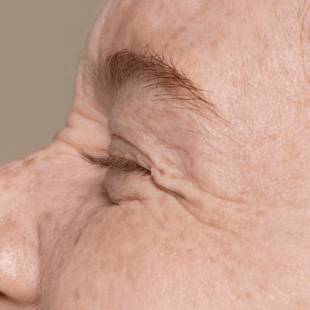
The changes in our skin start to become more visible as we age. People start noticing fine lines and wrinkles. The firmness we once took for granted also declines gradually, causing the skin to hang loose in folds. In addition, skin begins to lose its natural glow and radiance, looking dull and lusterless.
Red light therapy (RLT) has emerged as a popular option for skin care in professional clinics as well as at-home skincare routines. An increasing number of people are choosing red light therapy nowadays because, unlike most cosmetic treatments that act only on the superficial layer of skin, RLT works beneath the skin surface and supports its natural healing processes.
This article discusses the science of skin radiance and how professional red light therapy can help revitalize your aging skin and support long-term skin health.
Why Aging Skin Loses Radiance Over Time
The health and appearance of your skin depend on several factors, including the level of hydration, blood circulation, nutrition, and the amount of collagen and elastin. All of these factors together contribute to smooth, firm, and radiant skin.
However, as we get older, the natural processes that maintain the hydration, collagen, and elastin levels in the skin begin to slow. Eventually, the skin becomes dry and dull and loses its youthful brightness and firmness.
The production of collagen begins to decline naturally in our mid-20s. The loss of collagen causes the skin to become thinner and less elastic.
Aging also affects blood circulation and slows cellular turnover. As a result, the skin does not receive an adequate supply of oxygen and nutrients, which hampers its natural healing mechanisms and leads to visible signs of aging, such as wrinkles, fine lines, skin folds, and age spots.
In addition, factors such as sun exposure, pollutants, poor sleep, mental stress, and smoking tend to accelerate these changes.
In short, aging is a natural part of life. However, it is possible to slow or delay the appearance of these signs and support healthier, more radiant skin through safe, non-invasive treatments like red light therapy.
RLT can support the skin’s natural renewal process and help maintain a youthful appearance over time.
How Red Light Therapy Interacts With Skin Cells
Red light therapy, also referred to as photobiomodulation, works by delivering red and near-infrared wavelengths of light.
Unlike ultraviolet (UV) light, which is known to cause damage to the skin and contribute to premature aging, the red and near-infrared light supports cellular functions with their non-ionizing wavelengths, typically ranging between 630 nm and 850 nm.
These wavelengths have the ability to penetrate the skin and enter the deeper layers, where they are absorbed by the mitochondria in cells. Mitochondria are tiny organelles that serve as energy factories powering most of the cellular functions.
Red light therapy, by supporting mitochondrial activity, may increase the availability of energy to the cells, helping them to function more efficiently. This is expected to improve the ability of the skin to repair itself and maintain its firm and youthful appearance.
The Role of Mitochondria in Skin Renewal and Collagen Production
Mitochondria play a key role in the production of ATP, the primary source of energy used by cells. This is why they are considered the “powerhouses of the cell”.
Healthy mitochondrial function can ensure the skin cells are able to repair and renew themselves constantly. The production of energy by mitochondria also equips skin cells to perform important tasks, such as producing collagen and repairing everyday damage.
Collagen is a protein responsible for maintaining the firmness and structural matrix of the skin. However, as age increases, the production of collagen declines, due to which the skin loses its firmness. As a result, fine lines and sagging start becoming more noticeable.
RLT can support the production of collagen by stimulating fibroblasts, the cells responsible for collagen production. RLT can also reduce inflammatory damage, thereby slowing or reversing the appearance of the signs of aging. Over time, this may contribute to smoother skin texture and improved elasticity.
It is important to understand that RLT does not stop aging. Instead, it supports the body’s natural processes to help maintain healthier-looking skin.
Visible Benefits of Consistent Red Light Therapy Use
Most people choose red light therapy because it is safe and effective for managing several health concerns. It is a gentle, non-invasive treatment that delivers visible results over time when used consistently.
Some visible skin benefits you may notice from using red light therapy include:
· Improved texture and smoothness of the skin
· Reduced appearance of fine lines and wrinkles
· Enhanced skin radiance
· More even-looking skin tone
· Improved overall skin quality
The timeline of these results varies among different users. Some people notice subtle changes within just a few weeks, while some might need several months of consistent use to derive the expected benefits.
Factors such as your age, skin condition, diet, lifestyle habits, pollution, and sun exposure can influence the actual outcomes. Hence, it is advisable to view red light therapy as a long-term investment in your skin health rather than a quick fix.
Professional Devices vs At-Home Options
Many people wonder if they should visit a clinic for red light therapy or invest in an at-home device. Both of these options offer advantages. Being aware of the benefits of these options can help you make the right choice depending on your specific needs and preferences.
For example, you may choose professional treatments at a clinic if you prefer supervised treatments or want to incorporate RLT into your other cosmetic procedures. Also, RLT at the clinic is often performed using larger devices that deliver higher power output and offer broader coverage. So, treatment at the clinic may be suitable for those who need to target multiple body parts in a single session.
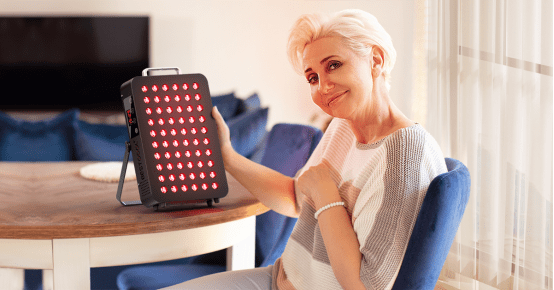
At-home RLT devices, on the other hand, offer greater convenience and allow you to build a consistent routine without the need to schedule appointments or visit the clinic. You can consider buying smaller handheld RLT devices if you want to target specific small areas. You may choose a device with larger panels if you want to treat broader regions of the face and body.
The biggest advantage of at-home RLT devices is accessibility. Having a device readily available at home is more likely to encourage regular use compared to visiting a clinic for each appointment.
This means having a red light therapy device at home could potentially improve the consistency of your RLT sessions, increasing the likelihood of seeing the desired results.
How to Safely Integrate Red Light Therapy Into Your Skincare Routine
The use of red light therapy for skincare involves following a simple routine and creating a sustainable habit. Here are some strategies you can adopt to safely integrate red light therapy into your skincare routine:
· Start with clean, dry skin before each session. Remove any makeup, sunscreen, and heavy skincare products as these may interfere with the penetration of light.
· You can begin with sessions lasting around 10 to 20 minutes, two to five times per week, depending on the recommendations of the manufacturer.
· After the session, apply your usual skincare products, such as hydrating serums and moisturizers. You can also consider using serums containing hyaluronic acid to improve hydration.
· Red light therapy is not a substitute for sun protection. Hence, continue practicing good skincare habits, including the use of sunscreen when stepping outdoors.
· Consult a healthcare professional before beginning RLT, especially if you have a medical condition or take photosensitizing medications.
Conclusion
Aging is inevitable. However, it is possible to support healthy, younger-looking skin at every stage of life by using red light therapy.
Red light therapy offers a gentle, science-backed approach that works by stimulating the body’s natural processes. It may help restore youthful, radiant skin by supporting cellular energy production, collagen synthesis, and skin renewal. These benefits are expected to improve the texture, radiance, and firmness of your skin over time.
When combined with healthy lifestyle habits, a balanced diet, and sun protection, red light therapy can become a valuable tool for supporting long-term skin health and helping your youthful radiance shine through. Check this link to find out the types of RLT devices available for you.
References:
1. Ravindran, R., Pizzol, D., López-Gil, J. F., Rahmati, M., Boyer, L., Fond, G., Butler, L., Stellato, A., Gawronska, J., Barnett, Y., Keyes, H., Soysal, P., Eren, R., Onal, B., Yon, D. K., & Smith, L. (2026). Collagen Supplementation for Skin and Musculoskeletal Health: An Umbrella Review of Meta-Analyses on Elasticity, Hydration, and Structural Outcomes. Aesthetic surgery journal. Open forum, 8, ojag018.
2. Pchelin, P., Shkarupa, D., Smetanina, N., Grigorieva, T., Lapshin, R., Schelchkova, N., Machneva, T., & Bavrina, A. (2023). Red light photobiomodulation rescues murine brain mitochondrial respiration after acute hypobaric hypoxia. Journal of photochemistry and photobiology. B, Biology, 239, 112643.
3. Couturaud, V., Le Fur, M., Pelletier, M., & Granotier, F. (2023). Reverse skin aging signs by red light photobiomodulation. Skin research and technology : official journal of International Society for Bioengineering and the Skin (ISBS) [and] International Society for Digital Imaging of Skin (ISDIS) [and] International Society for Skin Imaging (ISSI), 29(7), e13391.
4. Hernández-Bule, M. L., Naharro-Rodríguez, J., Bacci, S., & Fernández-Guarino, M. (2024). Unlocking the Power of Light on the Skin: A Comprehensive Review on Photobiomodulation. International journal of molecular sciences, 25(8), 4483.
5. Keszler, A., Lindemer, B., Weihrauch, D., Jones, D., Hogg, N., & Lohr, N. L. (2017). Red/near infrared light stimulates release of an endothelium dependent vasodilator and rescues vascular dysfunction in a diabetes model. Free radical biology & medicine, 113, 157–164.