Premium Cycling Upgrades for Weekend Road Riders
Weekend riders occupy an interesting spot in the cycling world. You’re serious enough to care about how the bike feels, but your riding life doesn’t revolve around it the way a competitive cyclist’s might. That means upgrade decisions need to actually make sense for the riding you do — long, unhurried mileage, the occasional group ride, maybe a century once or twice a year — rather than chasing marginal gains built for a finish line you’re not racing toward.
This piece is about the upgrades that genuinely matter for that kind of rider: the ones that make every Saturday loop feel better, not just the ones that shave grams for a podium you’re not chasing. And near the top of that list, almost every time, sits the wheelset.
The One Upgrade Weekend Riders Underrate
Ask ten casual riders what they’d upgrade first and most will say a new saddle, a bike fit, or maybe a power meter. Wheels rarely make the shortlist, which is a little strange given how much they actually shape the experience of a long ride. Wheels are rotating, unsprung weight — every gram there affects acceleration and climbing more noticeably than the same gram anywhere else on the bike — and they’re also your primary connection to road feel, vibration damping, and how confidently you carry speed through a corner.
For the specific case of weekend riding, the upgrade math is a little different than it is for racers. You’re not optimizing for a single hard effort — you’re optimizing for hours of sustained comfort and confidence, ride after ride. That reframes what “better” wheels actually means, and it’s exactly why thoughtful road bike wheel upgrades tend to deliver outsized satisfaction for exactly this kind of rider.
Why Comfort Should Outrank Pure Speed in Your Decision
A shallower or mid-depth wheel that feels stable and predictable across a four-hour ride is arguably a better weekend upgrade than the deepest, most aerodynamic option available, simply because you’ll spend more time enjoying the ride and less time fighting crosswinds or feeling beat up by the end of it. Speed matters, but for weekend mileage, ride quality compounds — a wheel that feels good at hour one and still feels good at hour four is doing its job.
What Changes When You Actually Upgrade
The honest answer is: more than most riders expect, and less than marketing copy sometimes implies. A quality carbon wheelset upgrade typically brings a noticeably lighter feel under acceleration, a smoother ride thanks to better rim engineering and tire compatibility, and — depending on rim depth — a real aerodynamic benefit on flatter stretches where maintaining speed matters more than raw power.
What it won’t do is turn an out-of-shape Saturday into an effortless one. Wheels amplify what’s already there; they don’t replace fitness or a good bike fit. Riders who go in with realistic expectations tend to be the happiest with the upgrade, because they’re evaluating it against what it actually delivers rather than against a marketing promise.
Setting a Budget That Matches Your Actual Riding
Premium doesn’t have to mean maximalist. A weekend rider putting in a few solid hours most Saturdays doesn’t necessarily need the same wheelset a Cat 1 racer would choose, and spending accordingly — a genuinely well-built mid-tier carbon option rather than the absolute top-of-the-line offering — often makes more financial sense without meaningfully compromising the experience. The goal is matching the upgrade to the riding, not maximizing spec sheet numbers for their own sake.
Rim Depth: Picking the Right Tool for Your Actual Routes
If your weekend routes tend toward rolling countryside, exposed bridges, or coastal roads with real crosswind exposure, a moderate rim depth — somewhere in the 40 to 50mm range — will likely feel more confidence-inspiring than a deep aero profile. If your typical loop is flatter and more sheltered, a deeper rim, in the 50 to 60mm range, rewards you with genuine aero benefit without much of a handling trade-off.
This decision matters more for weekend road riding than it might for someone chasing every last aerodynamic advantage regardless of conditions, because you’re less likely to be constantly adjusting your riding style around the wheel — you want a wheel that adjusts to your typical route, not the other way around.
A Realistic Case for Going Deeper
That said, plenty of weekend riders do best on a deeper wheel than they’d expect, particularly if most of their mileage happens on well-sheltered roads or they simply enjoy the sensation of carrying speed on flatter terrain. There’s no universal right answer here — it comes down to matching the wheel to where you actually ride most often, not to an abstract idea of what “serious” riders are supposed to choose.
The Weekend Rider’s Case for a 60mm Wheelset
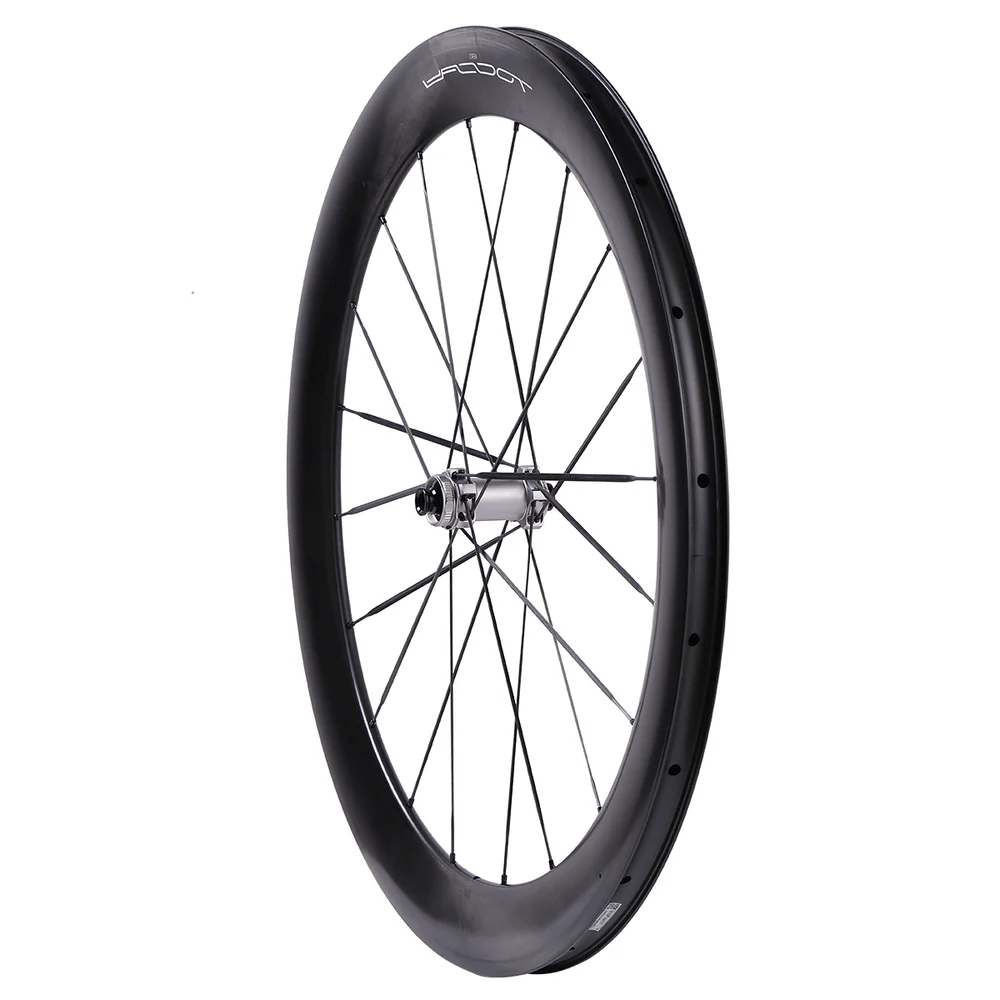
For riders whose typical Saturday loop favors flatter terrain, faster group rides, or long straight stretches where maintained speed matters more than climbing agility, a deeper wheel earns its keep. The AERO-60 Ghost Wheelset CARBON is a solid example of what that looks like in practice — a 60mm rim depth built on a Toray T800 + T1100 carbon layup, with a 25mm inner / 33mm outer rim width and a wheelset weight of roughly 1240g. It’s backed by a 36-month limited warranty, supports both Shimano HG and SRAM XDR freehub options, and is set up for tubeless-ready and clincher tires without needing rim tape. For a weekend rider chasing that satisfying sensation of holding speed effortlessly on a fast, flat loop, this is exactly the kind of upgrade that earns its price tag ride after ride, rather than sitting unused after the novelty wears off.
Small Upgrades That Pair Well With New Wheels
A wheelset upgrade is a great anchor point for a few smaller changes that amplify the benefit. Fresh, quality tires matched to your new rim’s internal width make a real difference — an upgraded wheel paired with old, mismatched tires won’t deliver its full potential. If your new wheels are tubeless-ready, setting them up properly with fresh sealant is worth the extra effort, since the comfort and puncture-resistance benefits are a meaningful part of what you’re paying for.
It’s also worth double-checking your tire pressure once new wheels are installed. Rim width changes tire shape and volume slightly, and riders who stick with their old pressure settings out of habit often miss out on some of the comfort gain a new wheelset is capable of delivering.
Don’t Skip the Compatibility Check
Before ordering anything, confirm rotor mounting type (Centerlock versus 6-bolt), axle standard, and freehub body against your current bike. It’s a five-minute check that prevents the single most common disappointment in wheel upgrades — a beautiful new wheelset that simply doesn’t fit the bike it was meant for.
Making the Upgrade Feel Worth It Long-Term
A premium wheelset is a multi-year investment for most weekend riders, which makes warranty coverage and after-sale support genuinely important considerations, not just fine print. Look for clear, usable warranty terms and a brand that answers detailed compatibility questions before you buy — that responsiveness tends to predict how well they’ll handle things if you ever need support down the line.
Final Thoughts
The best premium upgrade for a weekend rider isn’t the one built for a race you’re not entering — it’s the one that makes your actual Saturday loop feel better, ride after ride. That means picking a rim depth suited to your real routes, setting a budget that matches how often you actually ride, and treating the wheel as an investment in years of enjoyable mileage rather than a one-time spec-sheet flex.
Get that right, and the upgrade pays off exactly where it should: in how good mile 30 feels on a bike that’s finally keeping up with how seriously you take your weekends, even if you never once think about racing it.