PM10 Compliance and Water Trucks: What Phoenix Contractors Need to Know
Phoenix contractors know that dust is more than a nuisance. In Maricopa County, dust is a regulated pollutant, and construction sites are one of the largest contributors to it. Fine particulate matter, known as PM10, is a serious air quality concern in the region, and the rules around controlling it are strict, actively enforced, and expensive to ignore. Understanding how PM10 compliance works and how water trucks fit into the picture is essential for any contractor operating in the Phoenix metro area.
This guide breaks down what PM10 is, why it matters so much locally, what the rules require, and how a properly managed dust control program, built around reliable water truck service, keeps projects moving without triggering fines or shutdowns.
What Is PM10 and Why Does It Matter in Phoenix
PM10 refers to particulate matter measuring 10 micrometers or smaller in diameter. These particles are small enough to be inhaled deep into the lungs, which makes them a public health concern, not just an environmental one. Sources include vehicle traffic on unpaved roads, grading and excavation work, material handling, and wind erosion from exposed soil.
Phoenix and the surrounding Maricopa County area have long struggled with PM10 levels that exceed federal air quality standards. The combination of an arid climate, loose desert soils, rapid population growth, and a high volume of active construction sites creates ideal conditions for dust to become airborne. Because of this, the Environmental Protection Agency has classified the region as a “nonattainment area” for PM10, which means local regulators are required to enforce stricter controls than in most parts of the country.
For contractors, this designation translates directly into permitting requirements, inspection visits, and enforcement action if dust is not properly managed.
Maricopa County Air Quality Regulations Contractors Must Follow
The Maricopa County Air Quality Department oversees dust control compliance for construction activity in the region. Any project disturbing 0.1 acres or more of soil typically requires a dust control permit before work begins. Larger and higher risk projects may fall under even more detailed requirements.
Key elements of the regulatory framework include:
- A dust control plan submitted and approved before grading or earthwork begins
- An on-site trained and certified dust control coordinator during active operations
- Use of approved control measures such as water application, chemical stabilizers, or track-out prevention devices
- Ongoing monitoring and record keeping to document that dust control measures are being applied consistently
- Immediate corrective action when visible dust emissions occur
Inspectors from Maricopa County can and do visit active job sites unannounced. If dust is visibly leaving the property boundary, or if required control measures are not in use, the county can issue a notice of violation on the spot.
The Role of Water Trucks in Dust Control
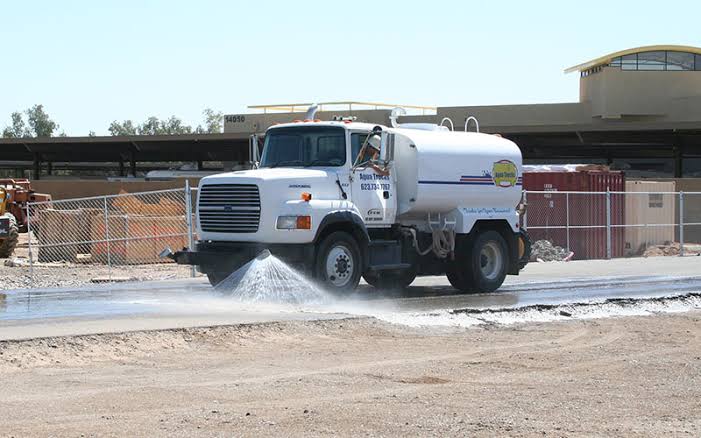
Among all the tools available to contractors, water application remains the most widely used and most effective method of PM10 control. Water trucks suppress dust by keeping exposed soil moist, which prevents fine particles from becoming airborne during grading, hauling, demolition, and vehicle movement across unpaved surfaces.
A water truck program typically covers several activities on a job site:
- Wetting down active work areas before and during earthmoving
- Applying water to haul roads and access points to reduce track out
- Suppressing dust generated by demolition or material crushing
- Controlling dust on stockpiles of soil, sand, or aggregate
- Providing compaction support by maintaining proper soil moisture for grading crews
The frequency of water application depends on site conditions, wind speed, temperature, and the scale of ground disturbance. In Phoenix summers, when temperatures regularly exceed 100 degrees and humidity is minimal, water evaporates quickly, which means dust control schedules often need to be more aggressive than they would be in cooler or wetter climates.
Choosing the Right Water Truck for Your Job Site
Not every project needs the same equipment. Water truck capacity, spray pattern, and maneuverability all affect how well a dust control program performs.
Factors contractors should consider include:
- Site size and layout, since larger sites may need higher capacity trucks or multiple units working simultaneously
- Terrain and access, since narrow or uneven sites may require smaller, more maneuverable trucks
- Water source availability and how far the truck needs to travel to refill
- Spray bar configuration, since front, rear, and side spray options each serve different purposes
- Compliance documentation capabilities, since some rental fleets offer GPS tracking and application logs that support regulatory record-keeping
Matching the right truck to the right job reduces wasted water, improves coverage, and helps crews stay ahead of inspection requirements rather than scrambling to react to them.
Water Truck Rental for Arizona Construction Sites: What to Consider
Many contractors choose to rent rather than own dust control equipment, and for good reason. A water truck rental for Arizona construction sites offers flexibility that ownership often cannot match, particularly for projects with variable timelines or seasonal dust control needs.
When evaluating rental options, contractors should look at:
- Fleet availability and whether trucks can be delivered quickly when a project timeline shifts
- Maintenance history, since a breakdown during peak dust season can create compliance exposure
- Operator experience, particularly familiarity with Maricopa County requirements
- Contract flexibility, including short-term, long-term, and seasonal rental structures
- Total cost of service, factoring in fuel, water refills, and operator labor if the rental includes staffing
Renting also removes the burden of storing, maintaining, and insuring heavy equipment that may only be needed for part of the year. For general contractors managing multiple sites across the Phoenix metro, a reliable rental partner can scale service up or down as different projects move through grading, excavation, or demolition phases.
Best Practices for Dust Control Compliance
Beyond simply having a water truck on site, contractors benefit from building dust control into daily operations rather than treating it as an afterthought.
Practical steps that support consistent compliance include:
- Scheduling water application before wind events, using local forecasts to anticipate high-risk days
- Coordinating water truck routes with active work zones so coverage matches where disturbance is happening
- Training crews to recognize visible dust and report it immediately
- Keeping daily logs of water application times, locations, and volumes
- Reviewing the dust control plan periodically as the project scope changes
Contractors who treat dust control as a proactive, scheduled activity generally spend less time dealing with violations and more time keeping the project on schedule.
Penalties for Non-Compliance
Failing to meet PM10 requirements in Maricopa County carries real financial and operational risk. Penalties can include:
- Notices of violation that require corrective action within a set timeframe
- Civil penalties that scale with the severity and frequency of violations
- Stop work orders on portions or all of a project until compliance is restored
- Increased scrutiny and more frequent inspections on future projects
- Reputational damage that can affect bidding on future public and private contracts
For most contractors, the cost of maintaining a solid water truck rotation is far lower than the cost of a stop work order or a string of violations that draw ongoing regulatory attention.
Frequently Asked Questions
Do all construction sites in Phoenix need a dust control permit? Most projects disturbing 0.1 acres or more of soil need a permit from the Maricopa County Air Quality Department before earthwork begins. Smaller projects should confirm requirements directly with the county, since thresholds can vary by activity type.
How often should water trucks apply water on an active site? There is no fixed universal schedule. Application frequency depends on wind speed, temperature, humidity, and the intensity of ground disturbance. Hot, dry, and windy conditions typically require more frequent watering.
Can I use recycled or non-potable water for dust control? In many cases, yes, provided the water source meets county guidelines and does not introduce contaminants to the site. Contractors should confirm approved water sources as part of their dust control plan.
Is it better to rent or own a water truck for a construction project? It depends on project duration and frequency of need. Renting offers flexibility and lower upfront cost for shorter or variable projects, while ownership may make sense for contractors with continuous, long-term dust control needs across multiple sites.
What happens if an inspector finds visible dust leaving my site? The county can issue a notice of violation on the spot, which typically requires immediate corrective action. Repeated or severe violations can lead to civil penalties or a stop work order.
Does a water truck rental include an operator? This varies by provider. Some rental agreements include a trained operator as part of the service, while others provide the equipment only and require the contractor to supply labor. It is worth confirming this detail before signing a contract.
Final Thoughts
PM10 compliance is not optional for Phoenix contractors, and it is not something that can be handled with occasional effort. The region’s air quality challenges, combined with active enforcement from Maricopa County, mean that dust control needs to be built into daily site operations from the first day of grading through final cleanup.
Water trucks remain the backbone of an effective dust control program, and for many contractors, a dependable water truck rental for Arizona construction sites is the most practical way to stay compliant without the overhead of owning and maintaining equipment year-round. By understanding the regulations, choosing the right equipment, and treating dust suppression as a scheduled part of the workday, contractors can keep projects moving, avoid costly penalties, and protect the air quality that affects everyone in the Phoenix community.