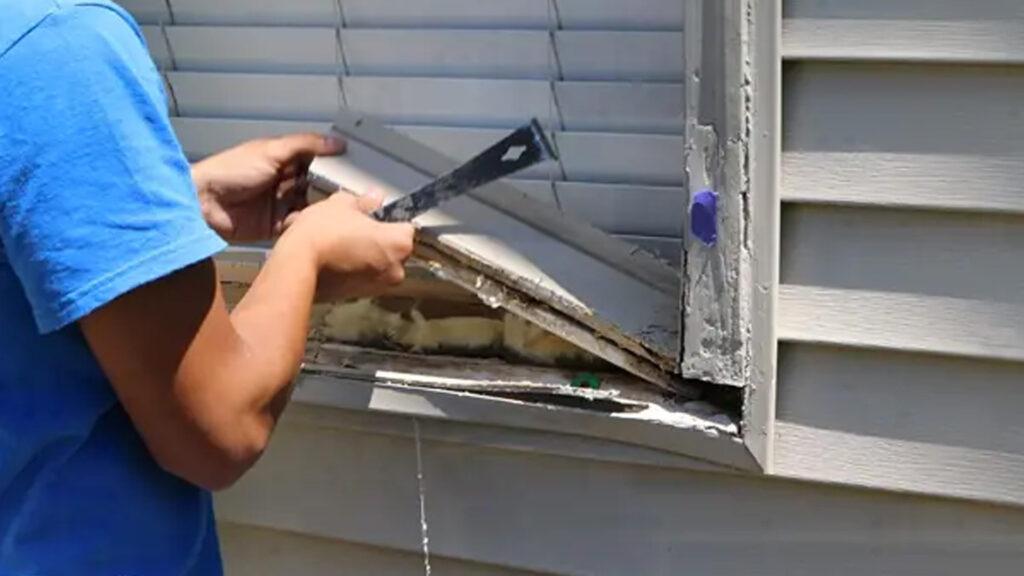
Most People Replace Windows They Could Have Repaired — and Most Fogging, Seal Failure, and Surface Deterioration Looks Far Worse Than the Actual Fix Turns Out to Be
The decision to replace a window is often made at the moment the problem is most visible and most frustrating — when condensation has been trapped between the panes for weeks, when the view through the glass has gone milky or distorted, or when the frame shows surface deterioration that suggests the window is past saving. That moment is not the ideal time to make an accurate assessment of what the window actually needs.
Window replacement is a significant expense. In the Chicago area, where historic and mid-century residential construction is common and where original window quality was often substantial, replacement frequently costs more and produces a worse long-term result than restoration or targeted repair would have. Understanding what causes the problems that look like replacement triggers, and what the actual repair options are, produces a more informed decision — and in most cases, a less expensive one.
What Causes Window Fogging and When Seal Failure Means the Glass Needs to Be Replaced
Fogging in insulated glass units — the condensation that appears between the panes of a double or triple-glazed window — has a single underlying cause: failure of the hermetic seal that keeps the insulating gas (typically argon or air) between the panes. When that seal fails, exterior moisture-laden air enters the space between the panes. When temperatures change, that moisture condenses on the interior glass surfaces, producing the characteristic fogging or milky appearance that makes the window frustrating to look through.
The seal failure itself does not indicate structural failure of the window. The frame, the sash, and the surrounding installation may be entirely intact. What has failed is the perimeter seal on the insulated glass unit — a component that can be replaced without replacing the entire window.
The repair approach for a failed insulated glass unit seal depends on the window construction. In windows where the glass unit is removable from the frame — which includes many quality windows manufactured in the last thirty to forty years — the insulated glass unit can be replaced with a new factory-sealed unit while the frame remains in place. This approach costs significantly less than full window replacement, requires no disruption to the interior trim, and restores the window’s optical quality and insulating performance to as-new condition.
In some windows, the glass and frame are manufactured as an integrated unit that is not designed for glass-only replacement. Some older wood-framed windows fall into this category, as do certain aluminum-clad frames where the glass unit is bonded into the frame assembly. For these windows, defogging — a process that involves drilling small access holes in the unit, applying a cleaning agent, and installing vents to allow moisture exchange — is an alternative that reduces the visible fogging. Defogging does not restore the original clarity or insulating performance, but it addresses the visual problem at a lower cost and is appropriate when the overall window is otherwise sound.
The specific repair approach that is appropriate depends on the window construction, the age of the unit, the severity of the seal failure, and the availability of replacement glass units for the specific window model. This is a determination that requires physical inspection rather than phone assessment, and it is one where the company performing the assessment should have experience with multiple window types and repair methods rather than a preference for a single approach.
How Brand-Specific Window Repair Differs from Generic Glass Service
Windows manufactured by established brands — Pella, Andersen, Marvin, Kolbe, and others — are built to specific engineering standards and use glass units with specific dimensions, coatings, and installation configurations. Replacing a failed glass unit in one of these windows with a generic replacement that does not match the original specifications can result in performance differences, warranty voidance, and aesthetic inconsistencies that undermine the quality of the original window.
Brand-specific repair involves sourcing replacement glass units that match the original specifications of the window — the same coating type, the same spacer system, the same gas fill, and the same dimensional profile. For windows that are still within their manufacturer’s warranty period, this also involves working within the warranty claim process in a way that preserves the remaining coverage.
Pella windows, which are prevalent in Chicago-area residential construction, use specific glass unit configurations that have changed across their product generations. A Pella window manufactured in 1995 has different glass unit specifications than one manufactured in 2005 or 2015. An installer who is not familiar with Pella’s product history and replacement parts inventory may quote a standard glass replacement that does not match the original performance specifications, or may advise replacement of an entire window that could have been addressed with a correctly specified glass unit replacement.
For Chicago-area homeowners with Pella windows experiencing seal failure or other glass issues, working with a provider that offers pella window service — with specific knowledge of Pella’s product line and replacement glass specifications — produces a repair that matches the original performance rather than a generic alternative.
What Window Restoration Covers That Standard Repair Services Don’t
Window restoration is a broader intervention than glass replacement, and it addresses a different set of problems. Where glass replacement addresses seal failure and the fogging or clarity issues that result from it, restoration addresses the deterioration of the frame, the hardware, the glazing compound, and the operating components that affect both the appearance and the performance of the window.
Wood window restoration — the process most relevant to Chicago’s substantial inventory of historic and pre-war residential construction — involves stripping deteriorated paint, repairing rotted wood with epoxy consolidants and fillers, reglazing or re-sealing glass in its opening, replacing failed hardware with period-appropriate or functionally equivalent components, and refinishing the repaired frame. Done correctly, wood window restoration extends the service life of a window by decades and preserves the weight, density, and profile of original wood frames that modern replacements cannot replicate.
The argument for restoring original windows rather than replacing them with modern units is strongest in homes with historic or architectural significance where the window profile, material, and character are design features rather than mere functional components. In these contexts, replacement units that approximate the appearance of the original in vinyl or aluminum-clad wood produce a result that is functionally adequate but architecturally diminished. Restoration preserves the original material while returning it to service.
Even in non-historic contexts, original windows in quality construction are often worth restoring rather than replacing. The glass in older single-pane windows has thermal mass that modern glass does not replicate. The wood in older frames, if it is old-growth Douglas fir or other slow-grown species, is denser and more decay-resistant than the fast-grown wood used in modern window construction. An original window that is restored and weatherstripped to current standards often performs comparably to a mid-range replacement unit while costing less and preserving the architectural character of the opening.
For homeowners in the Chicago area dealing with windows that have moved past straightforward glass replacement into frame and hardware deterioration, chicago window restoration center provides the full-scope intervention that addresses the problem at every level rather than treating the glass while ignoring the frame conditions that will require attention regardless.
How to Evaluate Whether a Foggy Window Is Worth Fixing or a Sign of a Larger Failure
Not every fogged window is a simple seal failure that warrants repair. Some windows with failed seals also have frame deterioration, hardware failure, or installation problems that make repair a less sensible investment than replacement. Evaluating which situation applies requires an assessment of the whole window rather than just the glass.
The frame condition is the first consideration. A window frame that is structurally sound — with no significant rot, no separation at the corners, and no deflection that affects the operation of the sash — is a frame that is worth repairing the glass in. A frame with rot that extends into the structural members, or that has deflected enough to affect drainage, may require replacement or more extensive restoration work than the glass repair alone justifies.
The hardware condition is the second. Casement and awning windows with failed operators — the crank mechanisms that open and close the sash — may be repairable with operator replacements specific to the window brand and generation. Windows with failed balance systems that no longer hold the sash in position may require balance replacement. Windows with hardware that is discontinued and not available through aftermarket sources require more creative solutions or replacement of the affected components. The cost of hardware repair, combined with the glass repair, should be weighed against the cost of the unit as a whole.
The window’s age and its position in the building envelope are contextual factors. A window that is thirty years old and has failed once is likely to fail again — the question is how much service life remains and whether the repair investment is recoverable. A window in a location where the failure was partly caused by installation conditions — inadequate flashing, improper drainage, or exposure that exceeds the window’s design specifications — may fail again in the same way unless the installation conditions are also addressed.
For homeowners evaluating whether a window problem warrants repair or replacement, consulting a provider that offers foggy glass window repair as well as restoration and full replacement gives access to an assessment that is not predetermined toward any single outcome — and that provides the information needed to make the decision that actually makes sense for the specific window and situation.
The Cost Calculation That Usually Changes the Decision
The cost comparison between window repair or restoration and full replacement is rarely as close as homeowners initially expect, and it almost always favors repair for windows that are structurally sound and architecturally significant.
A single glass unit replacement — for a standard double-hung window with a failed insulated glass unit — typically costs a fraction of the price of a full window replacement that includes frame removal, new unit installation, and interior trim restoration. Even restoration work that includes frame repair, reglazing, and hardware replacement typically costs less than full replacement when the original frame is worth preserving.
The decision to replace rather than repair is sometimes appropriate — when the frame is genuinely at end of life, when the window design no longer functions as needed, or when the opening requires a new unit to meet current code for egress or energy performance. In those cases, replacement is the right answer and is worth the investment. But for the majority of windows that present with fogging, surface deterioration, and hardware issues, a careful inspection will reveal repair options that cost significantly less and that the homeowner was never made aware of before proceeding to replacement.